products

Application Details

Contact Us
GT Sonic
0086-75523356715

Laboratory Ultrasonic Cleaning Solutions

Application Overview

Lab Glassware, Instruments and Precision Component Cleaning

GT SONIC laboratory ultrasonic cleaners use high-frequency cavitation to clean lab glassware, plasticware, instruments and precision components. The cleaning action reaches narrow tubes, joints, small gaps and complex surfaces, helping remove chemical residues, oils, biological debris, dust and fine particles more efficiently than manual washing.

Typical Applications

Beakers, flasks, test tubes, pipettes, centrifuge tubes, sample containers and analytical parts.

Common Residues

Chemical deposits, grease, agar, dust, biological debris and fine particles.

Suitable Functions

Cleaning, degassing, sample preparation and pre-cleaning before disinfection.

What Lab Items Can Be Cleaned?

A lab ultrasonic cleaner can be used for glassware, plasticware, small instruments and precision laboratory components that are difficult to clean by hand. Laboratory ultrasonic cleaning helps reach narrow tubes, joints, gaps and detailed surfaces in daily lab workflows.

Glassware

Beakers, flasks, test tubes, measuring cylinders and sample containers.

Plasticware & Containers

Centrifuge tubes, sample cups, reagent bottles and compatible small plastic parts.

Lab Tools

Tweezers, clamps, forceps, spatulas and reusable laboratory accessories.

Analytical Components

HPLC parts, syringes, nozzles, fittings and other precision lab components.

Pre-Cleaning Items

Dental tools, surgical instruments and reusable items before further disinfection.

Common Contaminants Removed

A lab ultrasonic bath helps remove common residues left after testing, sample handling, instrument use and routine laboratory work.

Reagents, salts & buffers Stains & dried deposits Fingerprints & light oils Protein residue Agar & dried samples Dust & fine particles

Why Use Ultrasonic Cleaning in Laboratories?

Laboratory ultrasonic cleaning provides a non-abrasive and efficient way to remove microscopic residues from labware, instruments and precision components. Through high-frequency cavitation, a lab ultrasonic cleaner can reach narrow tubes, blind holes, fine gaps and delicate surfaces that manual brushing may miss.

Microscopic Cleaning Access

Reaches small tubes, cracks, joints, meshes and hidden areas.

Protects Delicate Labware

Reduces the need for hard brushing on fragile glassware and fine tools.

Improves Cleaning Efficiency

Multiple items can be cleaned in one cycle for routine lab work.

Consistent Results

Helps reduce residue and cross-contamination risks in repeat workflows.

More Than Cleaning

Can support degassing, sample preparation, dispersion and mixing.

Recommended Ultrasonic Cleaning Solutions for Laboratories

Choose a suitable GT SONIC ultrasonic cleaner based on lab item size, residue type, cleaning frequency and required functions such as heating, degassing or digital control.

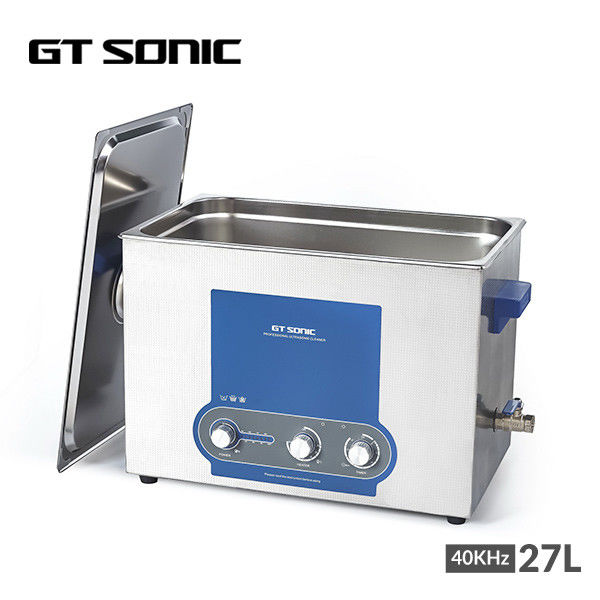
GT SONIC Lab Ultrasonic Cleaner

Lab Ultrasonic Cleaner

For daily laboratory ultrasonic cleaning, degassing and pre-cleaning workflows.

View Products
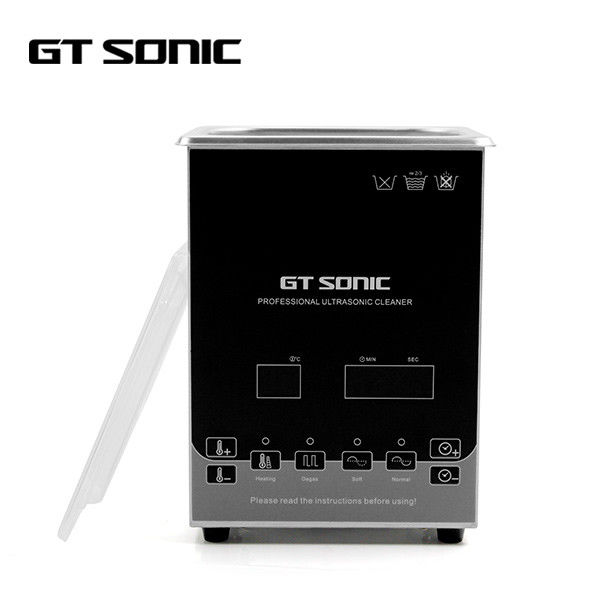
GT SONIC Digital Ultrasonic Cleaner

Digital Ultrasonic Cleaner

For controlled cleaning cycles with timer and temperature settings.

View Products
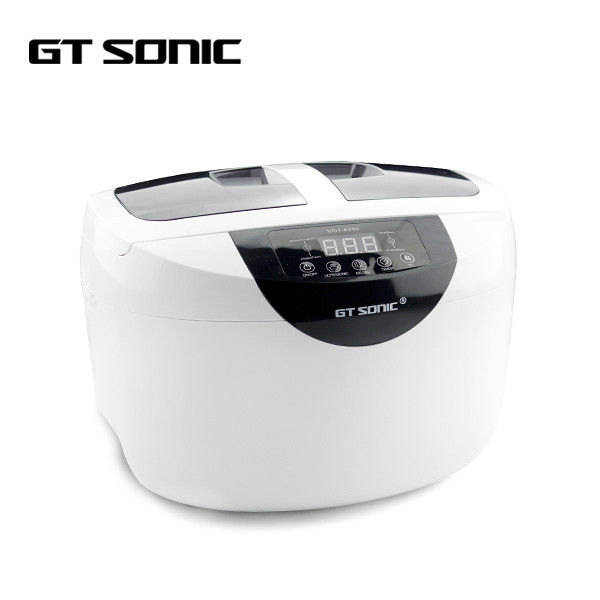
GT SONIC Heated Ultrasonic Cleaner

Heated Ultrasonic Cleaner

For chemical residues, grease, agar and dried deposits that need heating support.

View Products

How to Choose a Lab Ultrasonic Cleaner?

For laboratory ultrasonic cleaning, the right model should provide stable cavitation, suitable tank space and safe operation for glassware, instruments and precision lab components.

Selection Factor Recommended Choice Best For
Frequency 40kHz for most lab cleaning tasks Glassware, tools, containers and general lab items
Higher Frequency 68kHz+ when available Delicate parts, fine particles and precision components
Tank Size Items should be fully submerged Beakers, test tubes, racks, containers and small tools
Heating Function 40–60°C for common residues Oils, grease, agar, dried deposits and chemical residues
Degas Mode Recommended for fresh cleaning solution Helps improve cavitation stability before cleaning
Digital Control Timer and temperature settings More repeatable laboratory cleaning workflows
Tank Material Stainless steel tank Durability, corrosion resistance and daily lab use
Cleaning Solution Water-based lab detergent Safer cleaning for glassware, plasticware and instruments

FAQ About Laboratory Ultrasonic Cleaning

What can be cleaned in a lab ultrasonic cleaner?

A lab ultrasonic cleaner can be used for laboratory glassware, plasticware, small tools, sample containers and precision components, including beakers, flasks, test tubes, pipettes, centrifuge tubes, syringes, nozzles and HPLC-related parts.

Does a laboratory ultrasonic cleaner sterilize instruments?

No. Laboratory ultrasonic cleaning is a pre-cleaning process, not a sterilization process. It helps remove visible residues, biological debris, oils and particles before disinfection, autoclaving or other sterilization procedures.

What cleaning solution should be used in a laboratory ultrasonic cleaner?

Use a compatible water-based laboratory cleaning solution, such as a neutral, mild alkaline or enzymatic detergent, depending on the residue type and material. Avoid flammable liquids such as alcohol, gasoline or highly volatile solvents.

How long should lab items be cleaned in an ultrasonic bath?

Most routine lab cleaning cycles take about 5–15 minutes, depending on residue level, item shape, cleaning solution and temperature. Heavier deposits or complex components may require longer cleaning or repeated cycles.

Is heating necessary for laboratory ultrasonic cleaning?

Heating is helpful when cleaning oils, grease, agar, dried deposits or chemical residues. Delicate materials should be cleaned with suitable temperature settings and compatible detergents.

Can ultrasonic cleaning damage laboratory glassware or instruments?

Ultrasonic cleaning is generally safe for compatible glassware, metal tools and lab components when proper settings are used. Fragile glassware, coated parts, glued items, delicate sensors or sensitive electronic assemblies should be checked before cleaning.

Need a Laboratory Ultrasonic Cleaner?

Tell us your lab items, residue type, tank size requirement and cleaning frequency. GT SONIC can help recommend a suitable cleaning model.

Get a Cleaning Solution