Metal Parts Ultrasonic Cleaning Solutions
Application Overview
Ultrasonic Cleaning for Fabricated Metal Parts
GT SONIC ultrasonic cleaners use high-frequency cavitation to clean fabricated and machined metal parts, helping remove oil, grease, cutting fluid, polishing compound, metal shavings and fine particles from grooves, threads, blind holes and complex internal structures.
Typical Applications
Machined parts, molds, tools, gears, valves, carburetors and fuel injectors.
Common Residues
Oil, grease, cutting fluid, polishing paste, metal chips and fine particles.
Suitable Solutions
Benchtop, heated, large-capacity or customized ultrasonic cleaning machines.
What Metal Parts Can Be Cleaned?
GT SONIC ultrasonic cleaners are suitable for fabricated and machined components with grooves, holes, gaps, threads or complex surfaces.
Machined Metal Parts
CNC parts, turned parts, milled parts and stamped parts.
Mechanical Components
Bearings, gears, springs, valves, fittings and shafts.
Automotive Parts
Carburetors, fuel injectors, brake parts, nozzles and engine parts.
Tools & Fixtures
Metal molds, cutting tools, machine inserts and workshop tools.
Common Contaminants Removed
Ultrasonic cleaning helps remove common residues left from machining, finishing, repair and maintenance processes.
Oil & grease Cutting oil & coolant Metal chips & dust Polishing paste Carbon deposits Light oxidation
Benefits of Ultrasonic Cleaning for Metal Parts
Ultrasonic cleaning can reach hidden areas more evenly than manual brushing, while reducing repeated hand cleaning in daily or batch workflows.
Deep Cleaning
Reaches grooves, threads, holes and narrow gaps.
Surface Preparation
Supports cleaning before coating, painting, plating or assembly.
Less Manual Work
Reduces repeated brushing, soaking and hand cleaning.
Non-Abrasive Process
Cleans through liquid cavitation without heavy scrubbing.
Recommended Ultrasonic Cleaners
Choose a suitable GT SONIC cleaner based on tank capacity, cleaning frequency and daily workflow.
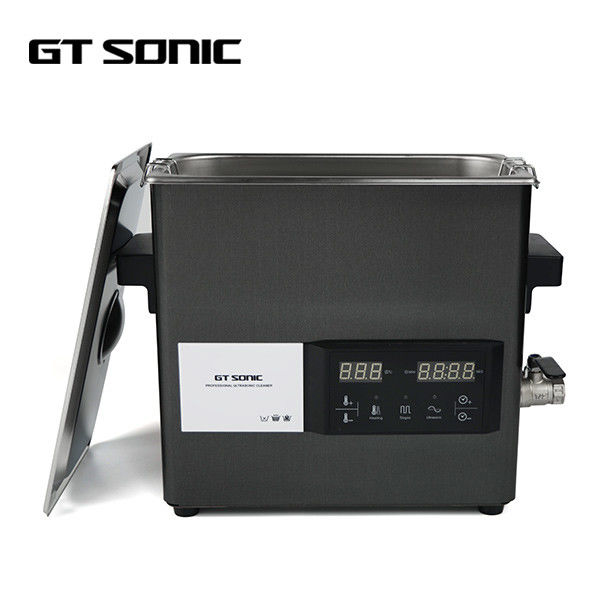
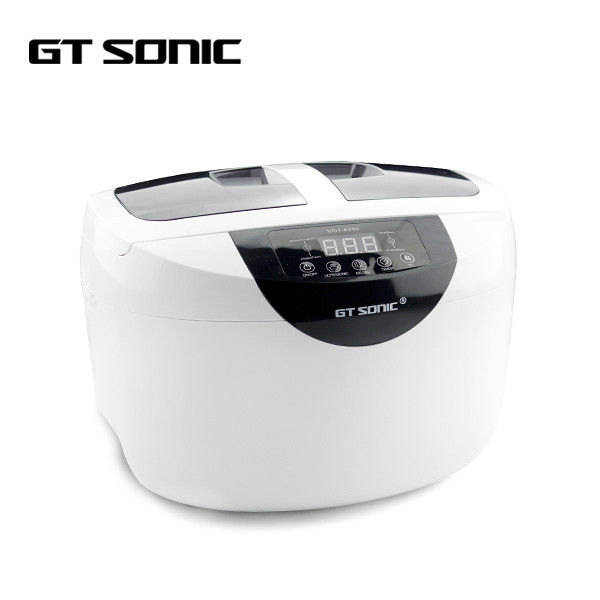
Parts Ultrasonic Cleaner
For routine workshop cleaning and metal component maintenance.
View Products
Heated Ultrasonic Cleaner
For faster cleaning performance with temperature-assisted cleaning.
View Products
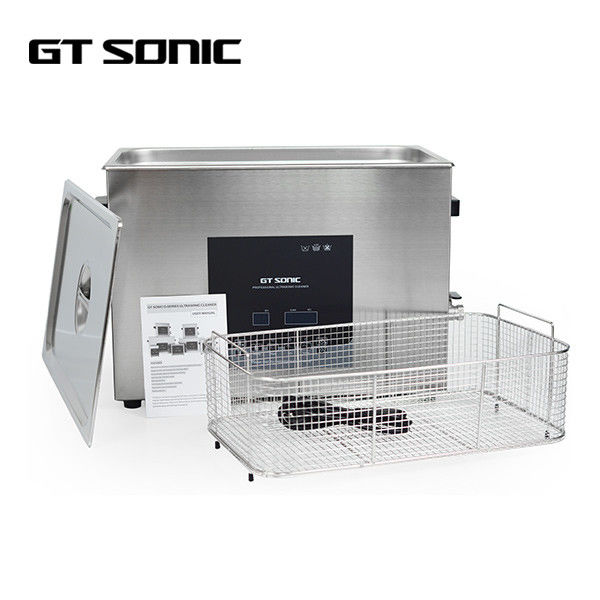
Large Ultrasonic Cleaner
For larger tank capacity, bigger baskets and batch cleaning needs.
View Products
How to Choose an Ultrasonic Cleaner for Metal Parts?
Check frequency, tank size, heating, material compatibility and operation features before choosing a model.
| Selection Factor |
Recommended Choice |
Best For |
| Frequency |
40kHz for most metal parts |
Balanced cleaning power and surface protection |
| Higher Frequency |
40kHz+ |
Delicate parts, aluminum, brass and precision components |
| Tank Size |
Parts should be fully submerged |
Better cleaning coverage on all surfaces |
| Heating |
50–70°C when needed |
Oil, grease and stubborn residue removal |
| Basket Space |
Check basket size, not only tank volume |
Avoid poor fit or uneven cleaning |
| Degas Function |
Useful before the first cleaning cycle |
Helps improve cavitation stability |
| Drain Valve |
Recommended for larger tanks |
Easier liquid replacement and maintenance |
FAQ About Ultrasonic Cleaning for Metal Fabrication
What cannot be cleaned in an ultrasonic cleaner?
Items with loose coatings, weak plating, glued joints, porous materials, fragile stones, soft decorative finishes or sensitive electronic assemblies may not be suitable.
Can ultrasonic cleaning damage metal surfaces?
It is generally safe for compatible metals when the right frequency, temperature, detergent and cleaning time are used.
Can you put different types of metal in an ultrasonic cleaner?
Yes, many metals can be cleaned, but aluminum, brass, copper and coated parts may need milder solutions and shorter cycles.
How to use ultrasonic cleaning for metal fabrication?
Place parts in a basket, add a suitable water-based cleaning solution, set temperature and cleaning time, then rinse and dry after cleaning.
Can ultrasonic cleaning remove oil, grease and cutting fluid?
Yes. With a suitable cleaning solution and heating function, ultrasonic cleaning can improve removal of oil, grease, coolant and machining residues.
What settings are important for fabricated or machined parts?
Frequency, tank size, temperature, cleaning time and detergent type are the main settings to check before cleaning.
Need an Ultrasonic Cleaner for Metal Fabrication?
Tell us your part size, material, residue type and cleaning volume. GT SONIC can help recommend a suitable cleaning model.
Get a Cleaning Solution