Cleaning Jewelry Machine Maintenance: Tips for Long-Lasting Performance
Author: Zoey
Date: 2026-02-02
Read: 5min
Abstract:
A Cleaning Jewelry Machine (often called an ultra sonic jewelry cleaner or sonic cleaner for jewellery) can keep jewelry looking brilliant, but only if the machine is operated and maintained correctly. This guide explains how ultrasonic cavitation works, what to put in a jewelry cleaning machine, and how to build a practical maintenance routine that protects performance, reduces downtime, and extends service life. You will also learn how to choose the best jewelry cleaning machine for your workload, including options such as an ultrasonic cleaner 30 liter for batch cleaning, and when ultrasonic cleaning services may be a better fit. For buyers comparing an ultrasonic cleaner for sale, we include a checklist of technical and operational factors,focused brand authority section featuring GT Sonic ultrasonic cleaner.
Introduction to ultra sonic jewelry cleaner

What Is a Cleaning Jewelry Machine?
A Cleaning Jewelry Machine is a device designed to remove oils, polishing compounds, skin residue, and microscopic dirt from jewelry surfaces and hard-to-reach crevices. Most modern units use ultrasonic energy, which is why many shoppers search for terms like ultra sonic jewelry cleaner, sonic cleaner for jewellery, or professional jewelry cleaner. Unlike brushing or wiping, ultrasonic cleaning reaches under prongs, around settings, inside chain links, and across textured finishes without relying on aggressive abrasion.
In a typical workflow, you place jewelry in a basket, fill the tank with water and a suitable cleaning solution, set time and temperature, and let ultrasonic cavitation do the work. The result is faster, more consistent cleaning that supports retail presentation, repair prep, and post-polishing finishing. When maintained properly, a quality cleaning jewelry machine can deliver repeatable results for years.
Why Maintenance Matters for Long-Term Performance
Maintenance is not just about keeping the tank shiny - it directly affects cleaning power, consistency, and safety. Dirty solution can redeposit grime, while scale and residue can reduce energy transfer and heating efficiency. Ignoring small issues (like unusual noise, weak bubbling, or inconsistent results) can lead to transducer stress, control panel errors, or premature failure.
For businesses, good upkeep protects throughput and reputation: customers notice when jewelry returns looking cloudy or uneven. For consumers, maintenance prevents odor, corrosion, and disappointing performance. A simple routine - daily solution management, weekly tank cleaning, and monthly performance checks - is usually enough to keep an ultrasonic cleaner running at peak effectiveness.
How Ultrasonic Jewelry Cleaning Technology Works

Principles of Ultrasonic Cavitation
Ultrasonic cleaners generate high-frequency sound waves in liquid. These waves create alternating high- and low-pressure zones. During low-pressure cycles, tiny bubbles form; during high-pressure cycles, the bubbles collapse. That collapse releases micro-jets of energy that dislodge contaminants from surfaces. This process is called cavitation.
Cavitation is powerful but controllable. When you choose proper settings - time, temperature, and solution - you can remove oils and residues while protecting delicate finishes. If you overload the basket, use the wrong chemistry, or run overly hot cycles, cavitation can become less effective or risk damaging sensitive gemstones and glued settings.
Key Components of a Professional Jewelry Cleaner
The main parts of a professional jewelry cleaner are listed below, along with the maintenance focus for each component.
|
Component
|
Function
|
Maintenance Focus
|
|
Transducer
|
Generates ultrasonic waves
|
Power stability
|
|
Tank
|
Holds cleaning solution
|
Corrosion prevention
|
|
Control panel
|
Time & temperature control
|
Calibration
|
From a maintenance perspective, the tank and transducers do most of the physical work. Keeping the tank clean, using non-corrosive chemistry, and avoiding dry running helps protect welded seams and transducer bonding. The control panel should be kept dry and operated within recommended parameters to prevent overheating and electrical faults.
Types of sonic cleaner for jewellery
Home vs Professional Jewelry Cleaner
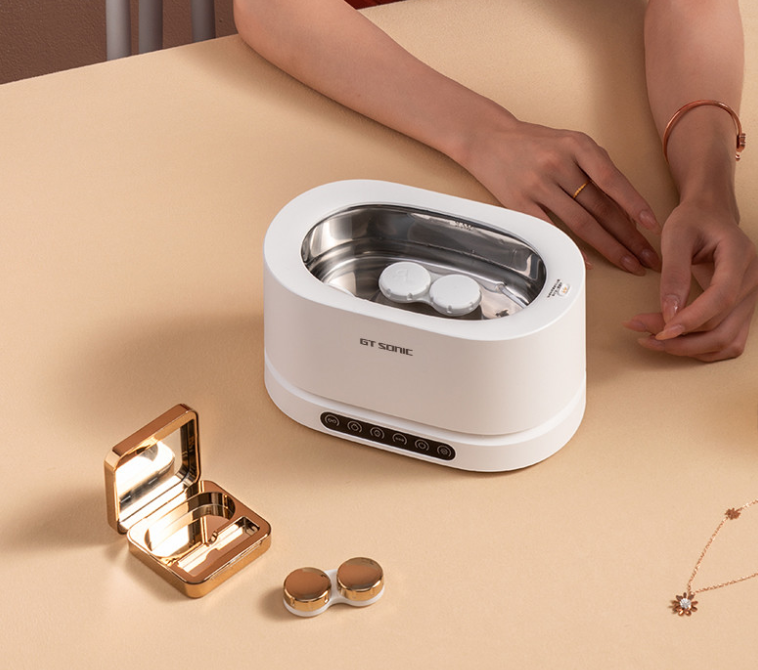
Home ultrasonic units are convenient for occasional cleaning of rings, earrings, and simple chains. They typically have smaller tanks, lower continuous-duty ratings, and simplified controls. A professional jewelry cleaner is built for frequent cycles, heavier loads, and stable output. Professional units often include stronger ultrasonic power, better temperature control, and more robust construction (including thicker stainless steel tanks).
If you clean jewelry daily for customers or production, professional-grade equipment helps you maintain consistent results. For intermittent household use, a compact ultra sonic jewelry cleaner may be sufficient - but maintenance still matters, especially solution hygiene and proper loading.
Capacity-Based Classification
Capacity impacts batch size, cleaning uniformity, and how often you must change solution.
|
Capacity
|
Typical Users
|
Application
|
|
2L-3L
|
Home users
|
Rings, earrings
|
|
10L
|
Jewelry stores
|
Daily retail cleaning
|
|
30 Liter
|
Repair centers
|
Batch & heavy-duty cleaning
|
Larger tanks like an ultrasonic cleaner 30 liter are popular for repair centers and workshops because they can process multiple items per cycle, but they also require more disciplined solution management and more careful heating control. Smaller tanks are easier to refresh and monitor, making them a good fit for front-counter cleaning and low-volume use.
Cleaning Jewelry Machine Maintenance (Core Section)

Daily Maintenance Best Practices
Daily maintenance is the highest-impact habit for long-lasting performance. Start each day by checking the liquid level, ensuring the basket is clean, and confirming that the machine runs quietly and consistently. If the solution looks cloudy, foamy, or smells unpleasant, replace it. Contaminated solution can redeposit residue onto jewelry and reduce cavitation efficiency.
What Do You Put in a Jewelry Cleaning Machine?
In most cases, you should use water plus an ultrasonic-safe detergent formulated for jewelry or precision parts. Choose a solution that matches the material: mild, non-ammoniated formulas are commonly preferred for routine cleaning. Avoid harsh chemicals that can corrode stainless steel, discolor metals, or weaken certain gemstone treatments. When in doubt, test one item first, run a short cycle, and rinse thoroughly.
Practical tip: always rinse jewelry after ultrasonic cleaning and dry it with a lint-free cloth or compressed air. Residue left on the surface can dull shine. For high-end items with fragile stones (such as pearls, opals, emeralds with fractures, or pieces with glued settings), consider manual cleaning or consult a jeweler before ultrasonic cleaning.
Weekly & Monthly Maintenance Checklist
Use the checklist below to prevent scale buildup, keep cavitation strong, and catch early signs of wear.
|
Maintenance Task
|
Frequency
|
Purpose
|
|
Replace solution
|
Daily
|
Prevent contamination
|
|
Clean tank walls
|
Weekly
|
Maintain hygiene
|
|
Performance testing
|
Monthly
|
Ensure consistent cavitation
|
Weekly tank cleaning should include wiping the interior with a soft cloth after draining, then refilling with clean water to run a short rinse cycle. Do not scrape the tank with metal tools. Monthly performance testing can be as simple as a consistent 'foil test' or comparison against baseline results using the same load, solution, and settings. If performance drops, check solution freshness, degas the tank, and confirm settings before assuming a hardware issue.
Maintenance Frequency Matrix (visual reference):
|
Task
|
Daily
|
Weekly
|
Monthly
|
|
Change solution
|
●
|
|
|
|
Wipe basket & lid
|
●
|
|
|
|
Clean tank walls
|
|
●
|
|
|
Degas & inspect output
|
|
●
|
●
|
Best Operating Practices for Long-Lasting Performance
Correct Time & Temperature Settings
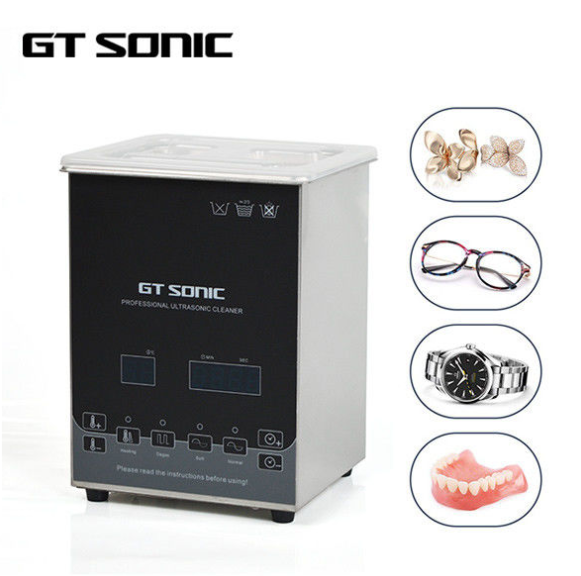
Time and temperature strongly influence both cleaning results and machine stress. In general, use the shortest cycle that achieves the desired cleanliness. Many jewelry loads clean well in a few minutes, especially when solution is fresh and the tank is properly degassed. Overly long cycles can heat the solution, increase evaporation, and expose delicate items to unnecessary vibration.
Temperature improves cleaning by lowering viscosity and boosting detergent activity, but higher temperatures are not always better. Follow the solution manufacturer’s guidance and avoid extreme heat that can affect plated finishes, adhesives, or heat-sensitive gems. If the machine has a heater, allow it to stabilize before starting heavy batches to keep cavitation consistent from one cycle to the next.
Load Management & Basket Usage
Never place jewelry directly on the tank bottom. Always use a basket or tray to prevent scratching the tank and to allow uniform wave distribution. Space items apart so liquid can circulate. When parts touch, they can shield each other from cavitation (reducing cleaning) and cause surface rubbing.
If you operate a high-capacity unit such as an ultrasonic cleaner 30 liter, consider standardizing load sizes for repeatable results. For example, you might group items by material (gold vs silver) or by contamination type (polishing compound vs skin oils). Standardization also simplifies maintenance because you can predict how quickly solutions become contaminated.
Choosing the Right ultrasonic jewlery cleaner: Buyer’s Guide
What Is the Best Jewelry Cleaning Machine?
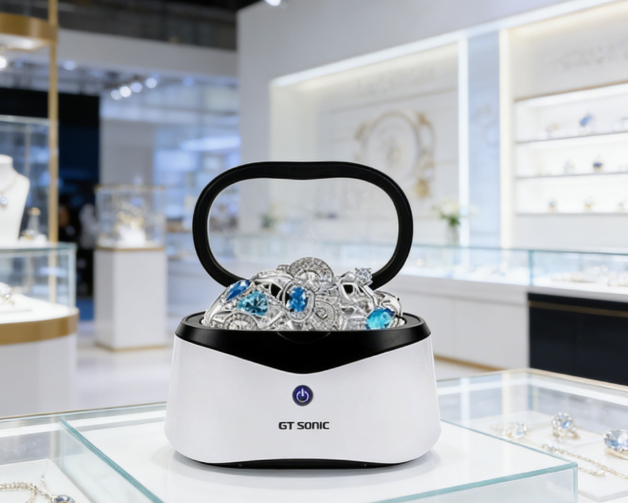
The best jewelry cleaning machine depends on your workload, jewelry types, and quality expectations. For most jewelry applications, 40kHz is a common frequency choice because it balances strong cleaning with a relatively gentle action. Multi-frequency machines can offer flexibility, letting you tune cleaning intensity for delicate pieces versus heavy contamination.
Power density (ultrasonic power relative to tank size) affects how effectively the machine cleans under real-world loads. Too little power can lead to weak cavitation, especially in larger tanks; too much power can be unnecessarily aggressive for sensitive items. Look for stable output, consistent control, and documentation that matches your intended use.
Why professionals trust GT Sonic ultrasonic cleaner often comes down to predictable performance and industrial design priorities: durable tanks, stable ultrasonic output, and operational support for continuous use. When evaluating brands, focus on measurable specifications, serviceability, and buyer protection (warranty and parts availability).
Ultrasonic Cleaner for Sale: What to Evaluate
When comparing an ultrasonic cleaner for sale, evaluate both the machine and the supplier. Strong manufacturing experience can translate to better welding quality, more consistent transducer placement, and reliable electronics. Certifications, testing procedures, and clear documentation are additional trust signals for professional buyers.
Key evaluation factors include:
• Manufacturing experience & certifications
• R&D capability and patented technologies
• After-sales service and spare parts support
|
Selection Factor
|
Why It Matters
|
|
Brand reputation
|
Trust & reliability
|
|
Factory scale
|
Production consistency
|
|
Patents & R&D
|
Technology leadership
|
Also consider daily usability: drain valves, lids, basket quality, noise level, and easy-to-read controls. For retail environments, quieter operation and a clean, professional appearance can matter as much as raw ultrasonic power. For workshops, prioritize serviceability and capacity, especially if you run multiple cycles per hour.
Brand Authority: Why GT Sonic
Industry Experience & Manufacturing Strength
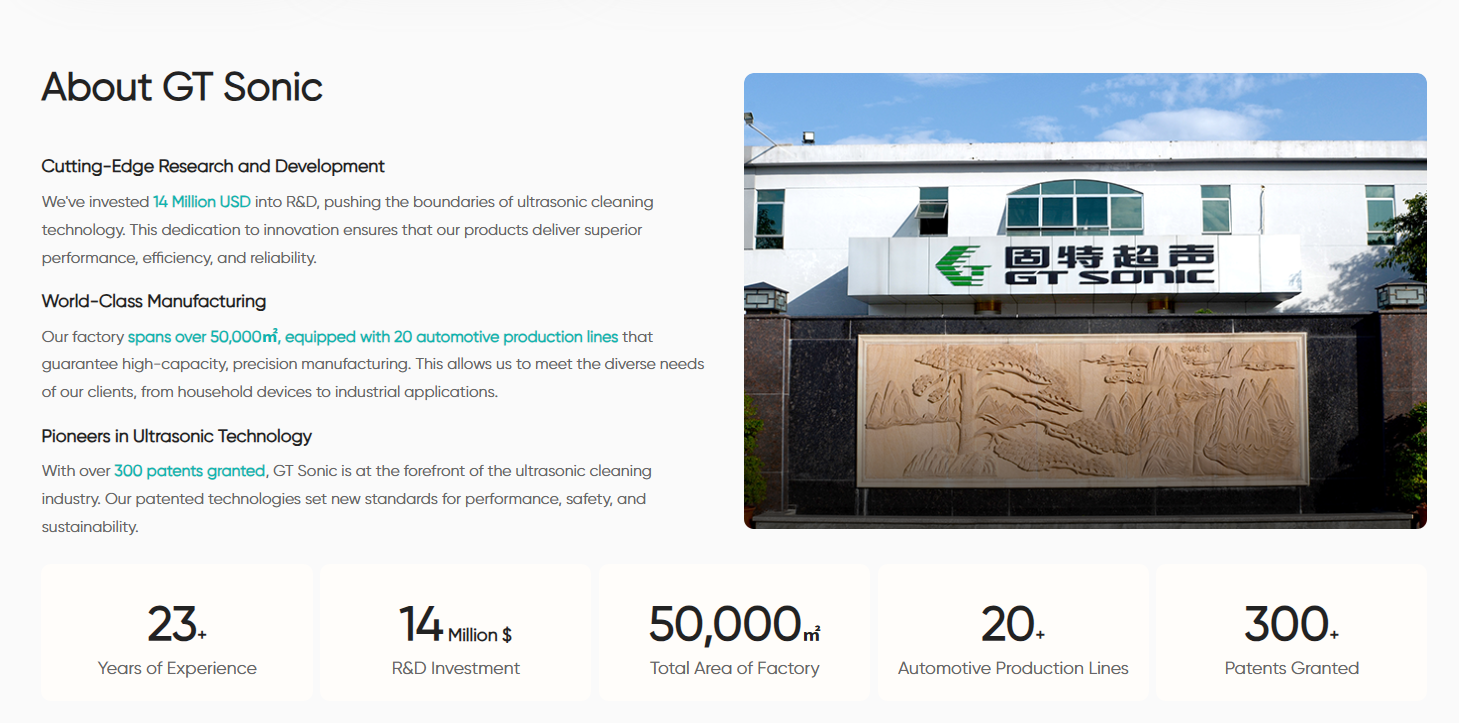
it matters in industrial and professional cleaning equipment because reliability is closely tied to manufacturing discipline. According to company-stated materials, GT Sonic has more than 20 years of ultrasonic technology experience and supports production with a large-scale factory and automated production lines. These capabilities can help ensure consistent assembly and quality control for professional jewelry cleaner models as well as larger industrial units.
For buyers who prioritize supplier credibility, look for transparent factory information, documented testing, and clear support policies. A supplier that can scale production without compromising component quality is often a safer choice for long-term procurement.
Trust, Innovation, and Global Use
Innovation and support are practical trust indicators, not just marketing claims. Company-stated background highlights include substantial R&D investment, a broad patent portfolio, and use across multiple sectors such as jewelry, medical, and industrial cleaning. For jewelry businesses, that cross-industry usage can be relevant because it suggests the equipment is designed for demanding, repeatable processes.
Bottom line: whether you buy a compact sonic cleaner for jewellery or a high-capacity ultrasonic cleaner 30 liter, long-term performance depends on two things: a maintenance routine that keeps cavitation strong and a machine built with stable components and reliable support. If you need occasional cleaning only, ultrasonic cleaning services can be cost-effective; if cleaning is a daily workflow, owning a well-supported Cleaning Jewelry Machine and maintaining it correctly is the most efficient path to consistent results.


