"Deep clean," "sanitize," "disinfect" and "sterilize" are often used as interchangeable promises. They describe different outcomes. An ultrasonic cleaner is excellent at loosening physical soil from hinges, nose pads and frame recesses, but clean-looking eyewear is not automatically disinfected.
| Process | Practical meaning | Does ordinary ultrasound alone prove it? |
|---|
| Cleaning | Removes dirt, organic material and many germs | Physical cleaning is the core role |
| Sanitizing | Reduces germs to a defined acceptable level | No; a validated process is needed |
| Disinfecting | Inactivates many or all pathogenic microorganisms | No automatic claim |
| Sterilizing | Eliminates all microbial life, including spores | No |
This distinction matters for households after illness and for optical shops describing a paid service. The safe claim must match the process that was actually validated.
What an Ultrasonic Eyeglass Cleaner Actually Does
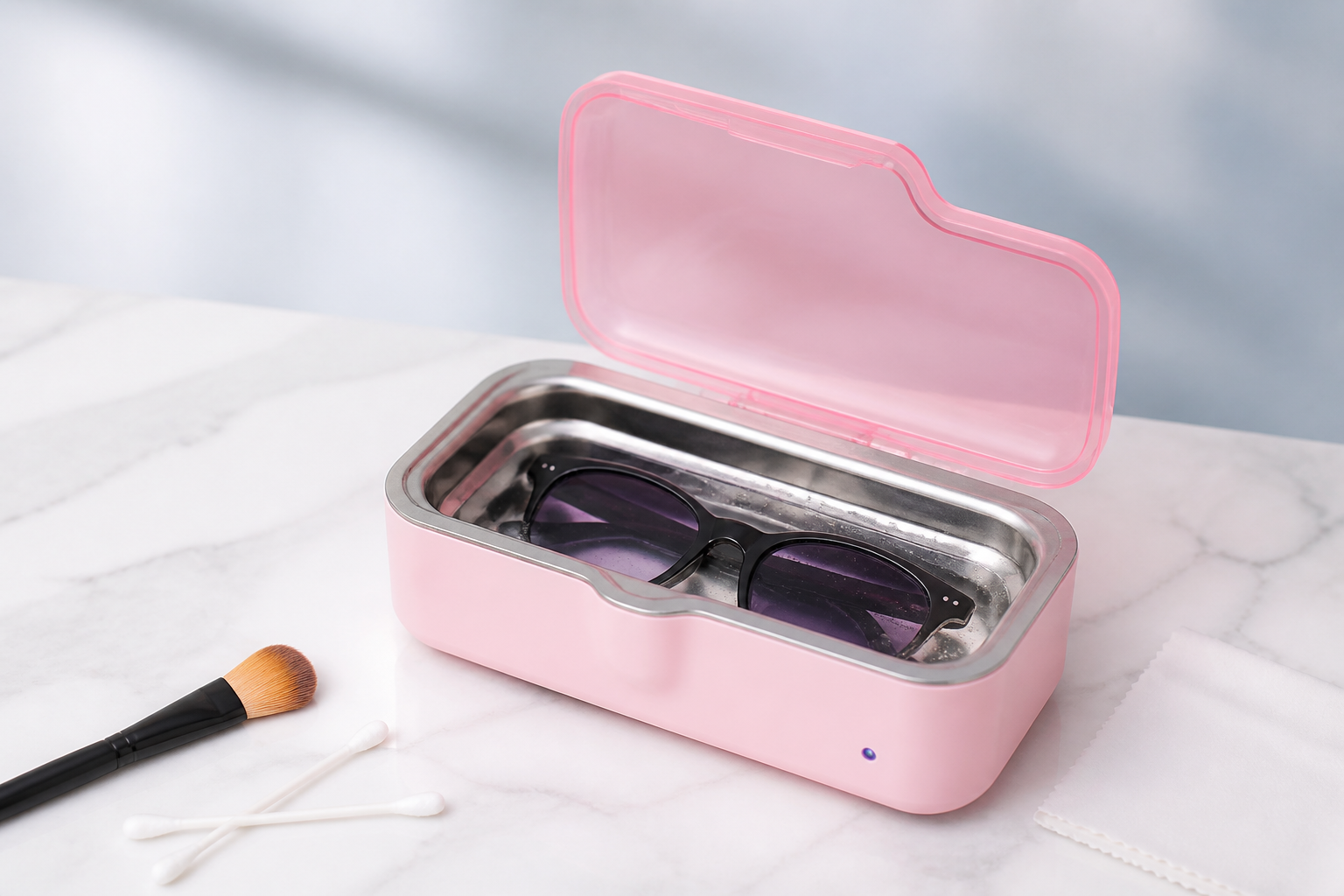
An ultrasonic eyeglass cleaner sends acoustic energy through liquid. Rapid formation and collapse of microscopic bubbles creates a scrubbing action that helps detach oil, dust and other soil from immersed surfaces. The liquid can reach narrow frame details that a cloth misses.
Removing soil has hygienic value because contamination leaves the item with the wash liquid. Cleaning can also make a later antimicrobial step more effective by removing material that shields microorganisms. Yet physical removal is different from demonstrating a defined microbial kill.
CDC infection-control guidance describes ultrasonic equipment as a cleaning method and notes that ultrasound alone does not significantly inactivate bacteria. Used solution may itself contain contamination when the detergent has no antimicrobial claim. Clear water and visible bubbles are therefore not evidence of disinfection.
Why an Ultrasonic Cleaner for Glasses Is Not a Sterilizer
Sterilization is a validated process with specified equipment, exposure conditions and monitoring. In healthcare workflows, ultrasonic equipment prepares items by cleaning them; instruments that require sterilization proceed to a separate sterilization process.
An ultrasonic cleaner for glasses does not become a sterilizer because a seller uses words such as "sterilizing" or because the tank has light, heat or visible agitation. Eyewear materials may also be unable to tolerate validated healthcare sterilization conditions.
For normal household eyewear, sterilization is rarely the practical objective. The appropriate action depends on the exposure, the wearer's health circumstances, local public-health advice and the care instructions for the complete lens-and-frame assembly.
Can an Ultrasonic Spectacle Cleaner Support Disinfection?
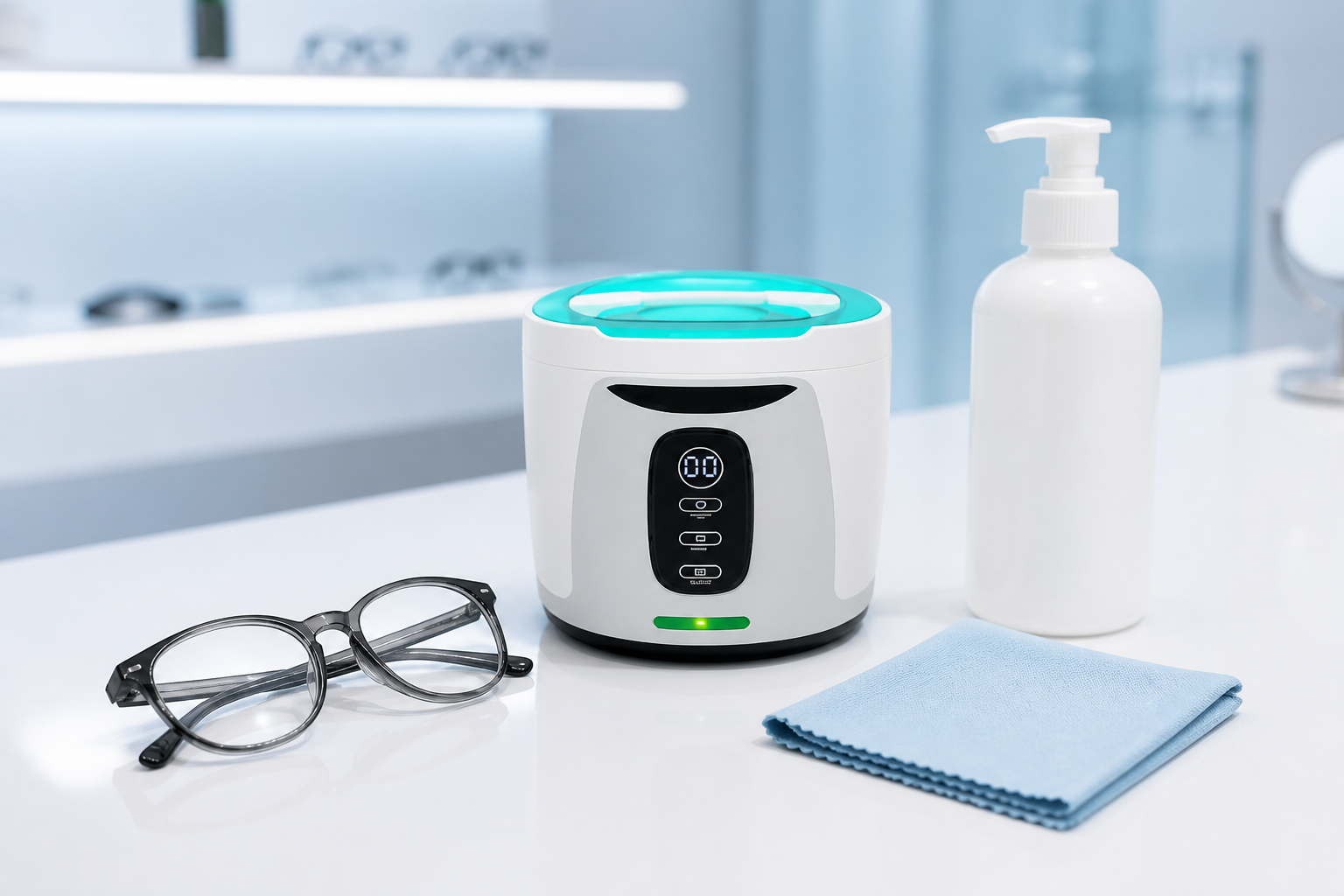
Yes—as a cleaning stage within a properly designed workflow. Cleaning first removes organic and inorganic material that can interfere with a disinfectant. But the later step still needs an appropriate product, correct concentration, full contact time, compatible materials and safe rinsing where required.
Adding a random disinfectant to an ultrasonic spectacle cleaner does not validate the process. The chemical may attack coatings, adhesives or tank components, and some liquids create fire or exposure hazards. Never mix products or put alcohol, bleach or another chemical into the tank unless both the equipment and eyewear instructions expressly allow that exact use.
If a business needs a disinfection claim, it should follow applicable rules and the disinfectant label, then document the process. Ultrasound may improve physical cleaning, but it cannot replace chemical-label requirements.
Build a Clean-to-Dirty Eyeglass Cleaning Machine Workflow
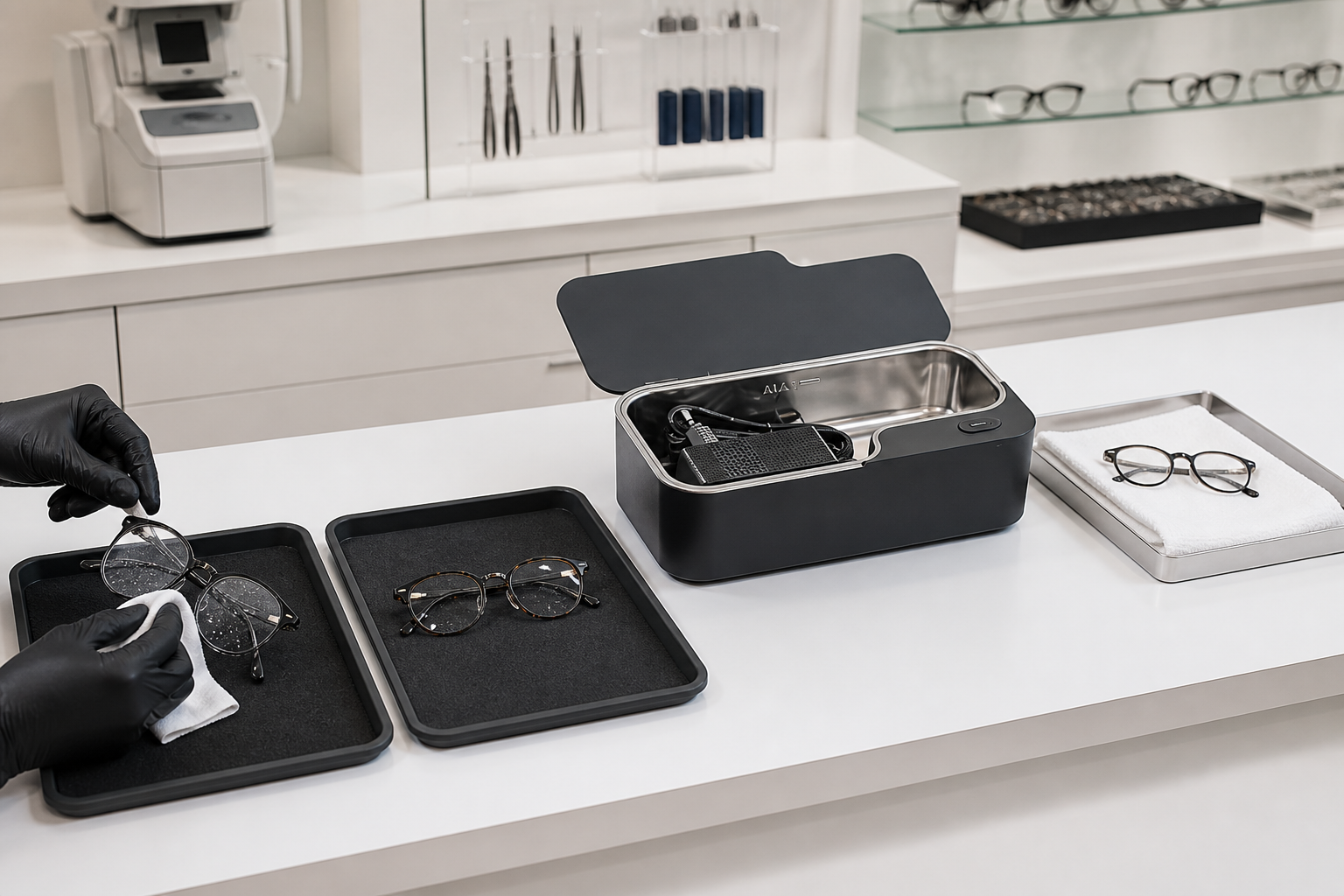
A shared eyeglass cleaning machine needs more than a start button. Divide the work surface into receiving, cleaning, rinsing/drying and finished-item zones. Staff should know when the liquid changes, where used eyewear rests and which cloths are reserved for clean items.
Receive and inspect
Identify visible soil, damaged coatings, loose screws, porous materials and glued decorations before immersion. Reject incompatible eyewear rather than treating cleaning as an experiment.
Clean and manage the solution
Use the approved liquid level, compatible detergent and correct load arrangement. Replace the solution according to the procedure and whenever contamination or performance indicates. Clean the basket, tank, lid and frequently touched controls.
Finish without recontamination
Rinse as required, dry with clean materials and place finished eyewear on a protected surface. Returning a cleaned frame to the receiving counter can undo the process before the customer receives it.
How Optical Shops Should Describe Ultrasonic Glasses Cleaning
Accurate language builds trust. "Ultrasonic deep cleaning removes physical soil from hard-to-reach frame areas" is specific and supportable. "Sterilizes every pair" is not supportable unless the complete process has been independently validated for that outcome.
If the shop adds a separate disinfection step, staff instructions should identify the product, concentration, contact time, compatibility limits, personal protective equipment and rinsing method. Marketing language should distinguish that validated step from the ultrasonic cleaning stage.
GT SONIC timed ultrasonic cleaners can support repeatable physical-cleaning cycles for optical retailers. Capacity, basket fit and workload should be selected around the frames handled—not around an unsupported germ-kill promise.
Household Hygiene After Using an Ultrasonic Eyeglass Cleaner
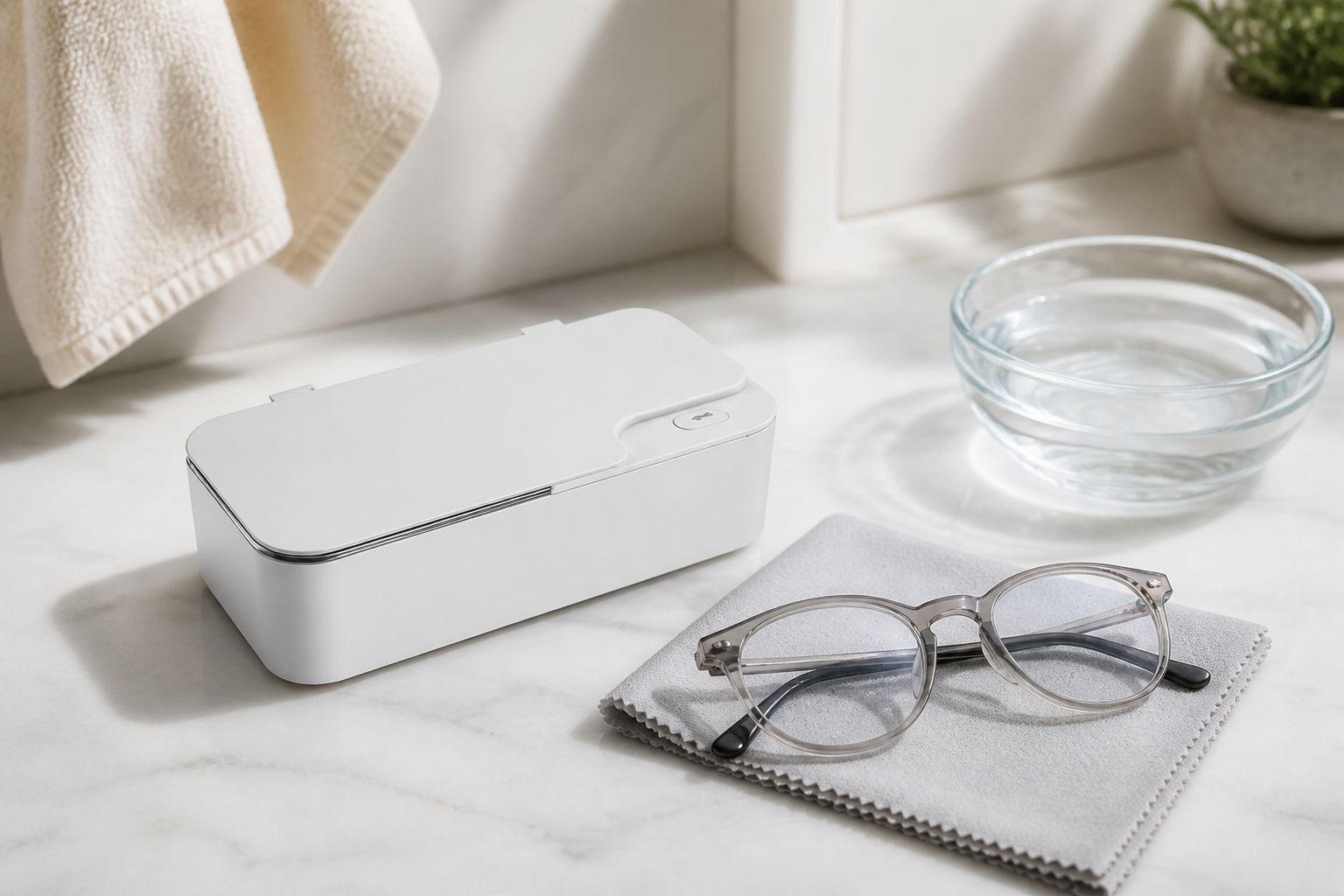
For routine household care, clean glasses when visibly dirty and follow the eyewear maker's instructions. CDC household guidance explains that cleaning with soap and water removes dirt and many germs; disinfection becomes particularly relevant when someone is ill or at increased risk.
After a cycle, dispose of or replace the liquid as directed, clean the basket and tank, and let the machine dry. Do not leave used water for repeated family members. Wash reusable cloths and keep them away from cosmetics or general household cleaning products.
For more process-focused information, read the GT SONIC ultrasonic cleaner knowledge center before making hygiene claims or changing chemicals.
FAQs About Disinfecting Glasses
Does hot water disinfect glasses in an ultrasonic tank?
Do not assume so. Effective temperatures are process-specific, while heat can damage lenses, coatings and frame materials.
Can UV light and ultrasound be treated as one process?
No. They are different technologies. Each requires its own performance evidence and safe-use conditions.
Does a clear tank mean the water is hygienic?
No. Dissolved or microbial contamination may be invisible.
Should an optical shop change the solution between every customer?
The shop needs a documented policy based on the solution instructions, soil load, risk and applicable local requirements. Used liquid should never be assumed antimicrobial.
Design a Responsible Ultrasonic Glasses Cleaning Process
Start with the correct promise: ultrasound cleans. A separate, validated process is needed before claiming disinfection or sterilization. Contact GT SONIC with your workload, frame mix and intended service description to select appropriate equipment and build a repeatable physical-cleaning stage.
Authoritative references
CDC, cleaning and ultrasonic equipment
CDC, definitions of cleaning, disinfection and sterilization
CDC, household cleaning and disinfecting
Ireland HSE, ultrasonic cleaning within decontamination workflows


