banner

News Details

Events
Contact Us
GT SONIC
0086-75523356715
Contact Now

Professional Jewelry Cleaner in Business Settings: Best Practices

Author: Zoey Date: 2026-02-04 Read: 5min

 Why “Professional Jewelry Cleaner” Matters in Business Settings

In a commercial environment, a Professional Jewelry Cleaner is not just a “nice-to-have”—it is part of your operational promise. Whether you run a retail counter, a repair bench, or a refurbishment line, customers expect jewelry to look brilliant without hidden risk. That means repeatable results, controlled processes, and clear documentation. A consistent cleaning program improves customer confidence, reduces rework, and supports higher-value services such as resizing, setting repairs, and pre-owned resale preparation. It also protects your business by reducing avoidable claims related to loose stones, fragile materials, or undisclosed damage.


Who this guide is for

This guide is designed for jewelry retailers, workshop technicians, watch service counters, pawn and pre-owned jewelry teams, and operations managers who need a practical, standardized approach. If you manage multiple locations, train new staff, or process jewelry in batches, the workflow below helps you scale quality with fewer surprises.

What “professional” means (vs. consumer cleaning)

Consumer cleaning is often “best effort.” Professional cleaning is a controlled service with a defined standard of care. In practice, that means: (1) intake and authorization before any cleaning, (2) an inspection step to screen risk, (3) an SOP with stable time/temperature rules, (4) post-clean QC and documentation, and (5) a clear “go/no-go” decision gate when an item should be declined or escalated. A professional approach also separates tools and solutions to prevent cross-contamination—especially important when your cleaning jewelry machine runs all day.

Business Use Cases for a Professional Jewelry Cleaner


Business settings demand different cleaning outcomes than home use. You are typically balancing speed, aesthetics, and liability. Below are the most common commercial use cases.

• Retail counter cleaning: quick “shine-up” for customer satisfaction and sales conversions.
• Repair shop pre/post service cleaning: remove oils before inspection and remove polishing compounds after work.
• Pre-owned jewelry refurbishment: consistent “like-new” presentation for resale listings and in-store displays.
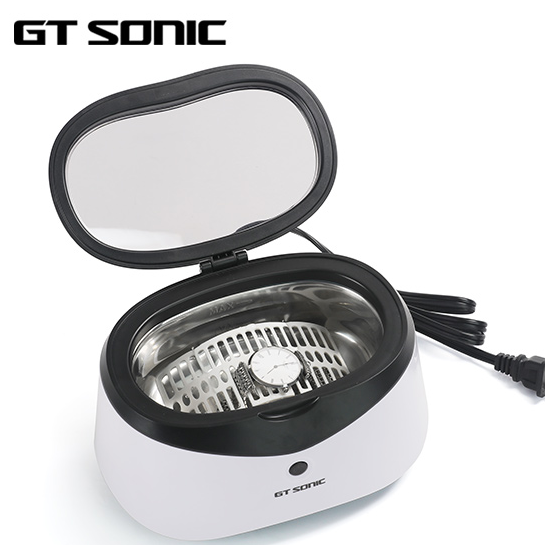
• Watch and mixed-material items: controlled cleaning routes for bracelets, clasps, and external parts where an ultrasonic watch cleaner may be used safely.

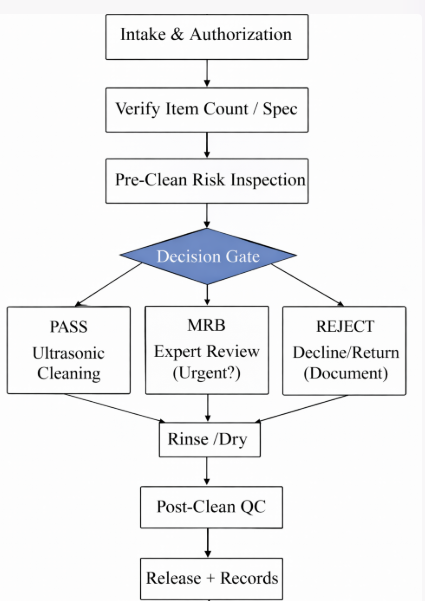
 Incoming Quality Control (IQC) Workflow for GTSONIC Jewelry Cleaning Services


Adopting an IQC-style workflow makes cleaning safer and more scalable. The idea is simple: treat jewelry cleaning like incoming inspection—verify what you received, evaluate risk, decide the method, then document the result. This structure is especially useful when you standardize across a shop floor using a GT SONIC ultrasonic cleaner (or any professional ultrasonic unit) because multiple staff members can follow the same steps.

Step 1 — Intake & customer authorization

Start with item identification and customer permission. Record: item type (ring/chain/bracelet/watch bracelet), gemstones, metal type, plating, known repairs, and visible prior damage. Take quick photos under good lighting. Then confirm consent for ultrasonic cleaning, cleaning chemistry, heat (if applicable), and risk exceptions. This is the moment to set expectations and prevent misunderstandings later.

 Step 2 — Verify quantity/spec (store operations)

Match ticket count, descriptions, and declared value. If the job includes multiple items, verify each piece against the intake list. This step prevents mix-ups and supports a clean chain of custody—especially important for multi-tenant repair benches or high-volume counters.

 Step 3 — Pre-clean inspection (risk screening)

Inspect under magnification before you clean. Screen for: loose stones, cracked gems, porous/soft stones, glued settings, micro-pavé, enamel, antique patina, and any unknown repairs. Identify items that can be safely cleaned ultrasonically versus those that need gentle manual cleaning. The most costly cleaning mistakes happen when staff skip this check.

Step 4 — Cleaning method decision gate (PASS/REJECT/MRB)

Use a decision gate to manage risk consistently:
• PASS: safe for standard ultrasonic cycle + rinse + dry.
• REJECT: return/decline cleaning due to high risk (e.g., fragile antiques, pearls, heavily damaged prongs).
• MRB: a review path for “urgent” or “exception” items—approved by a manager or bench jeweler. In MRB, you may allow a limited cycle, a different solution, or manual-only cleaning.

 Step 5 — Post-clean inspection & documentation

After cleaning, check stone tightness, surface integrity, and finish under magnification. Capture before/after photos if your business uses them for quality proof, resale listings, or customer trust. Log the method used (ultrasonic, steam, manual), cycle time, and any exceptions or warnings.

Step 6 — Release, packaging, customer education

Release items only after QC. Package clean jewelry to prevent re-soiling and add care notes when appropriate. A professional jewelry cleaner service includes transparency: tell the customer what was done, what was not done, and why.

Methods and Tools — What a Professional Ultrasonic Jewlery Cleaner Should Use


Most commercial cleaning programs combine three approaches: ultrasonic cleaning for deep soil removal, steam cleaning for finishing, and manual detailing for fragile pieces. If buyers search for an “ultrasonic jewlery cleaner” (common misspelling) they often mean a business-grade system that supports repeatable cleaning and documentation.

Ultrasonic cleaning (core method)

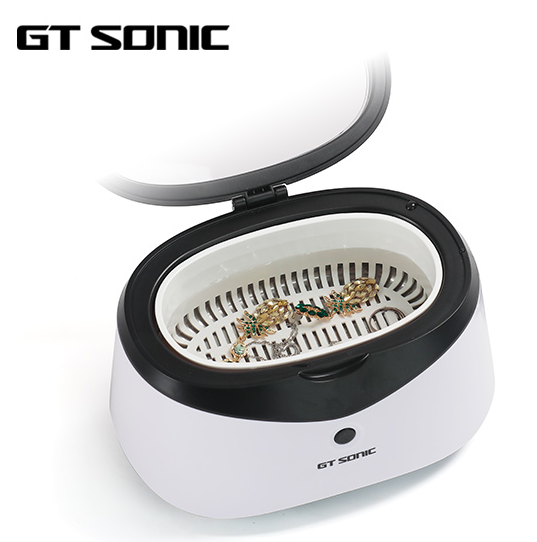
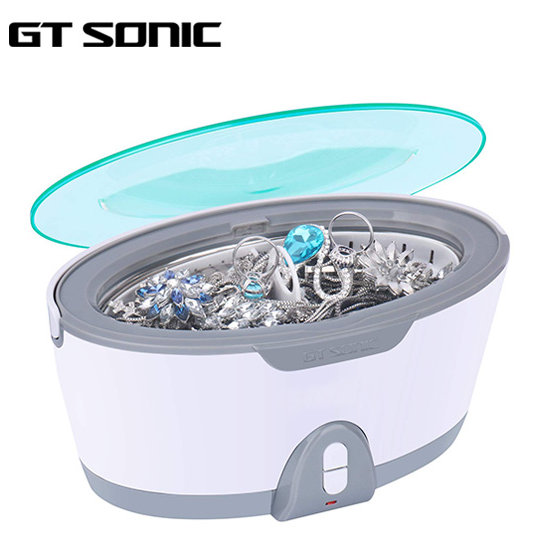
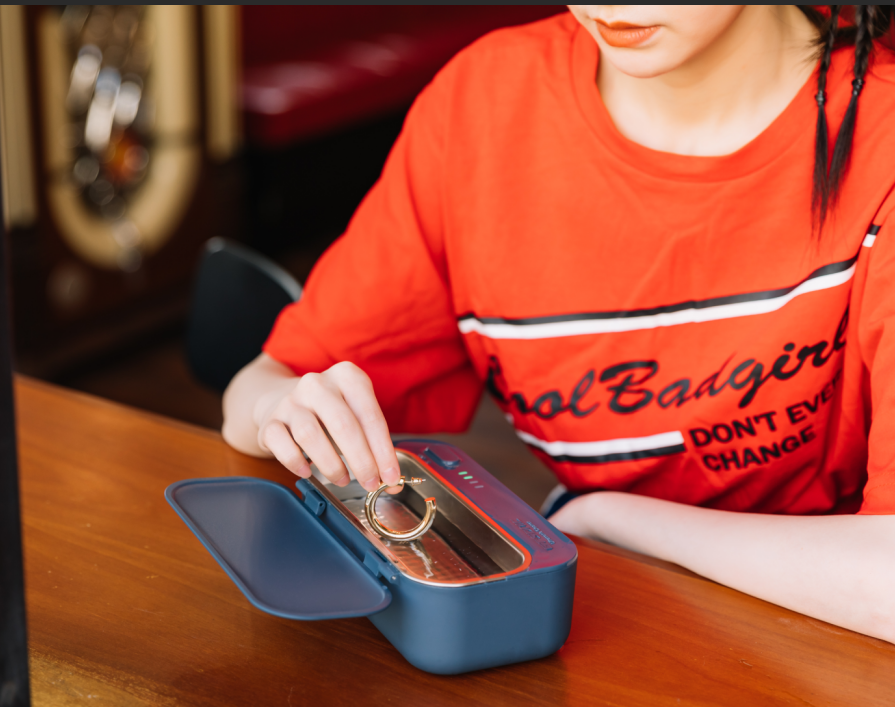
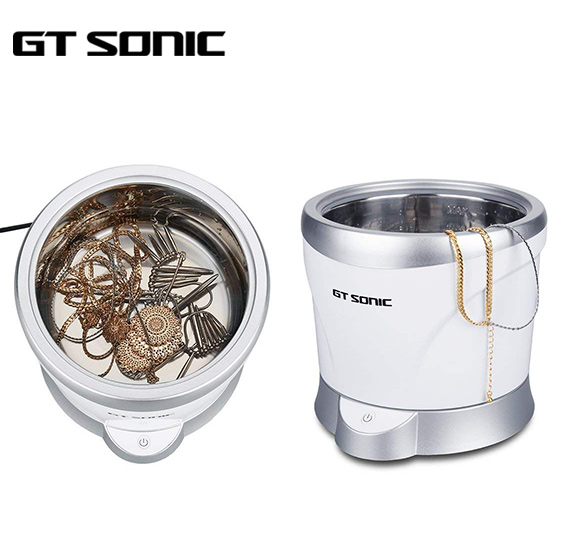
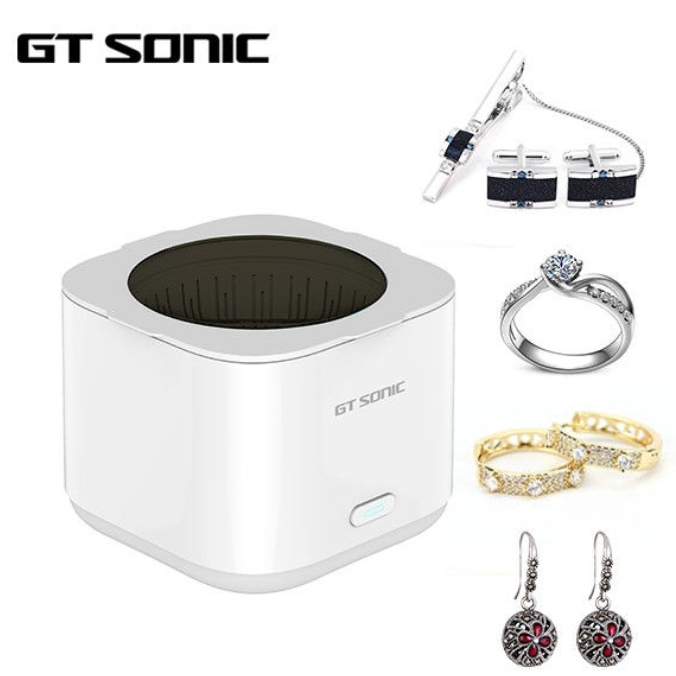
Ultrasonic cleaning is ideal when you need high throughput and consistent results—especially for metal-only items or durable stones in secure settings. It excels at removing oils, lotions, polishing residue, and embedded grime from small crevices. In busy shops, standardizing cycles on a gt sonic ultrasonic cleaner helps staff deliver uniform outcomes across shifts and locations. Keep baskets and holders to avoid metal-on-metal contact and to protect finishes.

 Steam cleaning (finishing method)

Steam is best as a finishing step after ultrasonic cleaning. It removes residue, improves sparkle, and delivers a strong retail “wow factor.” Use controlled technique and avoid steaming delicate, porous, or temperature-sensitive stones.

Manual detailing

Manual detailing—soft brushes, peg wood, microfiber cloths, and jewelry-safe solutions—remains essential. It is often the safest route for plated items, fragile antiques, enamel, and soft/porous gemstones. Manual cleaning also gives you control where ultrasonic cavitation could worsen existing damage.

Segregation and tank hygiene

Treat your tanks like a production tool: maintain solution cleanliness, change solutions on schedule, and avoid cross-contamination. Many businesses run separate solutions for heavy soil versus final clean. Rinse thoroughly and dry properly to prevent spots and residue. Good hygiene also extends equipment life and reduces repeat cleaning.

 Can you get jewelry professionally cleaned?


Yes—most jewelry can be professionally cleaned, but not all jewelry should be cleaned the same way. A professional process starts with inspection and risk screening. Customers often assume ultrasonic is always safe; your job is to match the cleaning method to the materials, construction, and condition of the piece.

 What customers can expect

A professional service typically includes intake documentation, safe cleaning with an appropriate method, a post-clean inspection, and clear communication. In business settings, this structure builds trust and supports repeat business.

When you may decline cleaning

Items may be refused or restricted when risk is high: loose settings, damaged prongs, pearls, opals, enamel, glued gemstones, or fragile antique pieces. Declining is sometimes the most professional option—especially when there is a high likelihood of worsening existing damage.

Best Professional Ultrasonic Jewelry Cleaner (Selection Criteria for Businesses)


Choosing the best professional ultrasonic jewelry cleaner depends on workload, risk profile, and workflow design. For commercial buyers comparing an ultrasonic cleaner for sale, look beyond marketing claims and focus on operational fit: capacity, stability, serviceability, and support.

 What to evaluate (business-grade checklist)

Evaluate tank size, frequency range, power, heater control, timer presets, and a degas mode. Also check basket quality, lid design, drain valve convenience, and the availability of spare parts. These factors determine whether your system will be easy to use daily and whether it will remain consistent over time.

 Matching capacity to workload

Front counter teams often need smaller units with fast cycles, while workshops benefit from larger tanks for batch processing. Over-sizing can waste solution and energy; under-sizing creates bottlenecks that show up as longer turnaround times and inconsistent results.

Positioning for purchase intent

If your audience is shopping “ultrasonic cleaner for sale,” they also care about warranty, local support, replacement parts, and safety compliance, a Professional Jewelry Cleaner program needs both good equipment and a documented SOP.

 Table — “Business Buyer’s Comparison Checklist”

Criteria

Why It Matters in a Professional Jewelry Cleaner

What to Look For

Tank volume

Batch efficiency & consistency

Sized for your average tray load

Ultrasonic power

Soil removal speed

Stable performance under load

Frequency

Risk management

Suitable for jewelry + delicate pieces

Timer presets

Repeatability

SOP-friendly settings

Heater control

Chemistry performance

Controlled temperature range

Drain + filtration

Hygiene & uptime

Easy maintenance, fewer re-dos

After-sales support

Business continuity

Parts, warranty, service responsiveness


 Operating SOP — Best Practices for Ultrasonic Jewelry Cleaning


An SOP turns equipment into a dependable service. The goal is repeatability: different staff members should reach the same quality outcome. Below are the key SOP pillars most businesses use.

 Pre-clean steps

Remove loose debris, separate items by material and risk level, and confirm stone stability. Use baskets to prevent scratching and tangling.

 Chemistry rules

Use jewelry-safe solutions and avoid harsh mixes that may harm certain metals, finishes, or stones. When in doubt, default to milder chemistry and shorter cycles.

 Cycle parameters

Standardize time and temperature guidelines by item class. Build “default” presets for common items and define when MRB approval is required.

 Rinse, neutralize, dry

Rinse thoroughly to remove residues, then dry with lint-free methods or controlled air. This step prevents spots, film, and customer complaints about “cloudy” shine.

Recordkeeping

Document intake photos, cycle used, exceptions, QC result, and staff initials. This is both a quality tool and a trust tool—especially for higher-value pieces.

 Table — “SOP Parameter Matrix (Example Template)”

Item Type

Risk Level

Method

Typical Cycle

Notes

Solid gold ring (no stones)

Low

Ultrasonic

Short-to-medium

Inspect scratches after

Diamond solitaire (secure prongs)

Low–Med

Ultrasonic + Steam

Short

Confirm prong tightness

Micro-pavé

Medium–High

Cautious / Often manual

Very short or avoid

High stone-loss risk

Pearls/opal/enamel

High

Manual only

N/A

Avoid ultrasonic

Plated jewelry

Medium

Gentle manual

N/A

Ultrasonic may lift plating


How much does a professional jewelry cleaner cost?


Pricing varies widely by region and service tier, but the cost drivers are consistent. The more risk and labor involved, the higher the price. Many businesses offer a basic clean, then premium or risk-managed tiers for complex or fragile pieces.

 Cost ranges (what drives pricing)

Pricing is influenced by item complexity, gemstone risk level, pre-existing damage, turnaround time, and documentation requirements (photos, written condition reports).

Business cost model

A reliable model includes equipment amortization, consumables, labor minutes, QC time, and a buffer for exceptions. Reducing rework rate is often the fastest way to improve profitability.

 Pricing structure examples

Common options include: (1) flat-rate basic cleaning for low-risk items, (2) tiered pricing based on risk and effort, and (3) bundled cleaning with repair services to increase perceived value and improve conversion.

 Table — “Cost Breakdown for a Professional Jewelry Cleaner Service (Business View)”

Cost Component

Examples

Why It Matters

Labor

intake + inspection + cleaning + QC

Main driver of profitability

Consumables

solutions, rinse water, cloths

Impacts repeat cost

Equipment

ultrasonic unit, baskets, maintenance

Drives consistency + throughput

Risk buffer

exceptions, claims prevention

Protects margin

Overhead

counter time, admin, packaging

Hidden but real


Ultrasonic watch cleaner in professional settings


An ultrasonic watch cleaner can be valuable, but scope matters. In most business workflows, ultrasonic is best used for metal bracelets, clasps, and external parts—not for the entire watch head unless properly disassembled and assessed by qualified staff.

 Safe use cases

Remove bracelets from the watch head when possible, then clean and inspect pins, clasps, and link joints. Rinse and dry fully before reassembly.

 Common no-go scenarios

Avoid ultrasonic cleaning on unknown water resistance, vintage seals, or assembled watch heads. If unsure, escalate to MRB or service technician review.

Reddit:

https://www.reddit.com/r/jewelry/comments/15iy93d/looking_for_a_good_jewelry_cleaner/

 Conclusion

A Professional Jewelry Cleaner program in business settings is most effective when it is process-driven: intake, inspection, a clear decision gate, controlled cleaning, post-clean QC, and documentation. Pairing a well-defined SOP with reliable equipment—such as a standardized gt sonic ultrasonic cleaner setup—helps you deliver consistent results, reduce risk, and build customer trust. Whether your customer asks “Can you get jewelry professionally cleaned?” or compares the “Best Professional Ultrasonic Jewelry Cleaner,” your best answer is a repeatable system that makes quality visible.

banner
News Details

Professional Jewelry Cleaner in Business Settings: Best Practices

2026-02-04

In a commercial environment, a Professional Jewelry Cleaner is not just a “nice-to-have”—it is part of your operational promise. Whether you run a retail counter, a repair bench, or a refurbishment line.

 Why “Professional Jewelry Cleaner” Matters in Business Settings

In a commercial environment, a Professional Jewelry Cleaner is not just a “nice-to-have”—it is part of your operational promise. Whether you run a retail counter, a repair bench, or a refurbishment line, customers expect jewelry to look brilliant without hidden risk. That means repeatable results, controlled processes, and clear documentation. A consistent cleaning program improves customer confidence, reduces rework, and supports higher-value services such as resizing, setting repairs, and pre-owned resale preparation. It also protects your business by reducing avoidable claims related to loose stones, fragile materials, or undisclosed damage.


Who this guide is for

This guide is designed for jewelry retailers, workshop technicians, watch service counters, pawn and pre-owned jewelry teams, and operations managers who need a practical, standardized approach. If you manage multiple locations, train new staff, or process jewelry in batches, the workflow below helps you scale quality with fewer surprises.

What “professional” means (vs. consumer cleaning)

Consumer cleaning is often “best effort.” Professional cleaning is a controlled service with a defined standard of care. In practice, that means: (1) intake and authorization before any cleaning, (2) an inspection step to screen risk, (3) an SOP with stable time/temperature rules, (4) post-clean QC and documentation, and (5) a clear “go/no-go” decision gate when an item should be declined or escalated. A professional approach also separates tools and solutions to prevent cross-contamination—especially important when your cleaning jewelry machine runs all day.

Business Use Cases for a Professional Jewelry Cleaner


Business settings demand different cleaning outcomes than home use. You are typically balancing speed, aesthetics, and liability. Below are the most common commercial use cases.

• Retail counter cleaning: quick “shine-up” for customer satisfaction and sales conversions.
• Repair shop pre/post service cleaning: remove oils before inspection and remove polishing compounds after work.
• Pre-owned jewelry refurbishment: consistent “like-new” presentation for resale listings and in-store displays.
• Watch and mixed-material items: controlled cleaning routes for bracelets, clasps, and external parts where an ultrasonic watch cleaner may be used safely.

 Incoming Quality Control (IQC) Workflow for GTSONIC Jewelry Cleaning Services


Adopting an IQC-style workflow makes cleaning safer and more scalable. The idea is simple: treat jewelry cleaning like incoming inspection—verify what you received, evaluate risk, decide the method, then document the result. This structure is especially useful when you standardize across a shop floor using a GT SONIC ultrasonic cleaner (or any professional ultrasonic unit) because multiple staff members can follow the same steps.

Step 1 — Intake & customer authorization

Start with item identification and customer permission. Record: item type (ring/chain/bracelet/watch bracelet), gemstones, metal type, plating, known repairs, and visible prior damage. Take quick photos under good lighting. Then confirm consent for ultrasonic cleaning, cleaning chemistry, heat (if applicable), and risk exceptions. This is the moment to set expectations and prevent misunderstandings later.

 Step 2 — Verify quantity/spec (store operations)

Match ticket count, descriptions, and declared value. If the job includes multiple items, verify each piece against the intake list. This step prevents mix-ups and supports a clean chain of custody—especially important for multi-tenant repair benches or high-volume counters.

 Step 3 — Pre-clean inspection (risk screening)

Inspect under magnification before you clean. Screen for: loose stones, cracked gems, porous/soft stones, glued settings, micro-pavé, enamel, antique patina, and any unknown repairs. Identify items that can be safely cleaned ultrasonically versus those that need gentle manual cleaning. The most costly cleaning mistakes happen when staff skip this check.

Step 4 — Cleaning method decision gate (PASS/REJECT/MRB)

Use a decision gate to manage risk consistently:
• PASS: safe for standard ultrasonic cycle + rinse + dry.
• REJECT: return/decline cleaning due to high risk (e.g., fragile antiques, pearls, heavily damaged prongs).
• MRB: a review path for “urgent” or “exception” items—approved by a manager or bench jeweler. In MRB, you may allow a limited cycle, a different solution, or manual-only cleaning.

 Step 5 — Post-clean inspection & documentation

After cleaning, check stone tightness, surface integrity, and finish under magnification. Capture before/after photos if your business uses them for quality proof, resale listings, or customer trust. Log the method used (ultrasonic, steam, manual), cycle time, and any exceptions or warnings.

Step 6 — Release, packaging, customer education

Release items only after QC. Package clean jewelry to prevent re-soiling and add care notes when appropriate. A professional jewelry cleaner service includes transparency: tell the customer what was done, what was not done, and why.

Methods and Tools — What a Professional Ultrasonic Jewlery Cleaner Should Use


Most commercial cleaning programs combine three approaches: ultrasonic cleaning for deep soil removal, steam cleaning for finishing, and manual detailing for fragile pieces. If buyers search for an “ultrasonic jewlery cleaner” (common misspelling) they often mean a business-grade system that supports repeatable cleaning and documentation.

Ultrasonic cleaning (core method)

Ultrasonic cleaning is ideal when you need high throughput and consistent results—especially for metal-only items or durable stones in secure settings. It excels at removing oils, lotions, polishing residue, and embedded grime from small crevices. In busy shops, standardizing cycles on a gt sonic ultrasonic cleaner helps staff deliver uniform outcomes across shifts and locations. Keep baskets and holders to avoid metal-on-metal contact and to protect finishes.

 Steam cleaning (finishing method)

Steam is best as a finishing step after ultrasonic cleaning. It removes residue, improves sparkle, and delivers a strong retail “wow factor.” Use controlled technique and avoid steaming delicate, porous, or temperature-sensitive stones.

Manual detailing

Manual detailing—soft brushes, peg wood, microfiber cloths, and jewelry-safe solutions—remains essential. It is often the safest route for plated items, fragile antiques, enamel, and soft/porous gemstones. Manual cleaning also gives you control where ultrasonic cavitation could worsen existing damage.

Segregation and tank hygiene

Treat your tanks like a production tool: maintain solution cleanliness, change solutions on schedule, and avoid cross-contamination. Many businesses run separate solutions for heavy soil versus final clean. Rinse thoroughly and dry properly to prevent spots and residue. Good hygiene also extends equipment life and reduces repeat cleaning.

 Can you get jewelry professionally cleaned?


Yes—most jewelry can be professionally cleaned, but not all jewelry should be cleaned the same way. A professional process starts with inspection and risk screening. Customers often assume ultrasonic is always safe; your job is to match the cleaning method to the materials, construction, and condition of the piece.

 What customers can expect

A professional service typically includes intake documentation, safe cleaning with an appropriate method, a post-clean inspection, and clear communication. In business settings, this structure builds trust and supports repeat business.

When you may decline cleaning

Items may be refused or restricted when risk is high: loose settings, damaged prongs, pearls, opals, enamel, glued gemstones, or fragile antique pieces. Declining is sometimes the most professional option—especially when there is a high likelihood of worsening existing damage.

Best Professional Ultrasonic Jewelry Cleaner (Selection Criteria for Businesses)


Choosing the best professional ultrasonic jewelry cleaner depends on workload, risk profile, and workflow design. For commercial buyers comparing an ultrasonic cleaner for sale, look beyond marketing claims and focus on operational fit: capacity, stability, serviceability, and support.

 What to evaluate (business-grade checklist)

Evaluate tank size, frequency range, power, heater control, timer presets, and a degas mode. Also check basket quality, lid design, drain valve convenience, and the availability of spare parts. These factors determine whether your system will be easy to use daily and whether it will remain consistent over time.

 Matching capacity to workload

Front counter teams often need smaller units with fast cycles, while workshops benefit from larger tanks for batch processing. Over-sizing can waste solution and energy; under-sizing creates bottlenecks that show up as longer turnaround times and inconsistent results.

Positioning for purchase intent

If your audience is shopping “ultrasonic cleaner for sale,” they also care about warranty, local support, replacement parts, and safety compliance, a Professional Jewelry Cleaner program needs both good equipment and a documented SOP.

 Table — “Business Buyer’s Comparison Checklist”

Criteria

Why It Matters in a Professional Jewelry Cleaner

What to Look For

Tank volume

Batch efficiency & consistency

Sized for your average tray load

Ultrasonic power

Soil removal speed

Stable performance under load

Frequency

Risk management

Suitable for jewelry + delicate pieces

Timer presets

Repeatability

SOP-friendly settings

Heater control

Chemistry performance

Controlled temperature range

Drain + filtration

Hygiene & uptime

Easy maintenance, fewer re-dos

After-sales support

Business continuity

Parts, warranty, service responsiveness


 Operating SOP — Best Practices for Ultrasonic Jewelry Cleaning


An SOP turns equipment into a dependable service. The goal is repeatability: different staff members should reach the same quality outcome. Below are the key SOP pillars most businesses use.

 Pre-clean steps

Remove loose debris, separate items by material and risk level, and confirm stone stability. Use baskets to prevent scratching and tangling.

 Chemistry rules

Use jewelry-safe solutions and avoid harsh mixes that may harm certain metals, finishes, or stones. When in doubt, default to milder chemistry and shorter cycles.

 Cycle parameters

Standardize time and temperature guidelines by item class. Build “default” presets for common items and define when MRB approval is required.

 Rinse, neutralize, dry

Rinse thoroughly to remove residues, then dry with lint-free methods or controlled air. This step prevents spots, film, and customer complaints about “cloudy” shine.

Recordkeeping

Document intake photos, cycle used, exceptions, QC result, and staff initials. This is both a quality tool and a trust tool—especially for higher-value pieces.

 Table — “SOP Parameter Matrix (Example Template)”

Item Type

Risk Level

Method

Typical Cycle

Notes

Solid gold ring (no stones)

Low

Ultrasonic

Short-to-medium

Inspect scratches after

Diamond solitaire (secure prongs)

Low–Med

Ultrasonic + Steam

Short

Confirm prong tightness

Micro-pavé

Medium–High

Cautious / Often manual

Very short or avoid

High stone-loss risk

Pearls/opal/enamel

High

Manual only

N/A

Avoid ultrasonic

Plated jewelry

Medium

Gentle manual

N/A

Ultrasonic may lift plating


How much does a professional jewelry cleaner cost?


Pricing varies widely by region and service tier, but the cost drivers are consistent. The more risk and labor involved, the higher the price. Many businesses offer a basic clean, then premium or risk-managed tiers for complex or fragile pieces.

 Cost ranges (what drives pricing)

Pricing is influenced by item complexity, gemstone risk level, pre-existing damage, turnaround time, and documentation requirements (photos, written condition reports).

Business cost model

A reliable model includes equipment amortization, consumables, labor minutes, QC time, and a buffer for exceptions. Reducing rework rate is often the fastest way to improve profitability.

 Pricing structure examples

Common options include: (1) flat-rate basic cleaning for low-risk items, (2) tiered pricing based on risk and effort, and (3) bundled cleaning with repair services to increase perceived value and improve conversion.

 Table — “Cost Breakdown for a Professional Jewelry Cleaner Service (Business View)”

Cost Component

Examples

Why It Matters

Labor

intake + inspection + cleaning + QC

Main driver of profitability

Consumables

solutions, rinse water, cloths

Impacts repeat cost

Equipment

ultrasonic unit, baskets, maintenance

Drives consistency + throughput

Risk buffer

exceptions, claims prevention

Protects margin

Overhead

counter time, admin, packaging

Hidden but real


Ultrasonic watch cleaner in professional settings


An ultrasonic watch cleaner can be valuable, but scope matters. In most business workflows, ultrasonic is best used for metal bracelets, clasps, and external parts—not for the entire watch head unless properly disassembled and assessed by qualified staff.

 Safe use cases

Remove bracelets from the watch head when possible, then clean and inspect pins, clasps, and link joints. Rinse and dry fully before reassembly.

 Common no-go scenarios

Avoid ultrasonic cleaning on unknown water resistance, vintage seals, or assembled watch heads. If unsure, escalate to MRB or service technician review.

Reddit:

https://www.reddit.com/r/jewelry/comments/15iy93d/looking_for_a_good_jewelry_cleaner/

 Conclusion

A Professional Jewelry Cleaner program in business settings is most effective when it is process-driven: intake, inspection, a clear decision gate, controlled cleaning, post-clean QC, and documentation. Pairing a well-defined SOP with reliable equipment—such as a standardized gt sonic ultrasonic cleaner setup—helps you deliver consistent results, reduce risk, and build customer trust. Whether your customer asks “Can you get jewelry professionally cleaned?” or compares the “Best Professional Ultrasonic Jewelry Cleaner,” your best answer is a repeatable system that makes quality visible.