Which Glasses Should Not Be Cleaned in an Ultrasonic Cleaner?
Author: Zoey
Date: 2026-07-08
Read: 6min
Quick Answer
Not all glasses are safe for ultrasonic cleaning. Avoid putting glasses with peeling lens coatings, polarized or mirror-coated lenses, glued decorations, loose screws, rimless mounting damage, or wood, horn, bone, leather, and other natural frames into an ultrasonic cleaner. Ordinary metal-frame glasses may be cleaned safely if the lenses and coatings are in good condition, the cycle is short, and the glasses are placed in a basket instead of directly on the tank bottom.
Table of Contents
-Is an Ultrasonic Cleaner Safe for Glasses?
-Which Glasses Should Not Be Put in an Ultrasonic Cleaner?
-What Cannot Be Cleaned in an Ultrasonic Cleaner Besides Glasses?
-Can You Put Prescription Glasses in an Ultrasonic Cleaner?
-How Long Should You Put Glasses in an Ultrasonic Cleaner?
-How to Use an Ultrasonic Glasses Cleaner Without Damaging Lenses
-Ultrasonic Cleaner for Glasses vs Manual Cleaning
-Choosing the Best Ultrasonic Cleaner for Glasses
-FAQ About Ultrasonic Cleaning for Glasses
Introduction
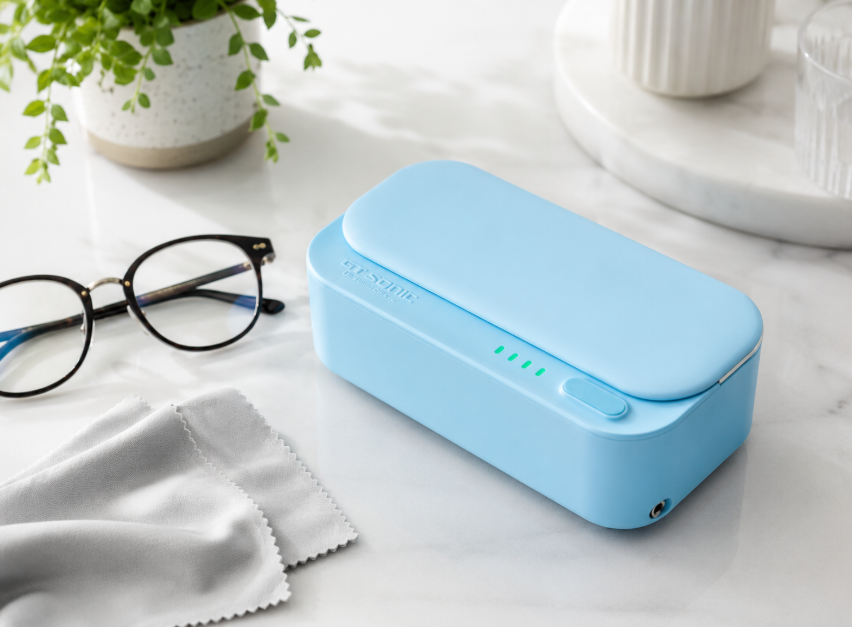
An ultrasonic glasses cleaner can remove oil, dust, sweat, and dirt from nose pads, hinges, screws, and frame gaps that are hard to reach by hand. This makes it useful for eyeglasses, sunglasses, and optical shops.
However, ultrasonic cleaning is not suitable for every pair of glasses. Some lenses, coatings, frame materials, and decorative parts may be damaged by vibration, water, heat, or cleaning solution. Before using an ultrasonic cleaner for glasses, you should check the lens coating, frame material, structure, and overall condition.
Is an Ultrasonic Cleaner Safe for Glasses?
An ultrasonic cleaner can be safe for glasses when the eyewear is in good condition and the cleaning process is gentle. Stable metal frames, clean lens coatings, tight screws, and simple frame structures usually have lower risk.
The risk increases when the glasses have damaged coatings, glued parts, porous materials, loose joints, or delicate lens treatments. Ultrasonic waves create vibration in liquid. This vibration can remove dirt, but it may also worsen existing damage.
When Ultrasonic Cleaning for Glasses Is Usually Safe
Ultrasonic cleaning is generally safer when:
1.The frame is metal and structurally stable.
2.The lenses have no peeling, cracks, or cloudy coating areas.
3.Screws, nose pads, and hinges are not loose.
4.The glasses are placed in the cleaning basket.
5.The cleaning cycle is short.
6.Only mild cleaning solution is used.
When Ultrasonic Glass Cleaning Becomes Risky
Ultrasonic cleaning becomes risky when glasses have fragile materials, weak adhesives, old lens coatings, or damaged mounting points. High temperature, strong chemicals, long cleaning cycles, or direct contact with the tank bottom can also increase the chance of damage.
Which Glasses Should Not Be Put in an Ultrasonic Cleaner?
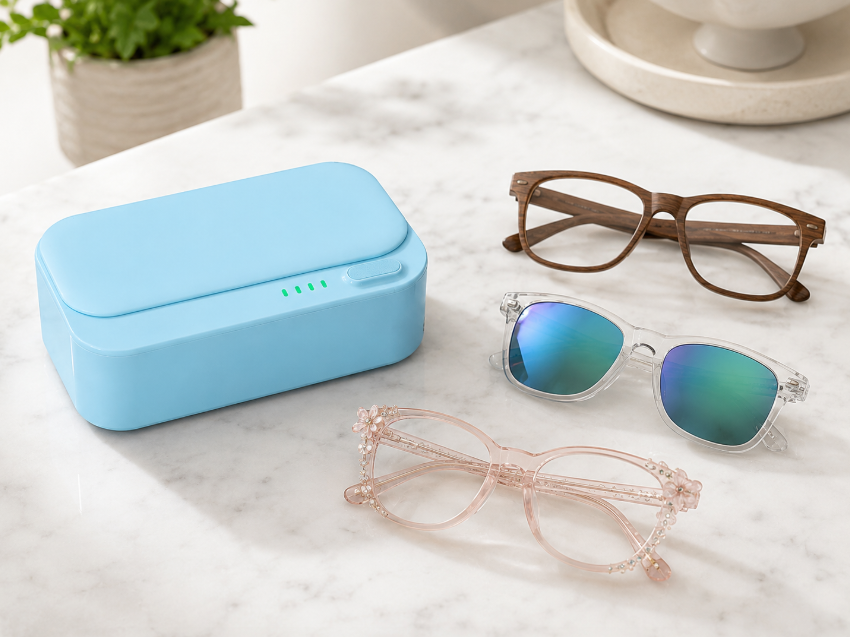
Some glasses should not be cleaned in an ultrasonic cleaner because the vibration and water exposure may damage lenses, coatings, frames, or decorations.
Glasses with Peeling or Damaged Lens Coatings
Do not use ultrasonic cleaning if the anti-reflective coating, anti-scratch coating, or other lens coating is already peeling, cloudy, cracked, or showing rainbow-like marks. Ultrasonic vibration may make the coating separate faster.
If the coating is already damaged, manual cleaning with mild soap, water, and a microfiber cloth is safer.
Polarized Sunglasses and Specialty Coated Lenses
Polarized sunglasses, mirror-coated lenses, photochromic lenses, blue-light lenses, and other specialty coated lenses should be treated carefully. Some may tolerate ultrasonic cleaning, but others may be sensitive to heat, vibration, or cleaning chemicals.
If the lens supplier does not clearly say the lenses are safe for ultrasonic cleaning, avoid frequent ultrasonic use.
Wood, Horn, Bone, Leather, or Natural Material Frames
Glasses made from wood, horn, bone, leather, or other natural materials should not be placed in an ultrasonic cleaner. These materials can absorb water, swell, warp, crack, or lose their finish.
Natural frames should usually be cleaned by hand with a slightly damp cloth and dried immediately.
Glasses with Glued Crystals, Rhinestones, or Decorative Inlays
Glasses with glued decorations are not ideal for ultrasonic cleaning. Water, vibration, and mild heat can weaken adhesive, causing crystals, rhinestones, logo plates, or inlays to loosen or fall off.
For decorative frames, hand cleaning is usually the safer choice.
Rimless or Semi-Rimless Glasses with Loose Mounting Points
Rimless and semi-rimless glasses rely on screws, drilled lens holes, nylon cords, or small mounting points. If these parts are already loose, ultrasonic vibration may make the structure weaker.
If the glasses feel unstable, repair them before cleaning.
What Cannot Be Cleaned in an Ultrasonic Cleaner Besides Glasses?
Ultrasonic cleaners are best for hard, non-porous, water-safe items. They are not suitable for all materials.
Porous, Glued, Painted, or Electronic Items
Avoid cleaning porous materials, glued objects, painted surfaces, electronics, watches that are not fully water-resistant, and items with delicate coatings. Ultrasonic vibration may loosen paint, weaken glue, or allow water to enter sensitive parts.
Why Eyeglasses Are More Sensitive Than They Look
Eyeglasses may look simple, but they often include multiple materials: lenses, coatings, frame plating, nose pads, screws, hinges, adhesives, and decorative finishes. The whole structure must be considered before using ultrasonic cleaning.
A pair of glasses may be safe because of its metal frame but unsafe because of its damaged lens coating.
Can You Put Prescription Glasses in an Ultrasonic Cleaner?
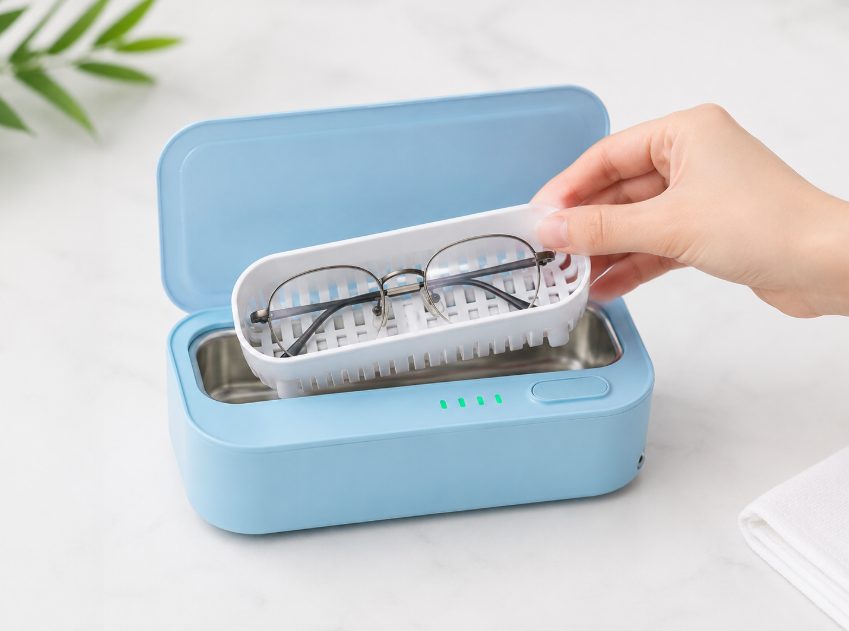
Prescription glasses can be placed in an ultrasonic cleaner only if the lenses, coatings, and frame are suitable. The safest approach is to inspect them first.
Check Lens Coatings Before Cleaning
Before ultrasonic cleaning, check whether the lenses have anti-reflective coating, blue-light coating, photochromic treatment, mirror coating, or other special layers. If the coating is old, scratched, cloudy, or peeling, do not use ultrasonic cleaning.
Check Frame Material and Construction
Metal frames are usually more stable than wood, horn, leather, or glued decorative frames. Plastic and acetate frames may be cleaned carefully, but they should not be exposed to high heat or strong chemicals.
Also check whether the screws, hinges, nose pads, and lens mounting points are secure.
Ask Your Optician If the Glasses Are Expensive or Custom-Made
For expensive eyewear, custom lenses, luxury frames, or specialty coatings, ask your optician before using an ultrasonic cleaner. Professional optical cleaning is safer when you are not sure about the material or coating.
How Long Should You Put Glasses in an Ultrasonic Cleaner?
Glasses should be cleaned with short cycles. Long cleaning times are unnecessary and may increase the risk of coating or frame damage.
Short Cycles Are Safer for Eyeglasses
For suitable glasses, a short cycle of about 30–60 seconds is usually enough for daily dirt, oil, and dust. For heavier buildup around nose pads or hinges, you can repeat a short cycle instead of running one long cycle.
For most eyeglasses, 1–2 minutes should be the upper limit unless the manufacturer gives different instructions.
Avoid High Heat and Long Cleaning Times
Do not use boiling water or very hot water. Heat may soften adhesives, affect plastic frames, or damage lens coatings. Warm water with a mild cleaning solution is enough for most glasses.
After cleaning, rinse the glasses with clean water and dry them with a microfiber cloth.
How to Use an Ultrasonic Glasses Cleaner Without Damaging Lenses
A safe cleaning process is more important than using a strong machine. The goal is to remove dirt without stressing the lenses or frame.
Use a Basket or Tray, Not the Tank Bottom
Always place glasses in the basket or tray. Do not let lenses touch the vibrating metal tank bottom. Direct contact may create micro-scratches or stress marks on the lens surface.
Use Mild Cleaning Solution Only
Use warm water with a small amount of mild dish soap or a dedicated ultrasonic cleaning solution for glasses. Avoid alcohol, acetone, ammonia, bleach, strong acids, strong alkalis, jewelry cleaner, and household glass cleaner.
These chemicals may strip coatings, discolor frames, or weaken adhesives.
Rinse and Dry with a Microfiber Cloth
After cleaning, rinse the glasses with clean water to remove remaining solution. Dry them with a clean microfiber cloth. Do not use paper towels, rough cloth, or clothing, because dust particles may scratch the lenses.
Ultrasonic Cleaner for Glasses vs Manual Cleaning: Which Is Safer?
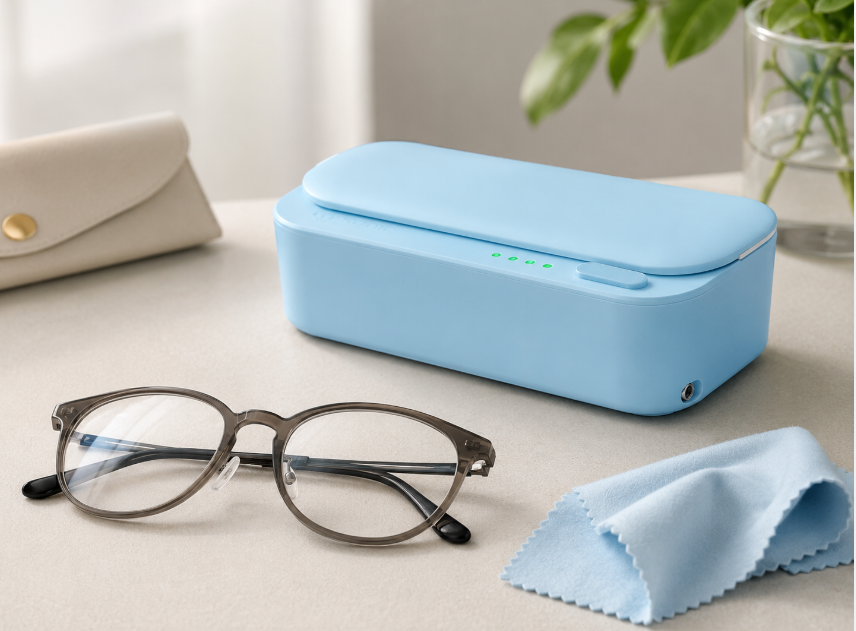
Both methods can be useful, but they are not suitable for the same situation.
|
Cleaning Method
|
Best For
|
Risk Level
|
|
Manual cleaning
|
Coated lenses, delicate frames, expensive glasses
|
Low
|
|
Ultrasonic cleaning
|
Metal frames, nose pads, hinges, light oil buildup
|
Medium
|
|
Professional optical cleaning
|
Uncertain materials, luxury frames, specialty lenses
|
Lowest
|
When Manual Cleaning Is the Better Choice
Manual cleaning is better for specialty lenses, high-end sunglasses, natural frame materials, glued decorations, rimless glasses with loose parts, or lenses with coating damage.
When Ultrasonic Cleaning Is More Useful
Ultrasonic cleaning is useful for removing oil and dirt from nose pads, hinges, screws, and frame gaps. It is also practical for optical shops, families with multiple pairs of glasses, and users who need frequent cleaning of metal frames.
Choosing the Best Ultrasonic Cleaner for Glasses
A good ultrasonic cleaner for glasses should be gentle, easy to control, and suitable for small precision items.
Recommended Features for Eyeglass Cleaning
Look for:
1.Short timer settings
2.Cleaning basket or tray
3.Mild ultrasonic power
4.Small desktop tank
5.Stable 40kHz or higher frequency
6.Temperature control or room-temperature cleaning option
7.Easy drainage and cleaning
Who Needs an Ultrasonic Glasses Cleaner Machine?
An ultrasonic glasses cleaner machine is useful for optical shops, eyewear stores, optometry centers, households, beauty salons, and users who often clean nose pads, hinges, metal frames, sunglasses, or small personal items.
What to Avoid When Choosing a Cleaner
Avoid machines that are too powerful for delicate eyewear, have no basket, offer poor timer control, or are mainly designed for heavy industrial parts. Also avoid pairing the machine with strong jewelry or metal cleaning chemicals when cleaning glasses.
FAQ About Ultrasonic Cleaning for Glasses
1. Is it safe to put prescription glasses in an ultrasonic cleaner?
It depends on the lens coating, frame material, and overall condition. Stable metal-frame prescription glasses with good coatings are usually safer. Glasses with damaged coatings, loose parts, natural frames, or glued decorations should not be cleaned ultrasonically.
2.How long should you put glasses in an ultrasonic cleaner?
Use a short cycle. For suitable glasses, 30–60 seconds is usually enough. Avoid long cycles, repeated high-frequency cleaning, or hot water.
3.Can dirty glasses cause blepharitis?
Dirty glasses are not the only cause of blepharitis, but oil, skin debris, and bacteria on nose pads, frames, and lenses may affect eye-area hygiene. Regular cleaning helps keep eyewear cleaner and more comfortable.
4. Can ultrasonic cleaners damage anti-reflective coatings?
Yes, especially if the coating is already old, scratched, peeling, or exposed to strong chemicals, high heat, or long cleaning cycles. If the coating looks damaged, avoid ultrasonic cleaning.
5.What cleaning solution should I use for glasses in an ultrasonic cleaner?
Use warm water, a small amount of mild dish soap, or a dedicated ultrasonic cleaning solution for glasses. Avoid alcohol, acetone, ammonia, bleach, strong detergents, and jewelry cleaning solution.
H2: Conclusion
Ultrasonic cleaning can be convenient, but it is not suitable for every pair of glasses. Do not clean glasses with peeling coatings, specialty lenses, natural frames, glued decorations, loose mounting points, or damaged structures in an ultrasonic cleaner.
For stable metal-frame glasses in good condition, short-cycle ultrasonic cleaning with a mild solution and basket can be effective. When in doubt, manual cleaning or professional optical cleaning is safer. GT SONIC ultrasonic glasses cleaner can help clean suitable eyeglasses, nose pads, hinges, and hard-to-reach frame areas when used with the correct solution, temperature, and cleaning time.


