Automotive Ultrasonic Cleaner: Applications and Equipment Selection Guide
Author: GT SONIC
Date: 2026-10-21
Read: 7 min
Oil trapped in engine components, metal particles left inside machined holes, and carbon deposits on pistons are common challenges in automotive maintenance and manufacturing. While brushes and spray cleaning can remove contaminants from exposed surfaces, narrow passages and complex internal features are often harder to reach.
An automotive ultrasonic cleaner uses cavitation in a cleaning solution to loosen residues from accessible surfaces, including grooves and recessed areas. This makes it useful for cleaning disassembled mechanical components and preparing newly machined parts for further processing.
Choosing suitable equipment requires an understanding of the parts being cleaned, the contaminants involved, and how the cleaning process fits into daily operations.
What Automotive Parts Can Be Cleaned with an Ultrasonic Cleaner?
Automotive components vary in material, size, and surface geometry. Some have narrow passages where oil and debris accumulate, while others require careful cleaning to protect precision-machined surfaces.
The following components are commonly considered for ultrasonic cleaning:
| Automotive Components | Common Contaminants | Cleaning Challenges |
|---|
| Engine parts and pistons | Oil, grease, carbon deposits | Grooves and recessed surfaces |
| Cylinder heads | Oil and machining residues | Internal passages and cavities |
| Transmission gears | Lubricants and metal particles | Gear teeth and narrow gaps |
| Carburetor components | Fuel residues and varnish | Small openings and passages |
| Bearings and machined parts | Cutting fluids and fine particles | Precision surfaces and blind holes |
During ultrasonic cleaning, cavitation bubbles form and collapse in the liquid, helping separate contaminants from surfaces the solution can reach. This is particularly useful for grooves, threads, and other features that are difficult to clean consistently by hand.
Repair workshops may use ultrasonic cleaning before inspecting or rebuilding mechanical components. In automotive manufacturing, the process helps remove machining residues before assembly or further surface treatment.
However, cleaning effectiveness still depends on the component. Sensitive coatings, electronic assemblies, and sealed cavities may be unsuitable without additional precautions. Internal passages must also allow cleaning liquid to enter and circulate.
What Contaminants Can Automotive Ultrasonic Cleaning Remove?
Different contaminants respond differently to ultrasonic cleaning. Oil and grease may be removed relatively easily with a suitable detergent, while hardened deposits or particles trapped inside complex features often require more careful process control.
Oil, Grease, and Machining Residues
Automotive components frequently retain lubricants, cutting fluids, and greasy residues from operation or machining. These substances can spread across metal surfaces and accumulate in recessed areas.
Combining ultrasonic cleaning with an appropriate degreasing solution helps loosen these contaminants. Heating can further support the process by reducing the viscosity of certain oils and improving detergent action.
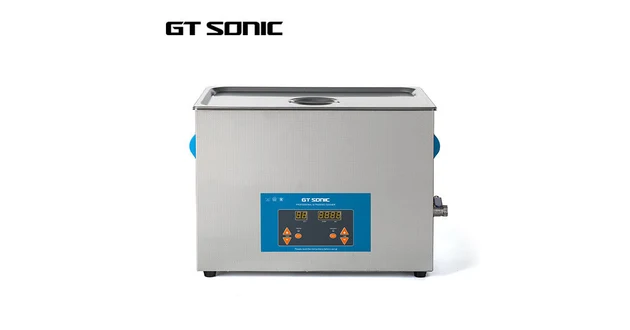
For smaller batches of compatible mechanical components, a heated benchtop cleaner such as the GT SONIC T27 can provide a practical cleaning setup without the space requirements of a larger industrial system.
Carbon Deposits and Metal Particles
Carbon buildup on pistons and engine-related components often adheres more strongly than ordinary grease. Ultrasonic cleaning can assist with removing certain deposits, although heavily carbonized surfaces may require chemical pretreatment or additional cleaning steps.
Fine metal particles create a different challenge. After machining, chips may remain inside threaded holes, grooves, and narrow cavities even when the exterior appears clean.
Ultrasonic cavitation helps release trapped debris, but appropriate part positioning and thorough rinsing are necessary to prevent loosened particles from remaining on the component. For precision automotive parts, these post-cleaning steps can be as important as the ultrasonic cycle itself.
How to Choose the Right Automotive Ultrasonic Cleaner
The most suitable ultrasonic cleaner for automotive parts depends on the physical characteristics of the components and the demands of the cleaning process. Tank capacity, ultrasonic frequency, and daily workload all deserve consideration, but none should be evaluated independently.
Match Tank Capacity to the Parts Being Cleaned
A tank should comfortably accommodate the largest component while leaving enough clearance for the cleaning basket and liquid circulation.
Advertised capacity alone can be misleading. A tank with sufficient volume may still be too narrow for a transmission housing or too shallow for components that must remain fully submerged.
Part arrangement also influences cleaning performance. Overcrowded baskets can restrict liquid access and cause components to contact one another during operation. For larger or irregularly shaped workpieces, internal tank dimensions and usable basket space are often more meaningful than total capacity.
Choose Ultrasonic Frequency and Heating Based on Cleaning Needs
Ultrasonic frequency influences cavitation characteristics and cleaning intensity.
Lower frequencies, such as 28 kHz, generally produce more aggressive cavitation and may be suitable for robust metal components with stubborn contamination. Around 40 kHz, the cleaning action is typically more balanced and is widely used for general metal parts cleaning. For a closer look at how these two settings differ in practice, see this comparison of 28 kHz and 40 kHz ultrasonic cleaners.
The appropriate frequency also depends on material and surface condition. Precision-machined components or parts with delicate finishes may need less aggressive cleaning conditions than heavily contaminated steel parts.
Heating is useful when removing certain oils and greases, but the temperature should remain compatible with the cleaning solution and workpiece. Similarly, higher ultrasonic power does not always improve results. Effective cleaning comes from balancing frequency, power, temperature, and exposure time.
Consider Daily Workload and Cleaning Process
Cleaning a few disassembled parts during routine maintenance places different demands on equipment than processing repeated batches throughout a production shift.
A benchtop ultrasonic cleaner may be sufficient for occasional cleaning, particularly when the parts are relatively small. Larger or more frequent workloads may justify industrial equipment with greater working capacity and more consistent operating controls.
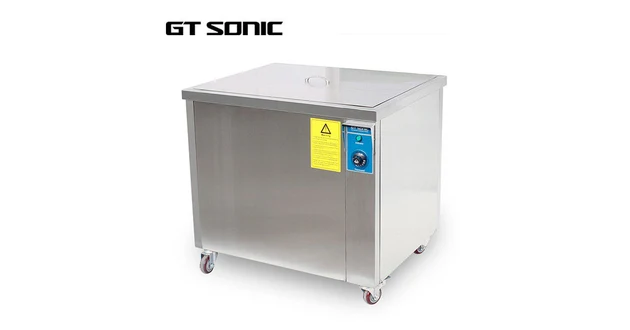
The GT SONIC SD industrial series is one option for applications requiring larger cleaning capacity and controlled operating cycles. Such equipment becomes relevant when ultrasonic cleaning forms a regular part of automotive component production rather than an occasional maintenance task.
Production requirements may also extend beyond washing. Where residual detergent, fine particles, or moisture cannot remain on finished components, separate rinsing and drying stages should be included in the overall process.
What Should You Consider Before Buying an Automotive Ultrasonic Cleaner?
Equipment selection should begin with the actual condition of the parts rather than a comparison of specifications alone.
Material compatibility deserves particular attention. Steel components, aluminum alloys, and coated surfaces may react differently to ultrasonic intensity, cleaning chemicals, and temperature. Testing representative workpieces helps identify suitable conditions before establishing a repeatable cleaning process.
The required cleaning result is equally important. Removing visible grease from a repair component is different from controlling residual particles on precision parts intended for assembly. More demanding cleanliness requirements may call for additional rinsing, filtration, or verification.
Operating volume also affects the decision. As batches become larger and cleaning cycles more frequent, basket loading, handling efficiency, and process consistency have a greater influence on productivity.
Before discussing equipment with a supplier, prepare the component dimensions, materials, contamination types, expected batch quantities, and any cleanliness requirements. This information provides a more reliable basis for selecting an automotive parts cleaning machine.
Frequently Asked Questions About Automotive Ultrasonic Cleaners
Can an ultrasonic cleaner remove carbon deposits from engine parts?
Ultrasonic cleaning can help loosen certain carbon deposits when used with suitable cleaning chemistry. Heavily bonded deposits may require pretreatment or additional cleaning methods.
What ultrasonic frequency is best for automotive parts?
Both 28 kHz and 40 kHz are common choices. Lower frequencies generally provide stronger cavitation, while 40 kHz offers a balanced cleaning action suitable for many general metal parts.
Can aluminum automotive parts be cleaned ultrasonically?
Many aluminum components can be cleaned ultrasonically, provided the solution, temperature, intensity, and exposure time are compatible with the alloy and surface finish.
Do automotive ultrasonic cleaners need heating?
Heating can improve the removal of certain oily residues, but it is not necessary for every application. The appropriate temperature depends on the detergent and workpiece requirements.
What size ultrasonic cleaner do I need for automotive parts?
Consider the dimensions of the largest component, basket space, and expected batch size. Internal tank dimensions are often more useful than advertised tank capacity alone.
Finding the Right Automotive Ultrasonic Cleaner for Your Application
Automotive ultrasonic cleaning is most effective when the equipment and cleaning process are matched to the components being handled. The right combination of tank space, ultrasonic frequency, cleaning chemistry, and operating conditions helps achieve consistent results while protecting the workpieces.
Whether cleaning parts during maintenance or preparing components for production, evaluating actual workpiece requirements is the most reliable starting point.
For assistance with equipment selection, share your automotive component specifications and cleaning requirements with GT SONIC to identify an appropriate ultrasonic cleaning solution.


