Can a Laboratory Ultrasonic Cleaner Sterilize?
Author: Zoey
Date: 2026-05-19
Read: 5min
A lab ultrasonic cleaner cannot sterilize instruments by itself. It is designed to remove debris, residues, particles, and organic contamination from surfaces, but it should not be used as a replacement for validated disinfection or sterilization methods.
This question is common because ultrasonic cleaning can make laboratory instruments look visibly clean. However, visible cleanliness is not the same as sterility. In a lab workflow, an ultrasonic cleaning machine should be treated as a pre-cleaning device used before disinfection, autoclaving, or another approved sterilization process when sterility is required.
For research labs, clinical labs, QA/QC labs, and other controlled environments, the safest answer is clear: ultrasonic cleaning helps prepare items for the next step, but it is not the final microbial control step.
Quick Answer: Does Ultrasonic Cleaning Sterilize?
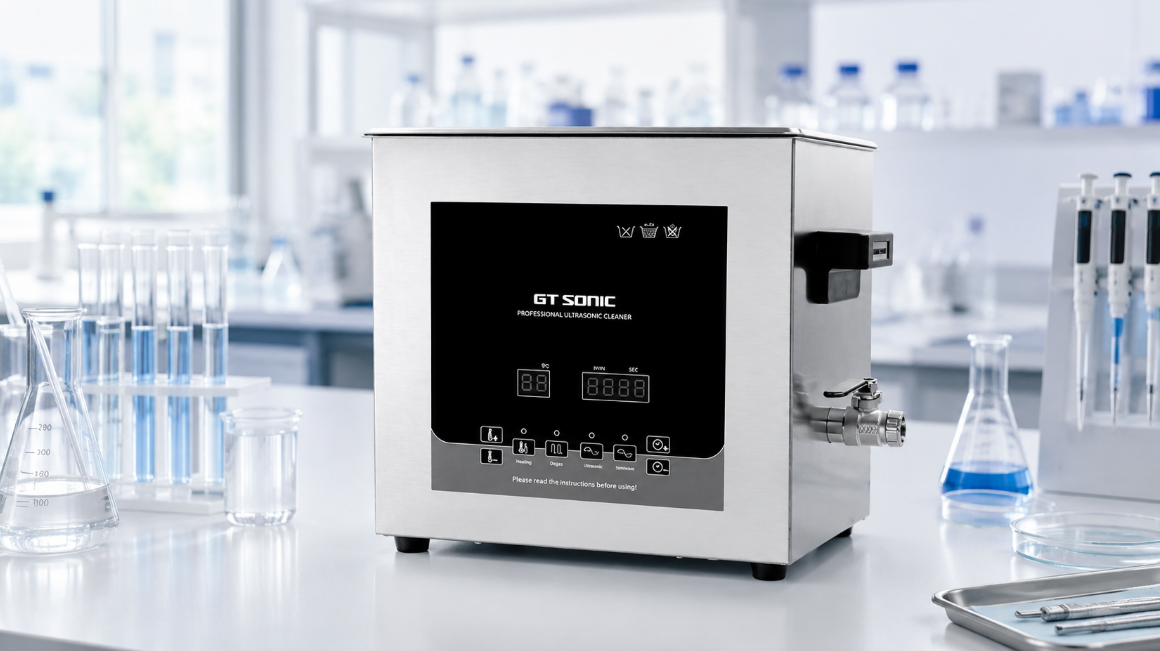
Ultrasonic cleaning does not sterilize because it physically removes contamination but does not guarantee complete microbial elimination. A standard ultrasonic cleaner machine uses cavitation in liquid to loosen debris from grooves, joints, surfaces, and hard-to-reach areas.
What Can a Lab Ultrasonic Cleaner Do?
A lab ultrasonic cleaner can remove visible soil, dried residue, oils, salts, particles, and some organic contamination. This makes it useful for pre-cleaning lab tools, small metal parts, glass accessories, and selected laboratory instruments.
What Can’t an Ultrasonic Cleaning Machine Guarantee?
An ultrasonic cleaning machine cannot guarantee sterility unless it is part of a validated sterilization process. Even if an item looks clean after ultrasonic cleaning, microorganisms may still remain on the surface or in protected areas.
Why Is This Important in Lab Workflows?
This distinction is important because treating a cleaned item as sterile may create contamination risk. A professional ultrasonic cleaner can improve cleaning consistency, but sterilization still requires a validated method when the application demands sterility.
What Does a Laboratory Ultrasonic Bath Actually Do?
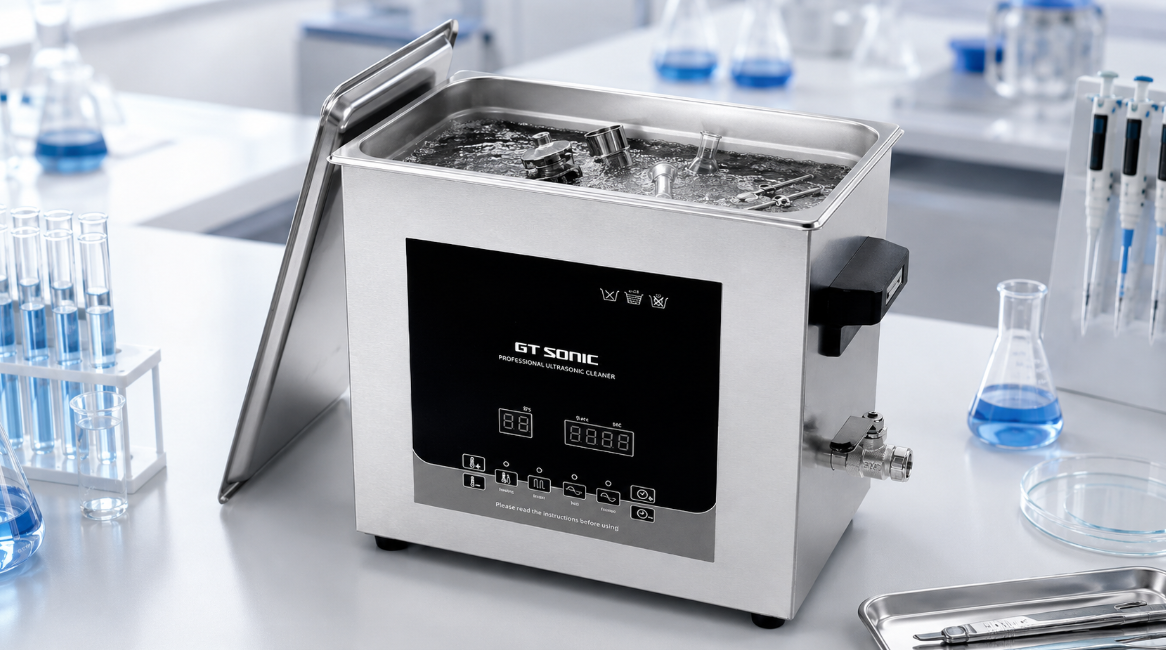
A laboratory ultrasonic bath removes contamination by using high-frequency sound waves to create cavitation bubbles in a cleaning liquid. When these microscopic bubbles collapse, they help dislodge residues from surfaces that may be difficult to clean manually.
How Does Ultrasonic Cavitation Remove Residue?
Ultrasonic cavitation removes residue by creating repeated microscopic cleaning action across immersed surfaces. This is why an ultrasonic bath cleaner is useful for items with grooves, threads, hinges, textured areas, or small openings.
Why Does Cleaning Solution Matter?
Cleaning solution matters because different residues require different chemistry. Water may remove light particles, but oils, proteins, dried residues, and chemical films usually need a compatible ultrasonic cleaner solution.
Why Are Time and Temperature Important?
Time and temperature are important because they affect cleaning consistency. A digital ultrasonic cleaner helps labs repeat the same cleaning conditions, which is useful for SOP-based cleaning and routine pre-cleaning.
Cleaning vs Disinfection vs Sterilization: What Is the Difference?
Cleaning, disinfection, and sterilization are different levels of contamination control. A laboratory ultrasonic bath mainly supports cleaning, while disinfection and sterilization require separate validated processes.
|
Process
|
Main Purpose
|
Typical Result
|
Role of Ultrasonic Cleaning
|
|
Cleaning
|
Removes debris, residues, soil, and organic matter
|
Item becomes visibly clean
|
Main function of ultrasonic cleaning
|
|
Disinfection
|
Reduces many microorganisms
|
Item is disinfected but not necessarily sterile
|
May follow ultrasonic cleaning
|
|
Sterilization
|
Eliminates viable microorganisms to a defined sterility level
|
Item is sterile if properly processed
|
Requires a validated sterilization method
|
Is Ultrasonic Cleaning the Same as Sterilization?
Ultrasonic cleaning is not the same as sterilization because cleaning removes contamination, while sterilization is a validated microbial elimination process. This is the key difference behind questions such as “does ultrasonic cleaning sterilize?” and “can an ultrasonic cleaner sterilize lab instruments?”
Does an Ultrasonic Cleaner Disinfect?
A standard ultrasonic bath cleaner does not automatically disinfect. Ultrasonic cleaner disinfection depends on the chemical agent, concentration, contact time, temperature, and whether the process is validated for that purpose.
Can an Ultrasonic Cleaner Kill Bacteria?
An ultrasonic cleaner may reduce surface contamination by removing debris, but it should not be relied on to kill bacteria to a validated disinfection or sterilization level. If microbial control is required, the lab should follow its approved SOP.
Why Is Ultrasonic Cleaning Used Before Sterilization?
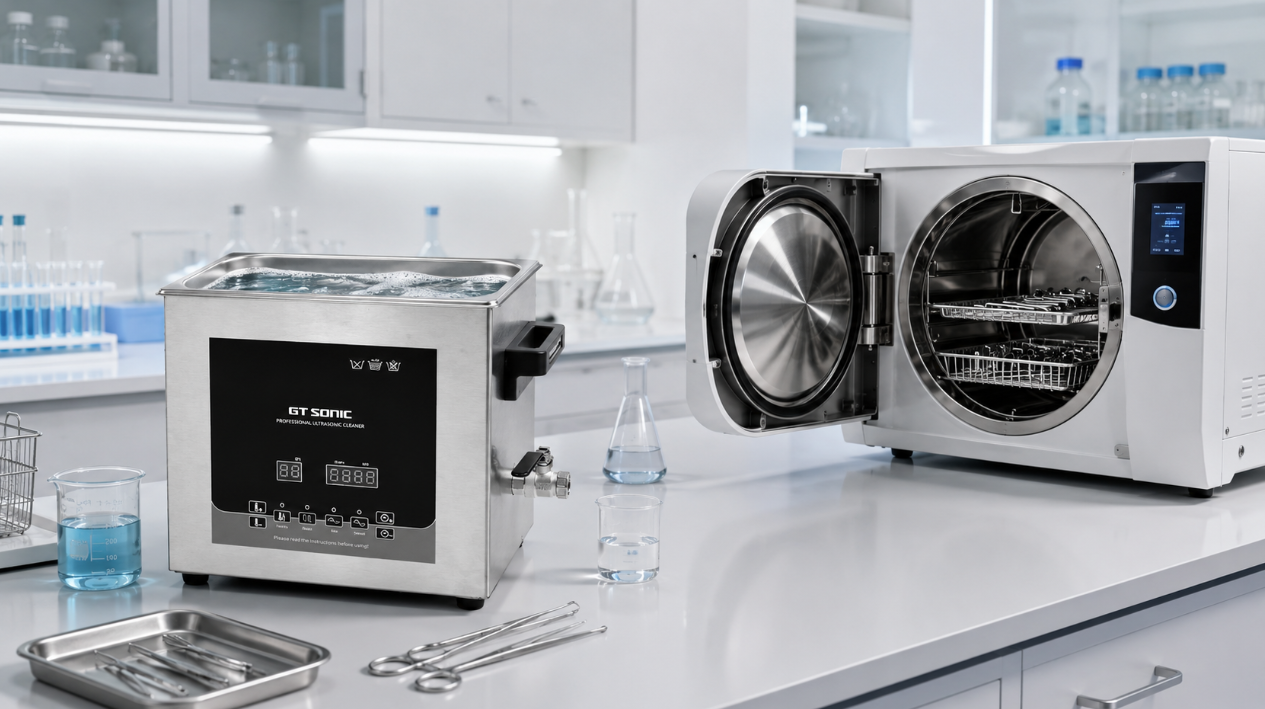
Ultrasonic cleaning is used before sterilization because debris and organic matter can interfere with later microbial control steps. If residues remain on an instrument, disinfectants or sterilants may not fully contact the surface.
Why Is Cleaning Before Sterilization Necessary?
Cleaning before sterilization is necessary because soil, dried residue, salts, and organic material can act as barriers. A lab equipment ultrasonic cleaner helps remove these contaminants before the item moves to disinfection or sterilization.
How Does a Benchtop Ultrasonic Cleaner Support Pre-Cleaning?
A benchtop ultrasonic cleaner supports pre-cleaning by reaching areas that brushes may miss. It is especially useful for small laboratory instruments with hinges, threads, textured surfaces, or hard-to-reach shapes.
Why Is Manual Cleaning Alone Sometimes Not Enough?
Manual cleaning alone may be less consistent because results depend on operator technique, brush access, and cleaning time. An ultrasonic cleaning bath helps standardize the cleaning step when used with correct loading, solution, temperature, and cycle time.
Can an Ultrasonic Cleaner Remove Biological Contamination?
An ultrasonic cleaner can help remove biological contamination from surfaces, but it should not be treated as the final sterilization step. Biological residues may be loosened and removed during ultrasonic cleaning, especially when the correct cleaning solution is used.
What Happens to Organic Residue During Ultrasonic Cleaning?
Organic residue can be lifted from surfaces through cavitation and cleaning chemistry. This is useful for pre-cleaning lab instruments, but the item may still require disinfection or sterilization depending on how it will be reused.
Why Is Visual Cleanliness Not Enough?
Visual cleanliness is not enough because microorganisms may remain even when no visible debris is present. An item can look clean after ultrasonic processing but still fail to meet disinfection or sterility requirements.
When Should Extra Microbial Control Be Used?
Extra microbial control should be used whenever the item must be disinfected or sterile before reuse. In these cases, ultrasonic cleaning should be followed by a validated process, such as autoclaving for compatible items.
Ultrasonic Cleaner vs Autoclave: What Is the Difference?
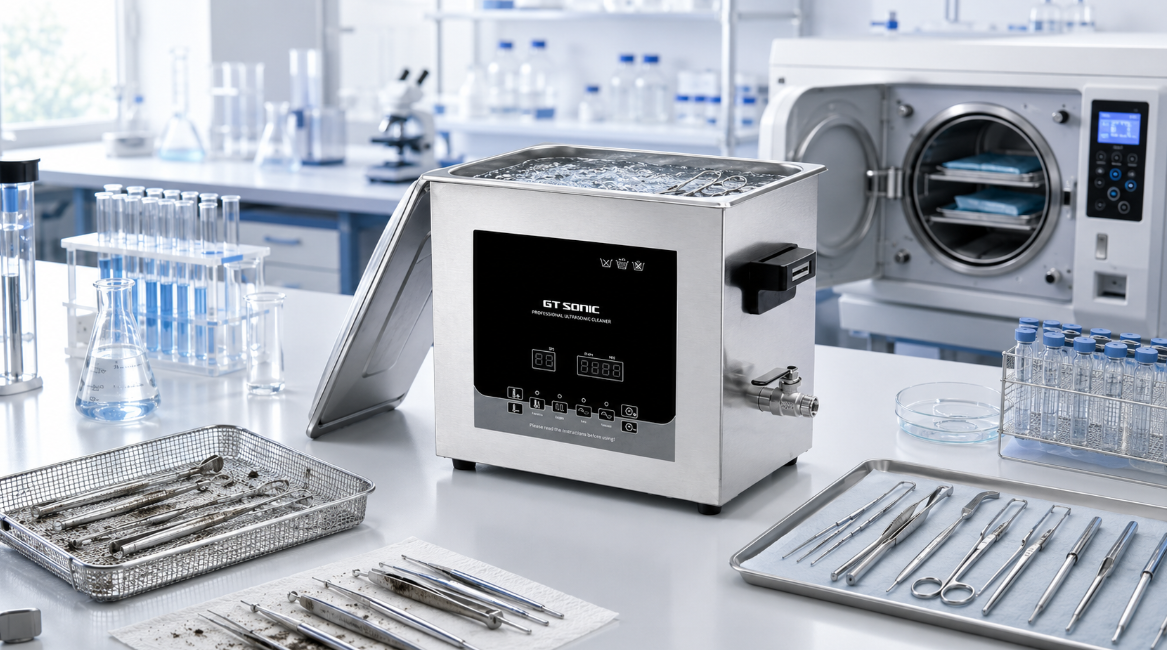
An ultrasonic cleaner and an autoclave have different roles in the lab. The ultrasonic cleaner removes contamination, while the autoclave sterilizes compatible items using steam under pressure.
|
Equipment
|
Main Function
|
Best Used For
|
Limitation
|
|
Lab ultrasonic cleaner
|
Cleaning and residue removal
|
Pre-cleaning lab tools and small parts
|
Does not sterilize by itself
|
|
Autoclave
|
Steam sterilization
|
Sterilizing compatible instruments and materials
|
Does not replace cleaning
|
|
Washer-disinfector
|
Cleaning and disinfection
|
Automated processing workflows
|
Not the same as sterilization unless validated
|
|
Manual cleaning
|
Initial debris removal
|
Fragile or special items
|
Less consistent and more labor-intensive
|
When Should You Use a Lab Ultrasonic Cleaner?
You should use a lab ultrasonic cleaner when items need residue removal before the next processing step. It is useful for cleaning grooves, small parts, textured surfaces, and laboratory instruments that can be safely immersed.
When Should You Use an Autoclave?
You should use an autoclave when compatible items require steam sterilization. Autoclaving is not a cleaning method, so instruments should be cleaned first before sterilization.
Can an Ultrasonic Cleaner Replace an Autoclave?
An ultrasonic cleaner cannot replace an autoclave because cleaning and sterilization solve different problems. The better comparison is not “ultrasonic cleaner vs autoclave,” but how both devices can work together in the same lab workflow.
Recommended Workflow: How Should Ultrasonic Cleaning Be Used Before Disinfection or Sterilization?
The recommended workflow is to remove debris first, clean with an ultrasonic bath, rinse and dry the item, and then disinfect or sterilize it if required. This sequence helps ensure that the final microbial control step is performed on a clean surface.
Suggested Ultrasonic Bath Lab Workflow
|
Step
|
Action
|
Purpose
|
|
1
|
Pre-rinse or remove gross debris
|
Prevent heavy contamination from entering the bath
|
|
2
|
Load items into a basket or holder
|
Protect items and improve liquid circulation
|
|
3
|
Add compatible cleaning solution
|
Improve residue removal
|
|
4
|
Run the ultrasonic cleaning cycle
|
Loosen debris from hard-to-reach areas
|
|
5
|
Rinse thoroughly
|
Remove loosened residue and cleaner solution
|
|
6
|
Dry and inspect
|
Confirm visible cleanliness and item condition
|
|
7
|
Disinfect or sterilize if needed
|
Complete microbial control according to SOP
|
|
8
|
Store properly
|
Prevent recontamination
|
What Should Happen Before Ultrasonic Cleaning?
Gross debris should be removed before ultrasonic cleaning. This prevents the cleaning bath from becoming contaminated too quickly and helps the ultrasonic cleaning machine work more effectively.
What Should Happen After Ultrasonic Cleaning?
Rinsing, drying, and inspection should happen after ultrasonic cleaning. These steps remove remaining solution residue and help confirm that the item is ready for disinfection, sterilization, or storage.
Where Can GT SONIC Fit Into This Workflow?
A GT Sonic ultrasonic cleaner for laboratory instruments can support the pre-cleaning stage when the item, solution, cycle time, and temperature are suitable. It should still be used as part of a complete SOP rather than as a standalone sterilization device.
Common Misunderstandings About Ultrasonic Cleaner Disinfection
The most common misunderstanding is that ultrasonic cleaning automatically means disinfection or sterilization. Ultrasonic action improves cleaning, but a standard ultrasonic bath cleaner should not be described as a sterilizer.
Does “Visibly Clean” Mean “Sterile”?
Visibly clean does not mean sterile. Visual inspection is useful for checking debris removal, but it cannot confirm that microorganisms have been eliminated.
Does Hot Water in a Heated Ultrasonic Cleaner Sterilize Instruments?
Hot water in a heated ultrasonic cleaner does not automatically sterilize instruments. Heat may improve cleaning performance, but sterilization requires validated time, temperature, pressure, or chemical conditions.
Does Adding Disinfectant Turn an Ultrasonic Bath Into a Sterilizer?
Adding disinfectant does not automatically turn an ultrasonic bath into a sterilizer. The process must consider chemical compatibility, concentration, contact time, safety, and validation requirements.
Can Ultrasonic Cleaner Disinfection Replace Sterilization?
Ultrasonic cleaner disinfection should not be treated as sterilization. If sterility is required, the final step must be an approved sterilization method, not only ultrasonic cleaning.
How to Choose a Professional Ultrasonic Cleaner for Laboratory Pre-Cleaning?
A professional ultrasonic cleaner should be selected based on tank size, frequency, timer control, temperature control, basket compatibility, and the type of laboratory instruments being cleaned. The goal is to make pre-cleaning consistent, not to claim sterilization.
What Tank Size Should a Lab Equipment Ultrasonic Cleaner Have?
The tank size should fit the largest item while leaving enough space for liquid circulation. Overloading a laboratory ultrasonic bath reduces cleaning efficiency and may leave residues behind.
Why Choose a Stainless Steel Ultrasonic Cleaner?
A stainless steel ultrasonic cleaner is commonly used in lab environments because the tank is durable, easy to clean, and suitable for many routine cleaning workflows. The exact model should still be selected based on workload, item size, and cleaning solution compatibility.
Why Are Timer and Temperature Controls Useful?
Timer and temperature controls are useful because they help labs repeat the same cleaning conditions. A digital ultrasonic cleaner or heated ultrasonic cleaner can support more consistent pre-cleaning before disinfection or sterilization.
When Is a GT SONIC Professional Ultrasonic Cleaner Suitable?
A GT SONIC professional ultrasonic cleaner is suitable when a lab needs repeatable pre-cleaning for instruments, small parts, and laboratory tools. The correct model should be selected based on tank volume, workload, item size, and cleaning requirements.
FAQ About Laboratory Ultrasonic Cleaner Sterilization
1. Can a Laboratory Ultrasonic Cleaner Sterilize?
No, a laboratory ultrasonic cleaner cannot sterilize by itself. It is used to remove debris and residues before disinfection or sterilization.
2.Does Ultrasonic Cleaning Sterilize?
No, ultrasonic cleaning does not sterilize. It improves cleaning but does not guarantee complete microbial elimination.
3.Does an Ultrasonic Cleaner Disinfect?
No, a standard ultrasonic cleaner does not automatically disinfect. Disinfection depends on the disinfectant, contact time, temperature, concentration, and validated procedure.
4.Can a Heated Ultrasonic Cleaner Sterilize Instruments?
No, a heated ultrasonic cleaner does not sterilize instruments just because it uses warm liquid. Heat may improve cleaning, but sterilization requires validated processing conditions.
5.Is an Ultrasonic Bath Cleaner the Same as a Sterilizer?
No, an ultrasonic bath cleaner is not the same as a sterilizer. It is mainly used for cleaning and pre-cleaning, not for validated sterilization.
6.Can an Ultrasonic Cleaner Sterilize Lab Instruments?
No, an ultrasonic cleaner cannot sterilize lab instruments on its own. Lab instruments that require sterility should be cleaned first and then processed using an approved sterilization method.
7.Can a GT Ultrasonic Cleaner Be Used for Laboratory Pre-Cleaning?
Yes, a GT ultrasonic cleaner can be used for laboratory pre-cleaning when the item, cleaning solution, time, temperature, and SOP are appropriate.
Conclusion
A lab ultrasonic cleaner is a cleaning device, not a sterilizer. It helps remove debris, residues, and surface contamination from laboratory instruments before disinfection or sterilization.
For laboratories that need a more consistent pre-cleaning workflow, an ultrasonic cleaner machine can reduce manual effort and improve cleaning repeatability. When sterility is required, ultrasonic cleaning should be followed by a validated disinfection or sterilization process according to the lab’s SOP.


