You fill the tank with fresh water, add a suitable cleaning solution, place the glasses in the basket and start the cycle—yet the hinges remain greasy and one lens edge cleans better than the other. Before blaming the machine, consider the air already dissolved in the liquid. Freshly mixed solution can hold enough gas to weaken the cavitation that performs the cleaning.
| Situation | Likely liquid condition | Practical response |
|---|
| Freshly filled tank | High dissolved-air load | Run the machine empty before loading glasses |
| Solution left overnight | Some gas may have returned | Briefly degas again |
| Weak, uneven cleaning | Gas, loading or solution may be involved | Correct one variable at a time |
| Stable repeatable results | Process is controlled | Document fill, degas and cycle times |
What Does Degassing an Ultrasonic Cleaner for Glasses Mean?
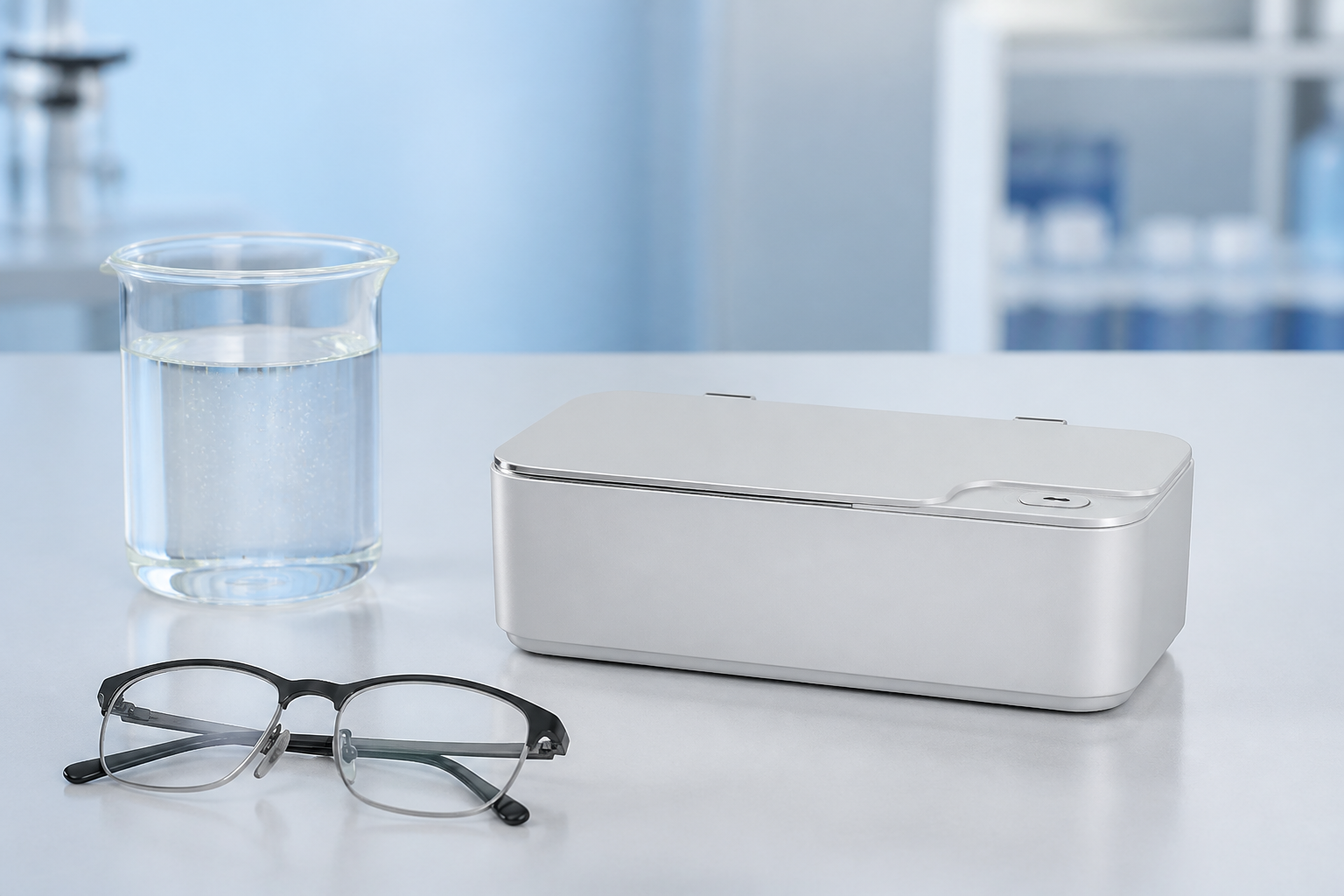
Degassing means removing dissolved gases, mainly air, from the cleaning liquid before the eyewear is introduced. It is not the same as draining the tank, filtering visible debris or sterilizing the solution. The liquid can look perfectly clear and still contain dissolved gas.
An ultrasonic cleaner for glasses relies on acoustic cavitation. The U.S. Food and Drug Administration describes this as the rapid formation and collapse of many small bubbles, producing a scrubbing action on an immersed surface. Dissolved gas changes how readily those useful cavitation events develop. A NIST-hosted ultrasonic-cleaner manual notes that fresh solutions contain air that reduces effective ultrasonic action; it also warns that a bath left unused can reabsorb gas.
During a degas run, larger bubbles often rise to the surface. That visible activity is only a clue, not a calibrated test of cleaning power. The goal is a more stable liquid condition before the repeatable cleaning cycle begins.
Why Fresh Water Can Weaken an Ultrasonic Eyeglass Cleaner
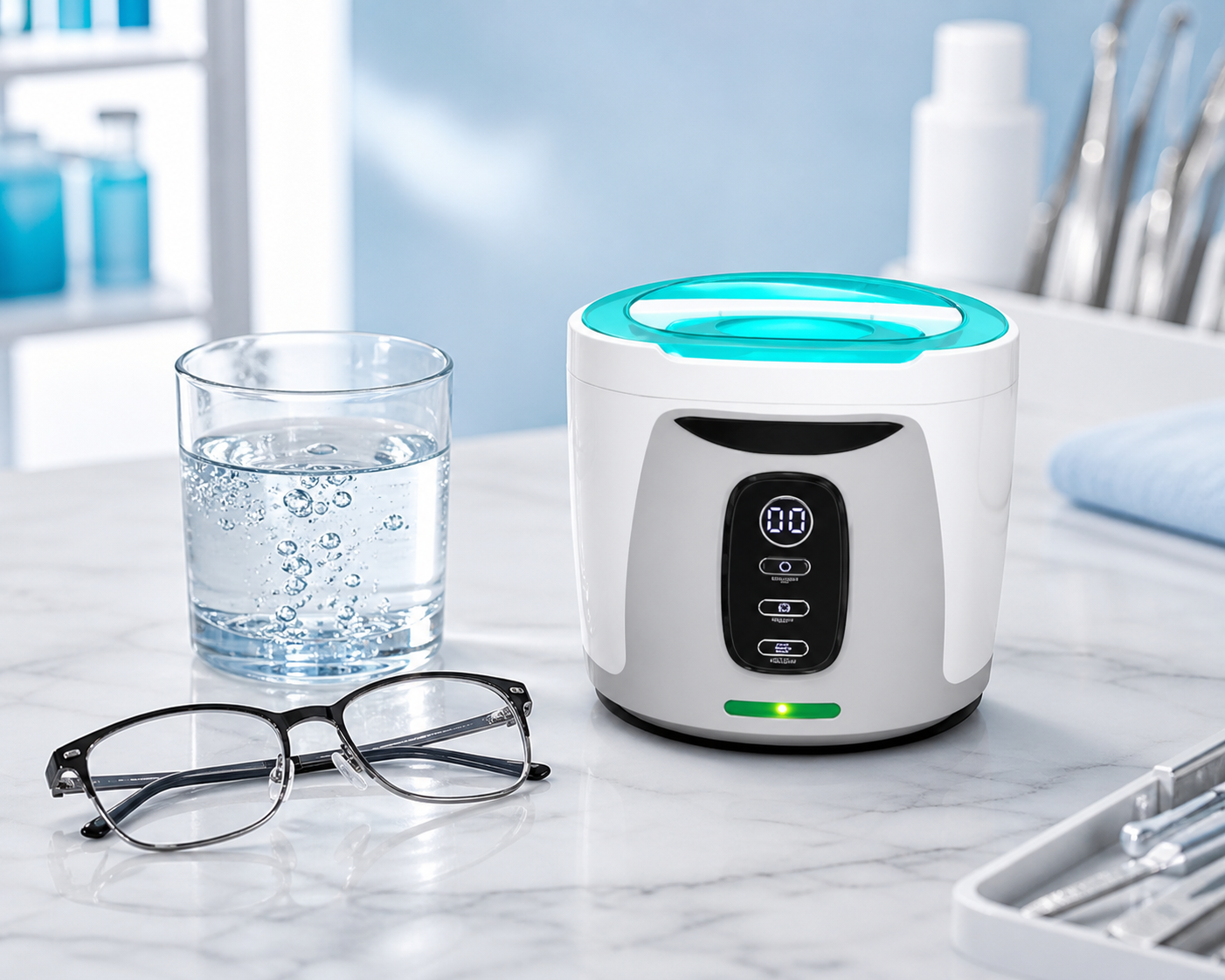
Water in contact with air naturally contains dissolved gases. Adding detergent, pouring quickly and changing temperature can disturb the balance, but the important operational point is simple: a newly prepared bath is not necessarily ready for its most consistent cleaning performance.
Gas cushions part of the acoustic action and makes bubble behavior less uniform. In practice, the user may see stubborn residue around nose-pad mounts or hinges even though the timer and machine sound normal. Repeating a long cycle without correcting the bath can add unnecessary exposure for the eyewear while leaving the real cause untouched.
Degassing also improves troubleshooting. If liquid condition, load position, fill level and cycle duration all change at once, nobody can tell which adjustment helped. Preparing the bath the same way each time turns a vague household routine into a controlled process.
How to Degas an Ultrasonic Spectacle Cleaner Safely
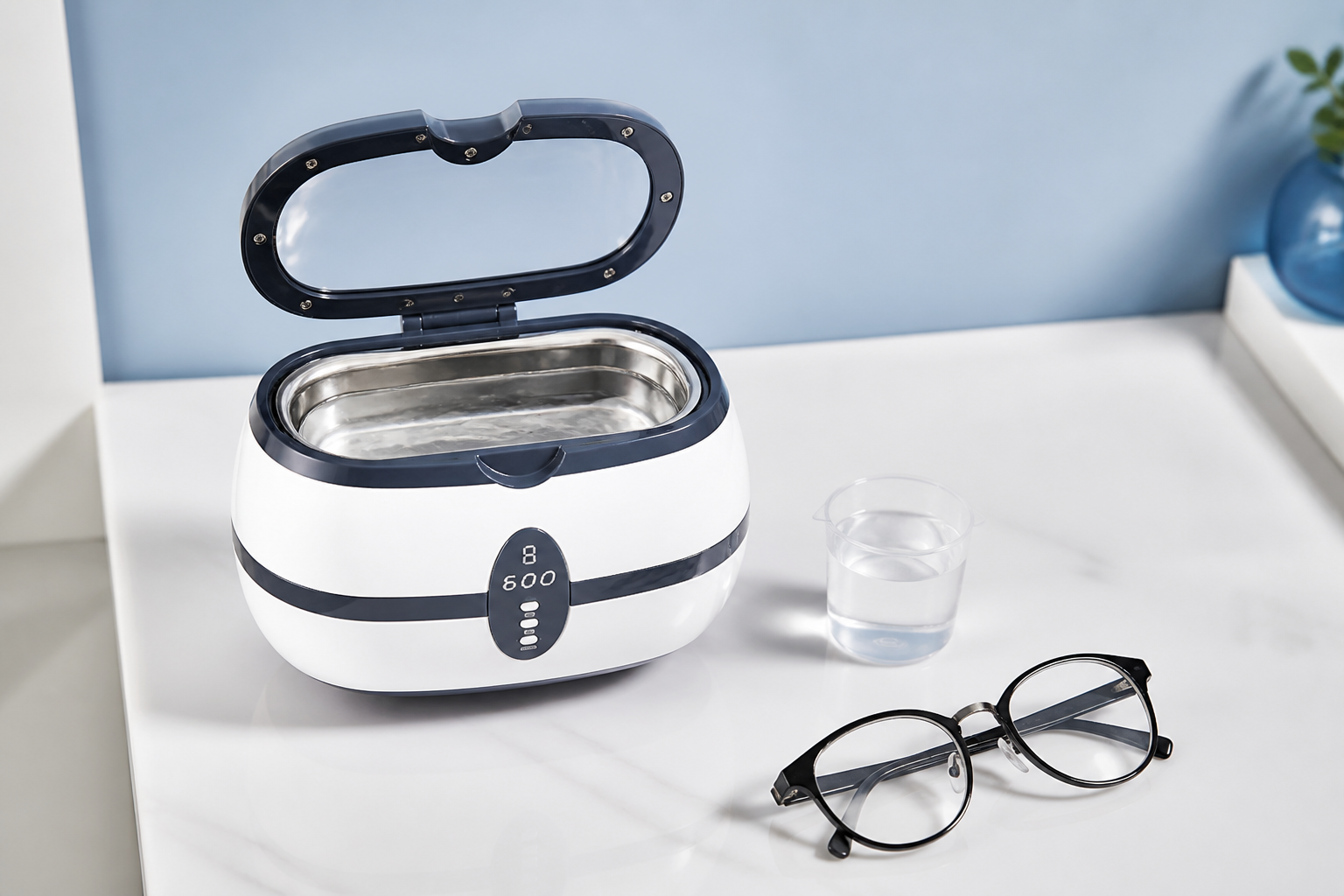
Fill the tank to the manufacturer’s specified level with the recommended water and compatible solution. Fit the lid if the instructions require it, but leave the glasses out. If the unit has a dedicated degas mode, use it exactly as directed. If it does not, run a normal short cycle with the basket empty unless the product manual states otherwise.
Do not run the tank dry. The liquid is part of the energy-transfer and cooling environment, and operating below the permitted level can damage equipment. Never use flammable solvents. The NIST-hosted manual specifically cautions that flammable vapors can collect beneath a cleaner and be ignited by electrical components.
There is no universal degas time for every ultrasonic spectacle cleaner. Tank volume, liquid temperature, solution chemistry, ultrasonic power and the amount of absorbed gas all matter. Treat the manual as the controlling instruction. For a small personal unit without a special mode, the empty preliminary cycle should remain short and purposeful—not an arbitrary ten-minute ritual copied from a large laboratory bath.
When Should You Degas an Eyeglass Cleaning Machine?
Degas after preparing a fresh bath. Repeat it when a covered bath has stood unused long enough to reabsorb air, when a significant volume of fresh water is added, or when the operating manual calls for it. An optical shop should include this step at the start of a documented shift rather than leaving it to personal judgment.
Do not confuse degassing with solution replacement. Degassing removes gas; it does not remove skin oil, cosmetic residue or particles already suspended in dirty liquid. When the bath is contaminated, discard and replace it according to the machine and solution instructions, then degas the new liquid.
Nor does degassing make unsuitable eyewear safe. Peeling coatings, loose decorations, cracked frames, porous natural materials and uncertain adhesives still require a compatibility decision before immersion. The process improves the bath, not the structural condition of the glasses.
Degassing vs Longer Cleaning: Which Fixes Poor Results?
A longer cycle is tempting because it appears to “add cleaning.” It also adds exposure time. If fresh liquid is gas-loaded, increasing time may be an inefficient response. Start by controlling the bath, then inspect placement, solution concentration and contamination level.
Use a simple comparison: prepare one bath consistently, degas it, load one compatible pair in the approved basket and use the shortest effective cycle. Inspect hinge recesses, nose-pad mounts and lens edges under the same light. If performance improves, document the method. If it does not, investigate loading shadows, weak or depleted solution, excessive soil, or equipment condition rather than extending the timer indefinitely.
For more process-focused advice, explore the GT SONIC ultrasonic cleaning blog. A compact model such as the GT-X5 ultrasonic eyeglass cleaner should still be operated according to its specific fill, timer and compatibility instructions.
A Repeatable Bath-Preparation Routine
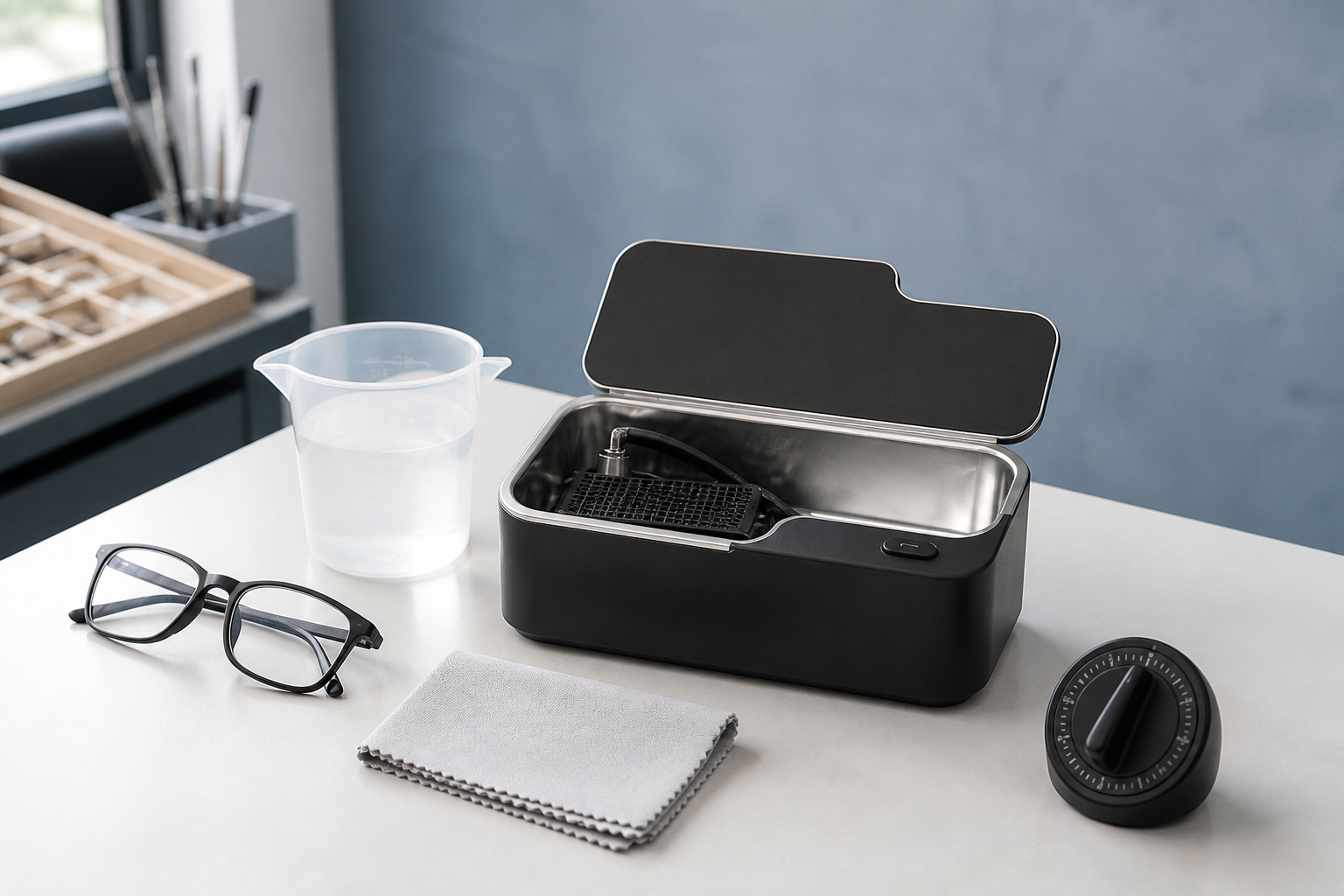
Consistency matters more than chasing a dramatic cloud of bubbles. Record the water volume, solution dose, initial liquid temperature, degas setting and cleaning cycle. Keep the basket position and test load consistent. This small record is especially useful for optical retailers, repair counters and distributors evaluating equipment.
- Inspect the tank and basket for residue or damage.
- Fill to the specified level with compatible liquid.
- Add only the recommended concentration of solution.
- Run the approved empty degas or preliminary cycle.
- Load one inspected pair without tank contact.
- Use the shortest validated cleaning cycle, then rinse and dry appropriately.
If results drift, change one factor at a time. That discipline prevents overcleaning and makes it easier to distinguish a liquid-preparation problem from a machine, load or eyewear problem.
FAQs About Degassing an Ultrasonic Cleaner
Can I degas with the glasses already in the basket?
Prepare the liquid before loading eyewear. This avoids exposing the glasses to a step intended for the bath rather than for cleaning the item.
Does warm water degas faster?
Temperature affects gas solubility and cleaning chemistry, but heat can also affect frames, adhesives and coatings. Stay within the machine and eyewear instructions instead of heating by guesswork.
Do I need to degas before every pair?
Usually not when several compatible loads follow in the same properly maintained bath. Degas when the bath is fresh, has stood unused, has been substantially topped up or the manual requires it.
Why do bubbles appear during the cleaning cycle?
Some visible bubbles are normal, but appearance alone cannot prove optimum cavitation. Judge the process by controlled preparation and repeatable cleaning results.
Build a Reliable Eyeglass-Cleaning Process with GT SONIC
Choosing the machine is only the beginning; a dependable result also needs the right bath preparation, basket position and cycle. Contact GT SONIC with your frame sizes, daily load, solution practice and target throughput. Our team can help match equipment and operating controls to a repeatable eyeglass-cleaning workflow.
Authoritative references
U.S. FDA: Evaluation of Production Cleaning Processes—Ultrasonic Cleaning
NIST-hosted Branson Ultrasonic Cleaner Operator's Manual
TU Bergakademie Freiberg: Ultrasonic Baths and Cavitation


