banner

News Details

Events
Contact Us
GT SONIC
0086-75523356715
Contact Now

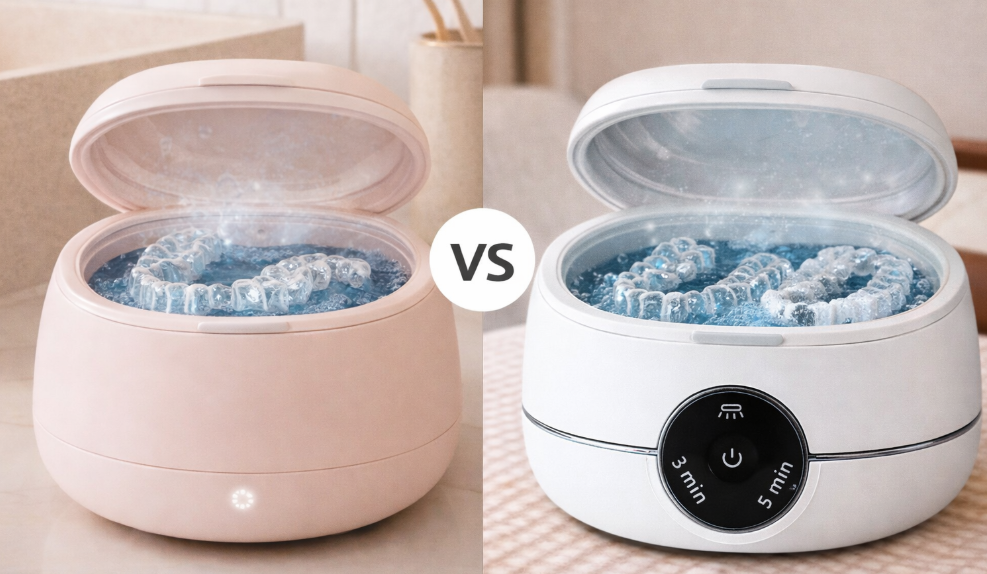
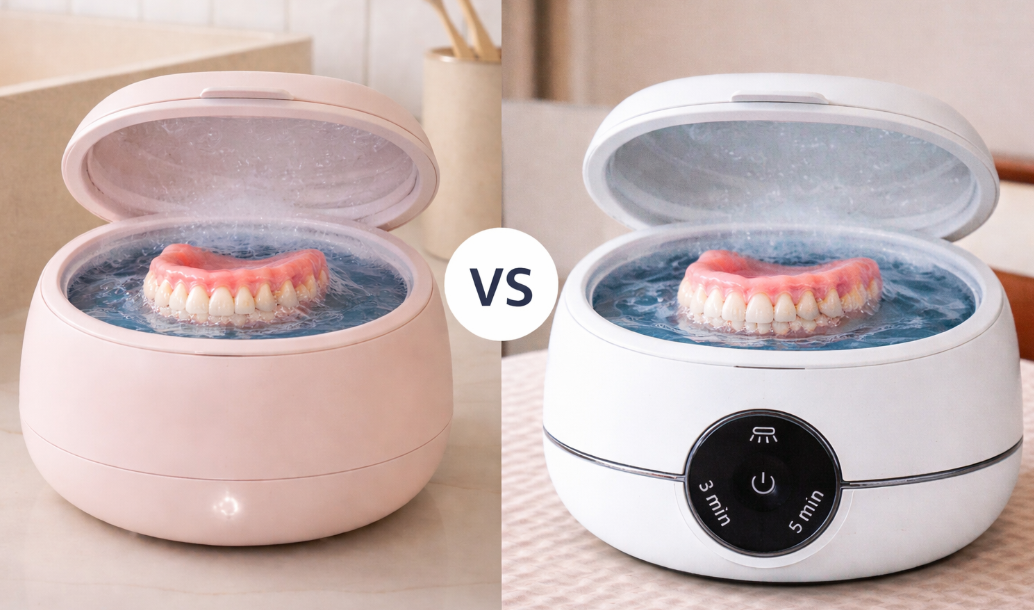
GT Sonic Ultrasonic Cleaner vs Dental Pod: Which Works Better for Retainers and Dentures in 2026?

Author: Zoey Date: 2026-03-18 Read: 5min

Summary:

Choosing between a GT Sonic Ultrasonic Cleaner and a Dental Pod usually comes down to one practical question: do you want a dedicated oral-appliance cleaner for a simple daily routine, or a more flexible ultrasonic cleaner that can handle dentures, retainers, and other small items? GT Sonic’s official lineup spans multiple dental-cleaning formats and capacities, including compact 180 ml brace cleaners and larger denture-oriented units up to 750 ml and beyond, while the Invisalign-branded ultrasonic cleaner powered by Zima is positioned as a one-touch, 5-minute solution for aligners and retainers.

For retainers and dentures, both approaches use the same basic principle: ultrasonic waves create cavitation bubbles in water to help lift debris from grooves and hard-to-reach surfaces. But product design, tank size, convenience, and use case differ enough that the better choice depends on what you wear, how often you clean it, and whether you want a single-purpose or multi-purpose device.

Quick Comparison Table

Criteria

GT Sonic Ultrasonic Cleaner

Dental Pod

Best For

Product type

Broader ultrasonic cleaner range

Dedicated oral-appliance cleaner

Users choosing by use case

Typical positioning

Multi-size, multi-use

Compact, oral-care focused

Buyers wanting simplicity vs flexibility

Capacity options

Wider range, including compact and larger denture-oriented sizes

More routine-focused compact format

Denture users often benefit from more size flexibility

Cleaning routine

Depends on model

One-touch daily workflow

Retainer and aligner users

Multipurpose use

Stronger

More limited

Homes that also clean jewelry or small accessories

Learning curve

Slightly higher because model choice matters

Lower

First-time buyers

Best fit

Dentures, retainers, mixed household use

Retainers, aligners, night guards

Depends on appliance and routine

Editorial note: exact capacity, controls, and extras vary by model, so comparisons should be finalized against the specific GT Sonic unit and the specific Dental Pod version being considered.

How Ultrasonic Cleaning Works for Retainers and Dentures
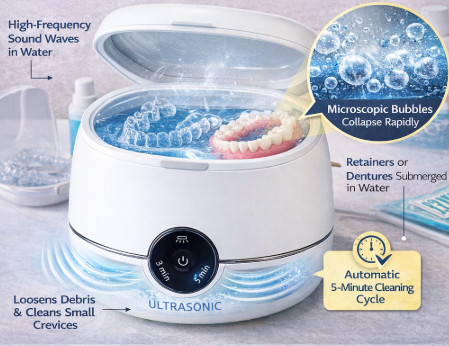
 

An ultrasonic cleaner for retainers or ultrasonic cleaner for dentures works by generating high-frequency sound waves in water. Those waves create microscopic bubbles that collapse rapidly and help loosen debris and surface buildup from small crevices. Invisalign’s product page explicitly describes this cavitation process and says its unit runs an automatic 5-minute cycle for aligners and retainers.

That matters because retainers and dentures are not easy to clean well with brushing alone. The American Dental Association says dentures should be rinsed to remove loose particles and cleaned with a commercial denture cleanser, while the CDC advises cleaning dentures daily and, when possible, removing them overnight.

Ultrasonic cleaning is best understood as a helpful daily-care tool, not a substitute for all professional care. It can improve routine cleaning efficiency and help reach tight areas, but it does not replace dentist guidance, proper denture cleansers, or manufacturer instructions for specialty appliances.

 GT Sonic Ultrasonic Cleaner: Positioning, Strengths, and Trade-Offs
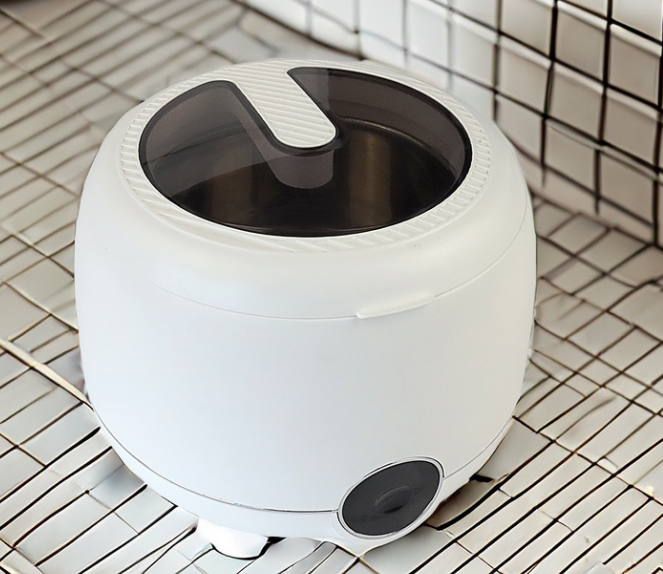
 

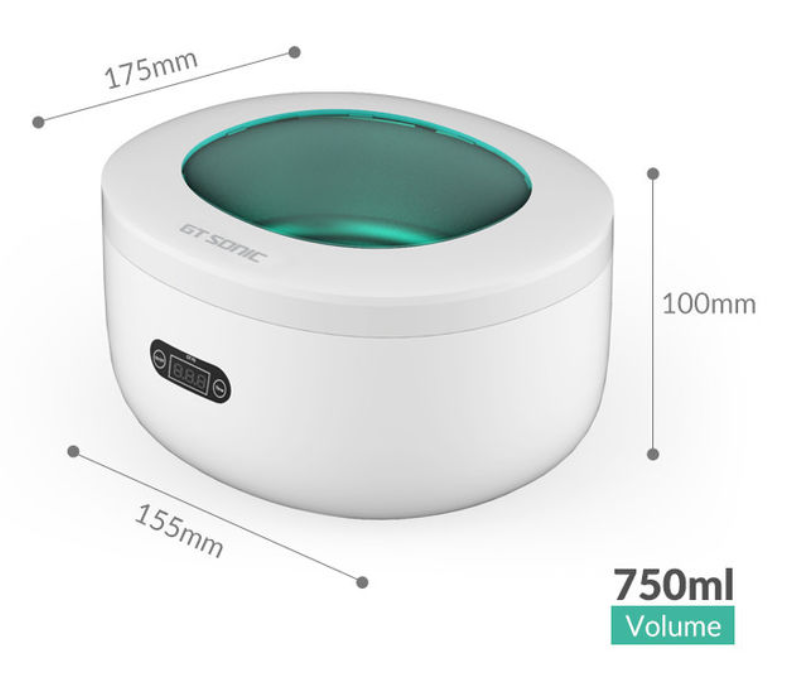
GT Sonic Ultrasonic Cleaner is better viewed as a product family than a single “pod” device. GT Sonic’s official dental-cleaner pages show compact brace-oriented models around 180 ml at 43 kHz, mid-size household denture cleaners around 450–600 ml, and larger 750 ml units for dentures, alongside even bigger professional-style equipment. That broader lineup is the brand’s biggest advantage.

 Where GT Sonic stands out

First, gt ultrasonic cleaner models offer more capacity and format flexibility. That can matter for full dentures, bulkier partials, or households that want one machine for oral appliances plus glasses, jewelry, or other small items. Second, GT Sonic’s range makes it easier to choose based on budget and volume rather than being locked into one dedicated form factor.

Where GT Sonic feels less specialized

The trade-off is that GT Sonic is not always framed as a highly specialized “retainer lifestyle” product. A buyer who wants the simplest countertop routine for one pair of aligners may find a dedicated pod-style device easier to understand at first glance. With GT Sonic, the product choice itself is part of the decision.

GT Sonic Buying Angles Table

Use Case

Suggested GT Sonic Direction

Why It Fits

Clear retainers only

Compact dental cleaner

Small footprint, appliance-sized cleaning

Full or partial dentures

Mid-size or larger denture cleaner

More room and easier placement

Shared household use

Multi-purpose ultrasonic cleaner

More flexibility beyond oral devices

Clinic or frequent-use setting

Larger-capacity unit

Higher throughput and broader fit

Budget-conscious buyer

Entry compact unit

Lower barrier to trying ultrasonic care

Dental Pod: Positioning, Strengths, and Trade-Offs
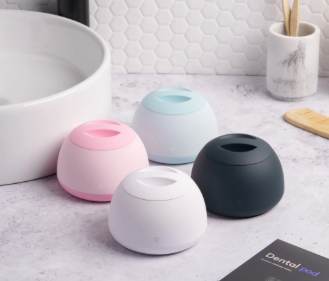
 

Dental Pod is positioned more like a dedicated oral-appliance cleaner than a general ultrasonic machine. The Invisalign ultrasonic cleaner powered by Zima emphasizes one-touch use, water-only cleaning, automatic shutoff, and a 5-minute cycle for Invisalign aligners and Vivera retainers. That is a very different value proposition from a broader equipment catalog.

 Where Dental Pod stands out

The main appeal of a Dental Pod is routine. It is easier to picture in daily use because the product story is simple: fill, place appliance, press start, finish in a few minutes. That makes it especially appealing for clear retainer, aligner, and night-guard users who want a low-friction habit rather than a more technical buying process.

Where Dental Pod is less flexible

The weakness is versatility. A dedicated pod-style cleaner is usually less compelling if you also want to clean jewelry, watches, or other household items, or if you need more room for larger dentures. It can still work for those cases, but its clearest value is focused convenience rather than broad utility.

Dental Pod Decision Table

Buyer Type

Why Dental Pod Appeals

Possible Limitation

Retainer wearer

Fast daily cycle and simple workflow

May feel specialized for one task

Invisalign / aligner user

Clear oral-care use case

Less versatile overall

Night-guard user

Easy countertop habit

Capacity may matter for larger appliances

Denture user wanting compact convenience

Simple routine

Some users may prefer more size flexibility

Multipurpose buyer

Less ideal

A broader cleaner may offer better value

 GT Sonic Ultrasonic Cleaner vs Dental Pod: The Differences That Matter
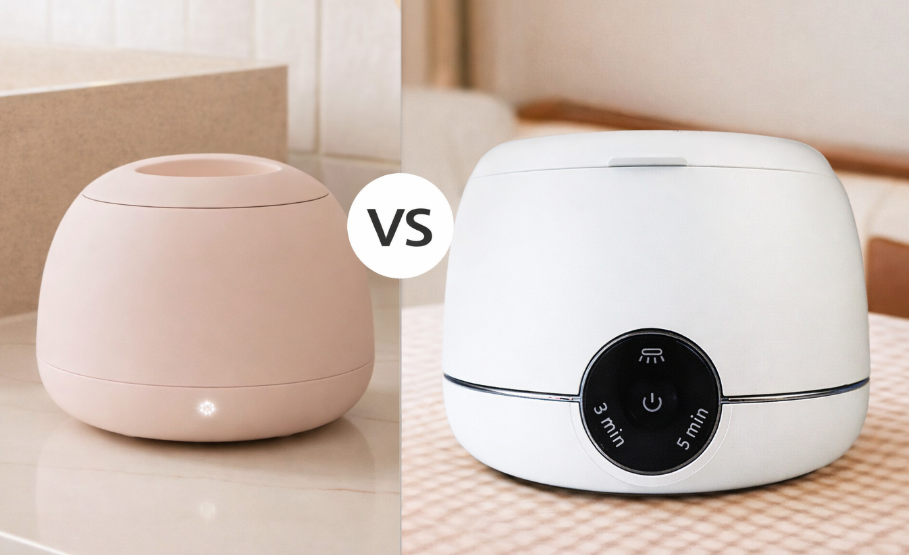
 

The biggest difference between GT Sonic Ultrasonic Cleaner and Dental Pod is not the cleaning principle. Both rely on ultrasonic cavitation. The real difference is product philosophy: GT Sonic is the more flexible equipment-style option, while Dental Pod is the more dedicated appliance-care option.

 Table: Head-to-Head Comparison

Comparison Point

GT Sonic Ultrasonic Cleaner

Dental Pod

Better Fit

Core positioning

Broader ultrasonic cleaner platform

Dedicated oral-appliance cleaner

Depends on user

Appliance focus

Retainers, dentures, and more

Retainers / aligners first

Retainer users often prefer dedicated workflow

Capacity flexibility

Strong

Moderate

Denture users often benefit from flexibility

Ease of purchase decision

Requires model selection

Simpler concept

First-time buyers

Daily routine convenience

Varies by model

Strong

Pod-style users

Multipurpose value

Strong

Lower

Mixed-use homes

Brand story

Equipment breadth

Appliance-care simplicity

Depends on buying intent

Which Cleans Retainers Better?


For retainers, convenience matters almost as much as cleaning performance. A device that is easy to use every day often wins over a more flexible device that is only used occasionally. That is where Dental Pod tends to have the edge: it is designed around the exact daily-care scenario many retainer users have. Invisalign’s official positioning reinforces this by highlighting quick, 5-minute cleaning for aligners and retainers.

That said, a GT Sonic Ultrasonic Cleaner can still be an excellent retainer cleaner, especially if you want more value from one device or need more options in capacity and format. For households that like one cleaner for retainers plus small valuables, GT Sonic can be the smarter buy.

 Retainer Decision Table

Retainer User Type

Better Choice

Why

Clear retainer user who wants speed

Dental Pod

Easier daily habit

Invisalign user

Dental Pod

Stronger dedicated-use alignment

User who also cleans jewelry

GT Sonic Ultrasonic Cleaner

Better multipurpose value

Buyer comparing capacities and price points

GT Sonic Ultrasonic Cleaner

More model flexibility

Which Cleans Dentures Better?


For dentures, the decision shifts slightly. Daily cleaning remains essential according to the ADA and CDC, but denture users often care more about capacity, fit, and ease of handling than aligner users do. That tends to make GT Sonic Ultrasonic Cleaner more attractive because GT Sonic clearly offers denture-oriented units in larger sizes such as 450 ml, 600 ml, and 750 ml, depending on model.

A Dental Pod still makes sense for denture users who prioritize compact design and a simple routine, but if the denture is bulkier, or if the user wants broader flexibility, GT Sonic usually has the stronger practical case. The ADA also notes that removable dentures should be cleaned with products made for dentures, which means the machine itself should fit into a broader care routine rather than be treated as the only cleaning step.

Denture Comparison Table

Denture Need

Better Fit

Reason

Larger denture size

GT Sonic Ultrasonic Cleaner

More capacity options

Very simple countertop routine

Dental Pod

More streamlined experience

Multi-use household

GT Sonic Ultrasonic Cleaner

Broader utility

Dedicated oral-appliance habit

Dental Pod

Easier to keep consistent

Buyer wanting equipment choice

GT Sonic Ultrasonic Cleaner

Wider model range

 Who Should Choose a Dental Pod and Who Should Choose a GT Sonic Ultrasonic Cleaner?
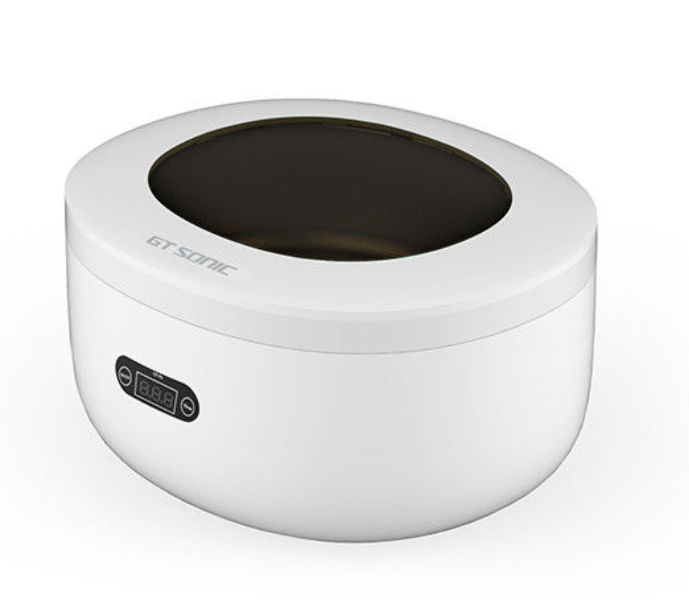
 

Choose a Dental Pod if you mainly clean retainers, aligners, or a night guard and want a device that feels purpose-built for one job. It is the stronger fit for users who care most about a repeatable, low-effort daily routine.

Choose a GT Sonic Ultrasonic Cleaner if you want more product options, need extra space for dentures, or want to use the cleaner for more than oral appliances. It is also the more practical path for buyers who want to compare capacity, configuration, and value across a wider lineup.

User-Type Matrix

User Type

Recommended Option

Why

Invisalign / aligner wearer

Dental Pod

Dedicated workflow

Retainer-only user

Dental Pod

Fast and easy daily use

Full denture user

GT Sonic Ultrasonic Cleaner

More size flexibility

Shared household buyer

GT Sonic Ultrasonic Cleaner

More multipurpose value

Buyer wanting “plug-and-play” simplicity

Dental Pod

Less model research needed

Buyer wanting broader equipment choice

GT Sonic Ultrasonic Cleaner

Wider product family

 Cleaning Tips for Retainers and Dentures
 

A realistic care routine is more important than overcomplicated cleaning. The ADA advises rinsing away loose debris and using a commercial denture cleanser for removable dentures, while the CDC says dentures should be cleaned daily and removed at night when possible.

A practical daily workflow

1.Rinse the retainer or denture.

2.Fill the ultrasonic cleaner with water according to instructions.

3.Run the cleaning cycle.

4.Use a compatible cleanser if the appliance maker and cleaner instructions allow it.

5.Rinse again and dry or store properly.

What to avoid

Do not assume ultrasonic cleaning alone equals full disinfection. Do not use overly hot water unless the appliance instructions allow it. For dentures, avoid abrasive products not intended for denture care, because dentures can scratch easily and require gentler cleaners.

Final Verdict: Which Option Is Better in 2026?

If your main goal is fast, simple, dedicated care for retainers or aligners, Dental Pod is usually the better choice. Its value is not that it uses a different cleaning science, but that it turns that science into an easier daily ritual. Invisalign’s official positioning around one-touch, 5-minute cleaning supports that use case clearly.

If your main goal is flexibility, denture fit, broader appliance compatibility, or multi-purpose value, GT Sonic Ultrasonic Cleaner is usually the stronger buy. GT Sonic’s official range gives it an edge for people who want more than one very specific workflow.

FAQs About GT Sonic Ultrasonic Cleaner and Dental Pod

1.Do dental pods work?

Yes, dedicated pod-style ultrasonic cleaners are designed to help remove debris and stains from oral appliances through cavitation. Invisalign’s official product page describes a 5-minute ultrasonic cleaning cycle that helps remove stains and debris from aligners and retainers.

2.Is a Dental Pod better than a regular ultrasonic cleaner?

It is better for some users, not all. A Dental Pod is usually better for a simple daily oral-appliance routine. A GT Sonic Ultrasonic Cleaner is usually better if you want more model choice, more tank-size flexibility, or broader household use.

3.Can GT Sonic Ultrasonic Cleaner clean dentures safely?

GT Sonic officially offers denture-oriented ultrasonic cleaner models, including household and larger-capacity options. Safe use still depends on following the appliance and cleanser instructions.

4.How often should I clean retainers and dentures?

Dentures should be cleaned daily, according to the CDC and ADA guidance summarized above. Retainer frequency should follow the appliance maker’s or clinician’s advice, but daily or near-daily maintenance is common for appliances worn frequently.

5.What is the best dental pod cleaner for retainers and dentures?

The best option depends on whether you want a dedicated oral-appliance routine or a more flexible ultrasonic machine. For routine retainer use, Dental Pod often feels more intuitive. For dentures and mixed-use needs, GT Sonic Ultrasonic Cleaner often offers more practical flexibility.

The simplest conclusion is this:

Choose Dental Pod for routine-first convenience. Choose GT Sonic Ultrasonic Cleaner for flexibility-first value.

banner
News Details

GT Sonic Ultrasonic Cleaner vs Dental Pod: Which Works Better for Retainers and Dentures in 2026?

2026-03-18

Choosing between a GT Sonic Ultrasonic Cleaner and a Dental Pod usually comes down to one practical question: do you want a dedicated oral-appliance cleaner for a simple daily routine, or a more flexible ultrasonic cleaner that can handle dentures, retainers, and other small items?

Summary:

Choosing between a GT Sonic Ultrasonic Cleaner and a Dental Pod usually comes down to one practical question: do you want a dedicated oral-appliance cleaner for a simple daily routine, or a more flexible ultrasonic cleaner that can handle dentures, retainers, and other small items? GT Sonic’s official lineup spans multiple dental-cleaning formats and capacities, including compact 180 ml brace cleaners and larger denture-oriented units up to 750 ml and beyond, while the Invisalign-branded ultrasonic cleaner powered by Zima is positioned as a one-touch, 5-minute solution for aligners and retainers.

For retainers and dentures, both approaches use the same basic principle: ultrasonic waves create cavitation bubbles in water to help lift debris from grooves and hard-to-reach surfaces. But product design, tank size, convenience, and use case differ enough that the better choice depends on what you wear, how often you clean it, and whether you want a single-purpose or multi-purpose device.

Quick Comparison Table

Criteria

GT Sonic Ultrasonic Cleaner

Dental Pod

Best For

Product type

Broader ultrasonic cleaner range

Dedicated oral-appliance cleaner

Users choosing by use case

Typical positioning

Multi-size, multi-use

Compact, oral-care focused

Buyers wanting simplicity vs flexibility

Capacity options

Wider range, including compact and larger denture-oriented sizes

More routine-focused compact format

Denture users often benefit from more size flexibility

Cleaning routine

Depends on model

One-touch daily workflow

Retainer and aligner users

Multipurpose use

Stronger

More limited

Homes that also clean jewelry or small accessories

Learning curve

Slightly higher because model choice matters

Lower

First-time buyers

Best fit

Dentures, retainers, mixed household use

Retainers, aligners, night guards

Depends on appliance and routine

Editorial note: exact capacity, controls, and extras vary by model, so comparisons should be finalized against the specific GT Sonic unit and the specific Dental Pod version being considered.

How Ultrasonic Cleaning Works for Retainers and Dentures


An ultrasonic cleaner for retainers or ultrasonic cleaner for dentures works by generating high-frequency sound waves in water. Those waves create microscopic bubbles that collapse rapidly and help loosen debris and surface buildup from small crevices. Invisalign’s product page explicitly describes this cavitation process and says its unit runs an automatic 5-minute cycle for aligners and retainers.

That matters because retainers and dentures are not easy to clean well with brushing alone. The American Dental Association says dentures should be rinsed to remove loose particles and cleaned with a commercial denture cleanser, while the CDC advises cleaning dentures daily and, when possible, removing them overnight.

Ultrasonic cleaning is best understood as a helpful daily-care tool, not a substitute for all professional care. It can improve routine cleaning efficiency and help reach tight areas, but it does not replace dentist guidance, proper denture cleansers, or manufacturer instructions for specialty appliances.

 GT Sonic Ultrasonic Cleaner: Positioning, Strengths, and Trade-Offs


GT Sonic Ultrasonic Cleaner is better viewed as a product family than a single “pod” device. GT Sonic’s official dental-cleaner pages show compact brace-oriented models around 180 ml at 43 kHz, mid-size household denture cleaners around 450–600 ml, and larger 750 ml units for dentures, alongside even bigger professional-style equipment. That broader lineup is the brand’s biggest advantage.

 Where GT Sonic stands out

First, gt ultrasonic cleaner models offer more capacity and format flexibility. That can matter for full dentures, bulkier partials, or households that want one machine for oral appliances plus glasses, jewelry, or other small items. Second, GT Sonic’s range makes it easier to choose based on budget and volume rather than being locked into one dedicated form factor.

Where GT Sonic feels less specialized

The trade-off is that GT Sonic is not always framed as a highly specialized “retainer lifestyle” product. A buyer who wants the simplest countertop routine for one pair of aligners may find a dedicated pod-style device easier to understand at first glance. With GT Sonic, the product choice itself is part of the decision.

GT Sonic Buying Angles Table

Use Case

Suggested GT Sonic Direction

Why It Fits

Clear retainers only

Compact dental cleaner

Small footprint, appliance-sized cleaning

Full or partial dentures

Mid-size or larger denture cleaner

More room and easier placement

Shared household use

Multi-purpose ultrasonic cleaner

More flexibility beyond oral devices

Clinic or frequent-use setting

Larger-capacity unit

Higher throughput and broader fit

Budget-conscious buyer

Entry compact unit

Lower barrier to trying ultrasonic care

Dental Pod: Positioning, Strengths, and Trade-Offs


Dental Pod is positioned more like a dedicated oral-appliance cleaner than a general ultrasonic machine. The Invisalign ultrasonic cleaner powered by Zima emphasizes one-touch use, water-only cleaning, automatic shutoff, and a 5-minute cycle for Invisalign aligners and Vivera retainers. That is a very different value proposition from a broader equipment catalog.

 Where Dental Pod stands out

The main appeal of a Dental Pod is routine. It is easier to picture in daily use because the product story is simple: fill, place appliance, press start, finish in a few minutes. That makes it especially appealing for clear retainer, aligner, and night-guard users who want a low-friction habit rather than a more technical buying process.

Where Dental Pod is less flexible

The weakness is versatility. A dedicated pod-style cleaner is usually less compelling if you also want to clean jewelry, watches, or other household items, or if you need more room for larger dentures. It can still work for those cases, but its clearest value is focused convenience rather than broad utility.

Dental Pod Decision Table

Buyer Type

Why Dental Pod Appeals

Possible Limitation

Retainer wearer

Fast daily cycle and simple workflow

May feel specialized for one task

Invisalign / aligner user

Clear oral-care use case

Less versatile overall

Night-guard user

Easy countertop habit

Capacity may matter for larger appliances

Denture user wanting compact convenience

Simple routine

Some users may prefer more size flexibility

Multipurpose buyer

Less ideal

A broader cleaner may offer better value

 GT Sonic Ultrasonic Cleaner vs Dental Pod: The Differences That Matter


The biggest difference between GT Sonic Ultrasonic Cleaner and Dental Pod is not the cleaning principle. Both rely on ultrasonic cavitation. The real difference is product philosophy: GT Sonic is the more flexible equipment-style option, while Dental Pod is the more dedicated appliance-care option.

 Table: Head-to-Head Comparison

Comparison Point

GT Sonic Ultrasonic Cleaner

Dental Pod

Better Fit

Core positioning

Broader ultrasonic cleaner platform

Dedicated oral-appliance cleaner

Depends on user

Appliance focus

Retainers, dentures, and more

Retainers / aligners first

Retainer users often prefer dedicated workflow

Capacity flexibility

Strong

Moderate

Denture users often benefit from flexibility

Ease of purchase decision

Requires model selection

Simpler concept

First-time buyers

Daily routine convenience

Varies by model

Strong

Pod-style users

Multipurpose value

Strong

Lower

Mixed-use homes

Brand story

Equipment breadth

Appliance-care simplicity

Depends on buying intent

Which Cleans Retainers Better?


For retainers, convenience matters almost as much as cleaning performance. A device that is easy to use every day often wins over a more flexible device that is only used occasionally. That is where Dental Pod tends to have the edge: it is designed around the exact daily-care scenario many retainer users have. Invisalign’s official positioning reinforces this by highlighting quick, 5-minute cleaning for aligners and retainers.

That said, a GT Sonic Ultrasonic Cleaner can still be an excellent retainer cleaner, especially if you want more value from one device or need more options in capacity and format. For households that like one cleaner for retainers plus small valuables, GT Sonic can be the smarter buy.

 Retainer Decision Table

Retainer User Type

Better Choice

Why

Clear retainer user who wants speed

Dental Pod

Easier daily habit

Invisalign user

Dental Pod

Stronger dedicated-use alignment

User who also cleans jewelry

GT Sonic Ultrasonic Cleaner

Better multipurpose value

Buyer comparing capacities and price points

GT Sonic Ultrasonic Cleaner

More model flexibility

Which Cleans Dentures Better?


For dentures, the decision shifts slightly. Daily cleaning remains essential according to the ADA and CDC, but denture users often care more about capacity, fit, and ease of handling than aligner users do. That tends to make GT Sonic Ultrasonic Cleaner more attractive because GT Sonic clearly offers denture-oriented units in larger sizes such as 450 ml, 600 ml, and 750 ml, depending on model.

A Dental Pod still makes sense for denture users who prioritize compact design and a simple routine, but if the denture is bulkier, or if the user wants broader flexibility, GT Sonic usually has the stronger practical case. The ADA also notes that removable dentures should be cleaned with products made for dentures, which means the machine itself should fit into a broader care routine rather than be treated as the only cleaning step.

Denture Comparison Table

Denture Need

Better Fit

Reason

Larger denture size

GT Sonic Ultrasonic Cleaner

More capacity options

Very simple countertop routine

Dental Pod

More streamlined experience

Multi-use household

GT Sonic Ultrasonic Cleaner

Broader utility

Dedicated oral-appliance habit

Dental Pod

Easier to keep consistent

Buyer wanting equipment choice

GT Sonic Ultrasonic Cleaner

Wider model range

 Who Should Choose a Dental Pod and Who Should Choose a GT Sonic Ultrasonic Cleaner?


Choose a Dental Pod if you mainly clean retainers, aligners, or a night guard and want a device that feels purpose-built for one job. It is the stronger fit for users who care most about a repeatable, low-effort daily routine.

Choose a GT Sonic Ultrasonic Cleaner if you want more product options, need extra space for dentures, or want to use the cleaner for more than oral appliances. It is also the more practical path for buyers who want to compare capacity, configuration, and value across a wider lineup.

User-Type Matrix

User Type

Recommended Option

Why

Invisalign / aligner wearer

Dental Pod

Dedicated workflow

Retainer-only user

Dental Pod

Fast and easy daily use

Full denture user

GT Sonic Ultrasonic Cleaner

More size flexibility

Shared household buyer

GT Sonic Ultrasonic Cleaner

More multipurpose value

Buyer wanting “plug-and-play” simplicity

Dental Pod

Less model research needed

Buyer wanting broader equipment choice

GT Sonic Ultrasonic Cleaner

Wider product family

 Cleaning Tips for Retainers and Dentures


A realistic care routine is more important than overcomplicated cleaning. The ADA advises rinsing away loose debris and using a commercial denture cleanser for removable dentures, while the CDC says dentures should be cleaned daily and removed at night when possible.

A practical daily workflow

1.Rinse the retainer or denture.

2.Fill the ultrasonic cleaner with water according to instructions.

3.Run the cleaning cycle.

4.Use a compatible cleanser if the appliance maker and cleaner instructions allow it.

5.Rinse again and dry or store properly.

What to avoid

Do not assume ultrasonic cleaning alone equals full disinfection. Do not use overly hot water unless the appliance instructions allow it. For dentures, avoid abrasive products not intended for denture care, because dentures can scratch easily and require gentler cleaners.

Final Verdict: Which Option Is Better in 2026?

If your main goal is fast, simple, dedicated care for retainers or aligners, Dental Pod is usually the better choice. Its value is not that it uses a different cleaning science, but that it turns that science into an easier daily ritual. Invisalign’s official positioning around one-touch, 5-minute cleaning supports that use case clearly.

If your main goal is flexibility, denture fit, broader appliance compatibility, or multi-purpose value, GT Sonic Ultrasonic Cleaner is usually the stronger buy. GT Sonic’s official range gives it an edge for people who want more than one very specific workflow.

FAQs About GT Sonic Ultrasonic Cleaner and Dental Pod

1.Do dental pods work?

Yes, dedicated pod-style ultrasonic cleaners are designed to help remove debris and stains from oral appliances through cavitation. Invisalign’s official product page describes a 5-minute ultrasonic cleaning cycle that helps remove stains and debris from aligners and retainers.

2.Is a Dental Pod better than a regular ultrasonic cleaner?

It is better for some users, not all. A Dental Pod is usually better for a simple daily oral-appliance routine. A GT Sonic Ultrasonic Cleaner is usually better if you want more model choice, more tank-size flexibility, or broader household use.

3.Can GT Sonic Ultrasonic Cleaner clean dentures safely?

GT Sonic officially offers denture-oriented ultrasonic cleaner models, including household and larger-capacity options. Safe use still depends on following the appliance and cleanser instructions.

4.How often should I clean retainers and dentures?

Dentures should be cleaned daily, according to the CDC and ADA guidance summarized above. Retainer frequency should follow the appliance maker’s or clinician’s advice, but daily or near-daily maintenance is common for appliances worn frequently.

5.What is the best dental pod cleaner for retainers and dentures?

The best option depends on whether you want a dedicated oral-appliance routine or a more flexible ultrasonic machine. For routine retainer use, Dental Pod often feels more intuitive. For dentures and mixed-use needs, GT Sonic Ultrasonic Cleaner often offers more practical flexibility.

The simplest conclusion is this:

Choose Dental Pod for routine-first convenience. Choose GT Sonic Ultrasonic Cleaner for flexibility-first value.