Can You Put IPA, Ethanol, or Acetone in a Lab Ultrasonic Cleaner?
2026-05-28
No, you should not pour IPA, ethanol, acetone, or other flammable solvents directly into a standard lab ultrasonic cleaner. These solvents can release flammable vapors, and ultrasonic action, heat, poor ventilation, or electrical components may increase fire and explosion risks.
This question is common because IPA, ethanol, and acetone are widely used in laboratories for wiping, rinsing, and residue removal. However, a regular ultrasonic cleaning bath is usually designed for water or a compatible water-based ultrasonic cleaning solution, not for volatile flammable liquids poured directly into the stainless steel tank.
Summary
No, you should not pour IPA, ethanol, acetone, or other flammable solvents directly into a standard lab ultrasonic cleaner. These solvents can release flammable vapors, and ultrasonic action, heat, poor ventilation, or electrical components may increase fire and explosion risks.
This question is common because IPA, ethanol, and acetone are widely used in laboratories for wiping, rinsing, and residue removal. However, a regular ultrasonic cleaning bath is usually designed for water or a compatible water-based ultrasonic cleaning solution, not for volatile flammable liquids poured directly into the stainless steel tank.
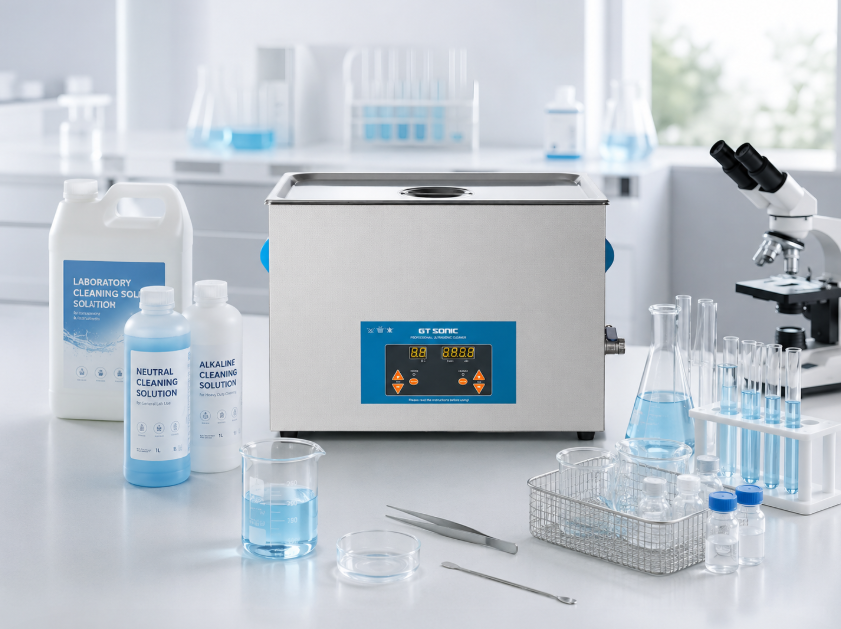
For most laboratory cleaning tasks, the safer choice is to use a suitable ultrasonic cleaner solution, check the solvent’s SDS, follow the equipment manual, and only use flammable solvents under approved lab safety procedures.
Can You Put Flammable Solvents Directly Into an Ultrasonic Cleaner?
No, flammable solvents should not be poured directly into a standard ultrasonic cleaner because IPA, ethanol, and acetone can create hazardous vapor. A normal benchtop ultrasonic cleaner is not the same as an explosion-proof solvent cleaning system.
Can I Put IPA in an Ultrasonic Cleaner?
No, IPA should not be used directly in a regular ultrasonic tank. Isopropyl alcohol has a low flash point, and its vapor can become dangerous around heaters, switches, wiring, or poor ventilation.
Can I Use Ethanol in an Ultrasonic Cleaning Bath?
No, ethanol should not be added directly to a standard ultrasonic cleaning bath. Even without heating, ethanol can evaporate quickly and create a flammable vapor environment around the machine.
Is Acetone Safe in a Laboratory Ultrasonic Bath?
No, acetone is not safe for direct use in a normal laboratory ultrasonic bath. Acetone is highly volatile, evaporates quickly, and should only be handled under proper solvent safety controls.
Why Are IPA, Ethanol, and Acetone Risky in an Ultrasonic Bath Cleaner?
IPA, ethanol, and acetone are risky in an ultrasonic bath cleaner because they evaporate easily and may form flammable vapor mixtures. Ultrasonic vibration can increase liquid agitation, while heat can accelerate vapor release.
Flammable Vapor Is the Main Hazard
Flammable vapor is the main hazard when alcohol or acetone is used in an ultrasonic cleaner. Even a small amount of solvent can become dangerous if vapor accumulates near electrical components or ignition sources.
A Standard Benchtop Ultrasonic Cleaner Is Not Explosion-Proof
A standard benchtop ultrasonic cleaner is not designed for flammable vapor environments. Most regular units include electronic controls, switches, heaters, and wiring that are not rated for solvent vapor exposure.
Heated Ultrasonic Cleaners Increase Solvent Risk
A heated ultrasonic cleaner can increase solvent risk because heat raises evaporation rates. When IPA, ethanol, or acetone is warmed, vapor concentration can rise quickly and create a more serious fire hazard.
How Do Heat, Vapor, and Cavitation Increase Solvent Risk?
Heat, vapor, and cavitation increase solvent risk by making volatile liquids evaporate faster and spread vapor more easily. This is why IPA in ultrasonic cleaner setups can be dangerous when the process is not properly controlled.
Heat Raises the Vapor Level Around the Tank
Heat raises the vapor level around the tank by increasing solvent evaporation. An ultrasonic cleaner with heater should not be used with flammable solvents unless the system is specifically designed and approved for that purpose.
Cavitation Agitates the Liquid Surface
Cavitation agitates the liquid surface and helps release vapor from volatile solvents. While cavitation improves cleaning with water-based liquids, it can make solvent vapor problems worse when flammable liquids are used.
Poor Ventilation Makes Solvent Cleaning More Dangerous
Poor ventilation makes solvent cleaning more dangerous because vapor can collect around the equipment. If solvent cleaning is required, it should be reviewed by lab safety personnel and performed only with proper ventilation, approved containers, and suitable equipment.
What Ultrasonic Cleaning Solution Is Safer for Lab Use?
A water-based ultrasonic cleaning solution is safer for most laboratory cleaning tasks. It can remove many common residues without creating the same vapor hazard as IPA, ethanol, or acetone.
Use a Water-Based Ultrasonic Cleaner Solution First
A water-based ultrasonic cleaner solution should be the first choice for routine lab cleaning. It is usually more suitable for glassware, stainless steel tools, small parts, and laboratory accessories than flammable solvents.
Match the Cleaner Solution to the Residue
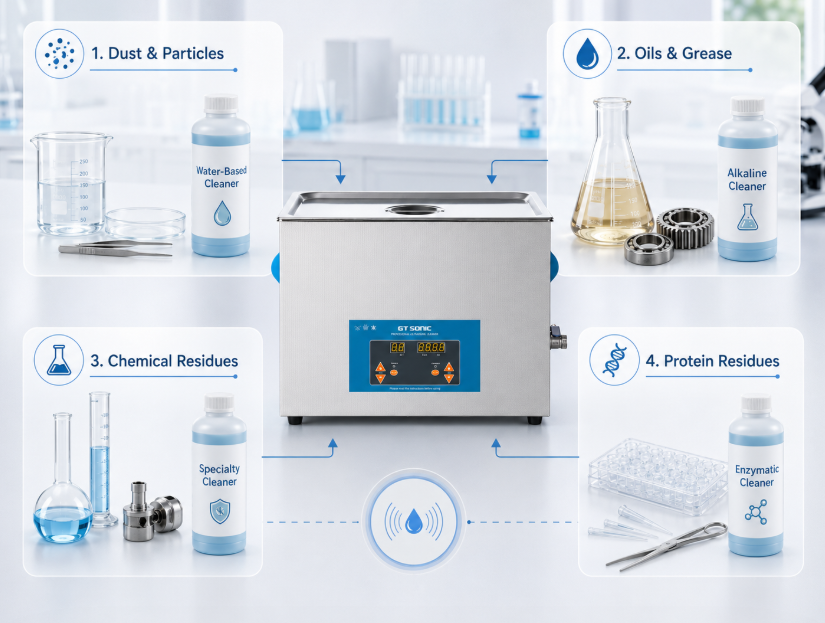
The cleaner solution should match the residue type. Oils may need a mild alkaline solution, salts may need a water-based rinse process, and biological or protein residues may require a lab-approved enzymatic cleaner.
Avoid Replacing Cleaning Solution with Alcohol or Acetone
Alcohol or acetone should not be used as a simple substitute for ultrasonic cleaning solution. If cleaning performance is poor, it is usually better to adjust concentration, temperature, cycle time, pre-soaking, or cleaning chemistry instead of using a flammable solvent directly.
When Should You Use a Water-Based Ultrasonic Cleaning Solution?
You should use a water-based ultrasonic cleaning solution for most routine laboratory applications. It is more appropriate for general glassware cleaning, small tool cleaning, and residue removal in a standard lab ultrasonic cleaner.
For Laboratory Glassware Cleaning
Water-based cleaner is usually suitable for beakers, flasks, test tubes, sample vials, and other lab glassware. It supports residue removal without exposing the ultrasonic cleaning bath to flammable vapor.
For Small Lab Tools and Stainless Steel Parts
Water-based solution can be used for many small lab tools and stainless steel parts when the material is compatible with immersion. A stainless steel ultrasonic cleaner works best when the liquid, basket, and cleaning time are selected correctly.
For Heated Ultrasonic Cleaning
Water-based cleaning liquids are generally safer for heated ultrasonic cleaning. Heat may improve cleaning performance for oils or greasy residues, but it should not be combined with IPA, ethanol, or acetone in a standard ultrasonic tank.
Can You Use a Beaker Inside an Ultrasonic Bath for Solvent Cleaning?
A beaker inside an ultrasonic bath may be used in some controlled solvent-cleaning procedures, but it should not be treated as a casual workaround. This indirect method still requires safety review, ventilation, controlled solvent volume, and proper operating procedures.
What Is the Indirect Beaker Method?
The indirect beaker method places a small amount of solvent in a covered beaker while the ultrasonic bath itself is filled with water. Ultrasonic energy passes through the water and the beaker wall into the solvent.
When Is the Beaker Method Still Unsafe?
The beaker method is still unsafe when vapor cannot be controlled, when the beaker is uncovered, when ventilation is poor, or when the ultrasonic cleaner is not suitable for the setup. It should not be used without lab approval.
When Is Explosion-Proof Ultrasonic Equipment Needed?
Explosion-proof ultrasonic equipment is needed when flammable solvents must be used and vapor risk cannot be eliminated. A regular ultrasonic bath cleaner or standard benchtop ultrasonic cleaner should not be assumed safe for solvent cleaning.
What Safety Rules Apply to a Heated Ultrasonic Cleaner?
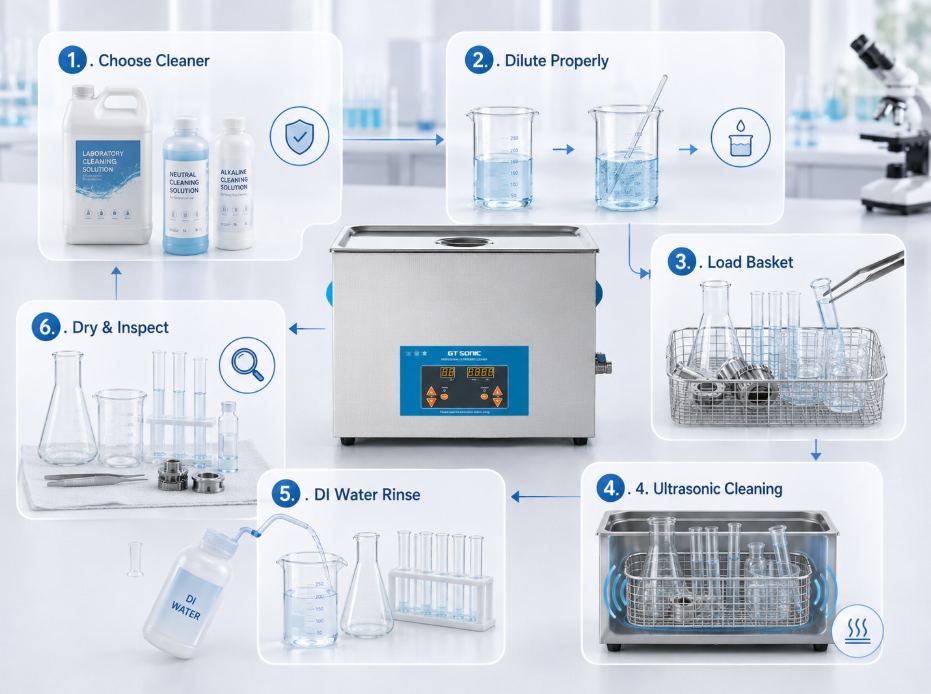
A heated ultrasonic cleaner should be used only with compatible non-flammable liquids unless the equipment is approved for solvent use. Heat can improve cleaning, but it can also increase solvent vapor risk.
Do Not Heat IPA, Ethanol, or Acetone in a Standard Tank
IPA, ethanol, and acetone should not be heated in a regular ultrasonic cleaning bath. Heating these solvents can quickly increase vapor concentration and make the process unsafe.
Check the SDS Before Choosing Any Cleaning Liquid
The SDS should be checked before any chemical is used in an ultrasonic cleaner. It provides information about flash point, vapor hazard, ventilation, incompatibilities, and safe handling requirements.
Do Not Rely on the Lid for Solvent Safety
A lid can reduce splashing for water-based solutions, but it does not make flammable solvent use safe. Vapor control requires proper ventilation, approved equipment, and a risk-assessed process.
What Should You Not Put in an Ultrasonic Cleaner?
You should not put flammable liquids, unknown chemicals, incompatible cleaners, sealed containers, or fragile unsafe items into an ultrasonic cleaner. The liquid and item should both be approved for ultrasonic cleaning.
Do Not Add Flammable Liquids Directly
Flammable liquids such as IPA, ethanol, acetone, gasoline, and similar solvents should not be added directly to a standard ultrasonic tank. These liquids can create vapor hazards around the equipment.
Do Not Use Strong Chemicals Without Compatibility Checks
Strong acids, strong alkalis, oxidizers, and reactive chemicals should not be used without compatibility checks. They may damage the stainless steel tank, basket, glassware, or item being cleaned.
Do Not Clean Sealed Containers
Sealed containers should not be cleaned in an ultrasonic bath because pressure changes, trapped vapor, or chemical reactions may create hazards. Containers should only be processed according to approved lab SOPs.
How to Choose a Safe Ultrasonic Cleaner Solution for Laboratory Applications?
A safe ultrasonic cleaner solution should match the residue type, material, temperature, and lab safety requirements. The goal is to clean effectively without creating unnecessary fire, corrosion, or contamination risks.
Choose the Solution by Residue Type
The solution should be selected according to the residue. A mild alkaline ultrasonic cleaner solution may work for oil, while a neutral or specialty cleaner may be better for delicate components.
|
Residue Type
|
Safer Cleaning Direction
|
Notes
|
|
Dust and particles
|
Water or mild cleaner
|
Suitable for routine cleaning
|
|
Oils and grease
|
Water-based alkaline cleaner
|
Heat may help if compatible
|
|
Salts
|
Water-based cleaner plus rinse
|
DI water rinse may be needed
|
|
Protein residue
|
Enzymatic or lab-approved cleaner
|
Avoid excessive heat
|
|
Adhesive residue
|
Approved specialty cleaner
|
Avoid direct flammable solvent use
|
|
Unknown residue
|
Identify first
|
Do not guess
|
Choose the Solution by Material Compatibility
The solution must be compatible with the item being cleaned. Glass, stainless steel, plastics, rubber, coated parts, and precision components may all respond differently to ultrasonic cleaning and chemical exposure.
Choose the Solution by Equipment Compatibility
The solution must also be compatible with the ultrasonic cleaning machine. A GT SONIC ultrasonic cleaning solution recommendation should consider tank material, heating function, basket type, cleaning time, and the application.
GT SONIC Ultrasonic Cleaner Safety Guidance for Lab Cleaning
GT SONIC ultrasonic cleaner safety guidance should focus on correct solution selection, proper liquid level, basket use, ventilation awareness, and avoiding direct flammable solvent use. Safe ultrasonic cleaning depends on both the equipment and the cleaning method.
Use a GT SONIC Ultrasonic Cleaner with Compatible Solutions
A GT SONIC ultrasonic cleaner can support routine laboratory cleaning when paired with water-based cleaning solutions, suitable baskets, correct liquid levels, and controlled time and temperature settings.
Do Not Treat a Standard Unit as a Solvent Cleaning System
A standard GT SONIC ultrasonic cleaner should not be treated as an explosion-proof solvent cleaning system. If the process requires IPA, ethanol, acetone, or another low-flash-point solvent, the lab should review safety requirements before use.
Ask for Application-Based Cleaning Recommendations
GT SONIC ultrasonic cleaner safety guidance can help users choose safer cleaning methods for glassware, stainless steel tools, small parts, and lab accessories without defaulting to flammable solvents.
FAQ About IPA, Ethanol, Acetone, and Ultrasonic Cleaner Safety
1.Can I Use Alcohol in an Ultrasonic Cleaner?
No, alcohol should not be poured directly into a standard ultrasonic cleaner. IPA and ethanol can release flammable vapor and should only be used under approved solvent-handling procedures.
2.Can I Put IPA in an Ultrasonic Cleaner?
No, IPA should not be placed directly in a standard ultrasonic tank. If IPA is required, the process should be reviewed by lab safety personnel and may require indirect methods, ventilation, or explosion-proof equipment.
3.Can I Put Ethanol in an Ultrasonic Cleaning Bath?
No, ethanol should not be used directly in a standard ultrasonic cleaning bath. Ethanol vapor is flammable and can create a fire risk.
4.Can I Put Acetone in a Lab Ultrasonic Cleaner?
No, acetone should not be used directly in a regular lab ultrasonic cleaner. Acetone is highly volatile and should only be handled with proper solvent safety controls.
5.What Is a Safe Ultrasonic Cleaning Solution for Lab Use?
A safe ultrasonic cleaning solution for lab use is usually a compatible water-based cleaner selected by residue type, material, temperature, and rinsing requirements.
6.Can I Use a Beaker Inside an Ultrasonic Bath for Solvent Cleaning?
A covered beaker method may be used only under approved safety conditions, such as proper ventilation, controlled solvent volume, and a water-filled ultrasonic bath. It should not be used casually or without risk assessment.
7.Is a Heated Ultrasonic Cleaner Safe for Flammable Solvents?
No, a heated ultrasonic cleaner is not safe for flammable solvents unless it is specifically designed and approved for that application. Heat can increase vapor risk.
8.What Should I Do If Water-Based Cleaning Does Not Work?
If water-based cleaning does not work, adjust the cleaning solution, concentration, temperature, cycle time, or pre-soaking process first. If solvent cleaning is still required, consult your lab safety officer and equipment supplier.
Conclusion
You should not put IPA, ethanol, acetone, or other flammable solvents directly into a standard lab ultrasonic cleaner. These solvents can release flammable vapors, and ultrasonic action or heating can increase the risk.
For most laboratory applications, a compatible water-based ultrasonic cleaning solution is the safer and more practical choice. If a cleaning process truly requires flammable solvents, use approved procedures, proper ventilation, risk assessment, and suitable equipment instead of treating a standard ultrasonic bath cleaner as a solvent tank.
A GT SONIC ultrasonic cleaner can support safer routine lab cleaning when paired with the right solution, basket, liquid level, time, temperature, and SOP.


