Ultrasonic Cleaner vs Parts Washer: Which Is Better for Industrial Cleaning?
Author: GT SONIC
Date: 2026-10-21
Read: 10 min
A metal component may look clean after washing, yet still carry fine particles, oil films, or residues left behind during manufacturing. Whether those contaminants matter depends on what happens to the part next. Components destined for precision assembly often require a different level of cleaning from parts being prepared for routine maintenance.
This is where the choice between a conventional parts washer and an ultrasonic parts washer becomes relevant. Both remove industrial contamination, but they approach the task differently. Some cleaning jobs call for strong fluid movement across exposed surfaces; others benefit from the cavitation produced inside an ultrasonic bath.
Before choosing equipment, it helps to understand what each process actually does and how those differences affect day-to-day production.
How Do Ultrasonic Parts Washers and Traditional Parts Washers Work?
Although both systems generally use liquid cleaning solutions, their mechanical cleaning action comes from different sources. Traditional washing equipment moves liquid around or across a component, sometimes with additional agitation. Ultrasonic equipment uses sound energy transmitted through the bath to produce cavitation. The distinction is important because it changes how cleaning action reaches the contaminated surfaces.
Traditional Parts Washing Methods
A conventional industrial parts washer may use pressurized spray nozzles, circulating liquid, or mechanical agitation. In spray systems, the arrangement of the nozzles determines where cleaning fluid strikes the component. Immersion systems keep parts submerged while the detergent works on deposits, sometimes with movement to improve contact.
Heat and cleaning chemistry support these processes. For example, raising the solution temperature may improve the removal of certain oily residues, provided the detergent and workpiece are compatible with the selected conditions.
How Ultrasonic Cleaning Works
Inside an ultrasonic cleaning machine, transducers introduce high-frequency vibrations into the liquid. These vibrations generate cavitation: microscopic bubbles form and collapse, creating localized action that helps detach contamination from wetted surfaces.
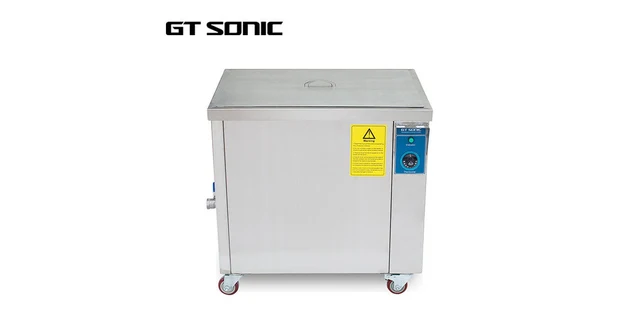
Ultrasonic cleaning does not require a spray nozzle to reach each surface directly. However, the solution must still enter the areas being cleaned. Trapped air, unsuitable chemistry, or overcrowded baskets can prevent the process from delivering the expected result.
How Does Cleaning Performance Change With Different Parts and Contaminants?
Consider two parts taken from the same metalworking workshop. One is a large housing covered with machining oil; the other is a small precision component carrying fine particles from a finishing operation. Both need cleaning, but the conditions that produce a good result are unlikely to be identical.
Oil, loose debris, polishing compounds, and embedded particles behave differently in a cleaning bath. Surface geometry introduces another variable: a smooth exterior is easier to flush than a recess where contamination has collected.
| Cleaning Condition | Conventional Parts Washer | Ultrasonic Parts Washer |
|---|
| Heavy grease and accumulated deposits | Effective for bulk removal | Pre-cleaning may be useful |
| Loose surface debris | Effective with suitable fluid movement | Capable, though often unnecessary |
| Fine machining particles | Requires adequate flushing | Useful for detailed cleaning |
| Polishing compound residues | Relies on chemistry and mechanical action | Can improve removal with suitable chemistry |
| Large structural components | Suitable with correctly sized equipment | Tank capacity may become a constraint |
| Intricate component features | Access and fluid flow affect results | Effective where cleaning liquid can penetrate |
There is also a difference between making a part look clean and preparing it for the next manufacturing step. A component that appears free of oil may still carry residues capable of interfering with coating adhesion or assembly.
Ultrasonic treatment is often considered when those remaining contaminants are difficult to remove with conventional fluid action. Yet it is not a universal solution. Some materials and finishes are sensitive to aggressive cavitation, and certain deposits respond better to chemical soaking or directed flushing.
The required cleanliness level gives the comparison its meaning. Without that reference, it is difficult to say whether one method offers a genuine improvement over another.
Spray Washing, Immersion Cleaning, and Ultrasonic Cleaning in Industrial Production
The term parts washer covers equipment that can look and operate quite differently. A conveyorized spray washer, for example, is built around a steady flow of components, while an immersion tank handles cleaning through liquid contact over a defined period. Ultrasonic systems share the submerged arrangement of immersion equipment but introduce a different form of mechanical action.
Looking at how these methods fit into production helps explain why they are not always interchangeable.
Spray Washing for Repeated Production Cycles
In a spray washing line, components move through a cleaning zone where nozzles deliver liquid at controlled pressure and flow. Rotating baskets or fixtures may expose different sides of the workpiece to the spray.
This arrangement works particularly well when parts have predictable shapes and follow a consistent processing sequence. Once the equipment is set up, repeated loads can move through with limited manual involvement.
Coverage remains important. A poorly positioned component may shield part of its surface from the spray, even when the pump and detergent are functioning correctly.
Immersion Cleaning and Ultrasonic Treatment
Immersion washing takes a different approach. Parts remain in the cleaning solution while chemical action, temperature, and sometimes agitation loosen the deposits.
Adding ultrasonic energy changes what happens within that bath. Cavitation supplies localized cleaning action alongside the detergent, which may improve the removal of residues that ordinary soaking leaves behind.
For an existing immersion process, ultrasonic technology may therefore be considered as an additional cleaning stage or as part of a redesigned cleaning system. Its usefulness comes from the particular contamination problem being addressed, not simply from adding another machine.
What Affects the Operating Cost of an Ultrasonic Parts Washer?
A low purchase price does not always translate into a low cleaning cost. The difference often becomes apparent after equipment has been used across hundreds or thousands of production cycles.
Take manual cleaning. The washer itself may be inexpensive, but time spent brushing individual components, transferring loads, or repeating unsuccessful cycles adds to the cost of every batch. Automated spray washing can remove much of that handling, although maintaining pumps, filters, and nozzle performance remains part of routine operation.
With an ultrasonic parts washer, attention shifts to bath condition, heating requirements, ultrasonic system performance, and the way components are loaded. Contaminated solutions can reduce cleaning effectiveness, while inappropriate loading may make longer cycles necessary without improving the result.
Chemicals, water, electricity, and waste handling also need to be accounted for. Their contribution will vary with the cleaning process and the volume of components being processed.
One practical way to compare alternatives is to calculate the cost per acceptably cleaned part. A process with a longer machine cycle may still be worthwhile if it eliminates substantial manual finishing or reduces rejected components. Equally, there is little reason to introduce a more complex system when straightforward washing already delivers the required cleanliness at a lower cost.
When Is an Ultrasonic Parts Washer Worth Considering?
Cleaning requirements often change gradually. A new machining operation introduces smaller features, a finishing process leaves a different residue, or a customer specification places tighter limits on contamination. Equipment that once performed adequately may begin to require extra attention.
Before replacing a washing system, it is worth identifying where the existing process falls short. Sometimes the issue is poor loading or unsuitable chemistry. In other cases, the mechanical cleaning action itself may be insufficient for the workpiece.
Ultrasonic cleaning offers another option when detailed contaminant removal is needed. The equipment should be configured around the parts being processed, with attention to usable tank dimensions, load weight, temperature control, and the cleaning solution.
GT SONIC's ST-series industrial ultrasonic cleaners include models with heated tanks and adjustable ultrasonic power. These controls provide flexibility when working with different cleaning conditions, although the appropriate settings still need to be established for each application.
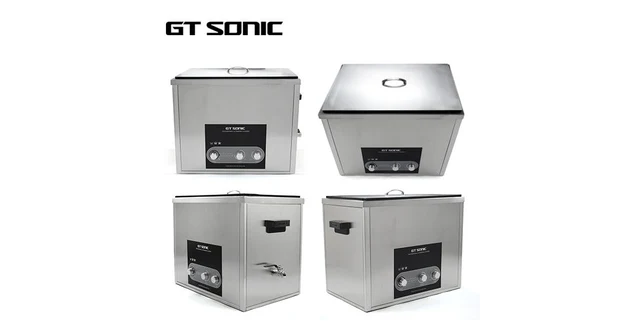
Introducing ultrasonic treatment does not necessarily mean replacing an entire production line. Where the existing washing stages remain effective, an additional cleaning operation may be all that is required.
How Can You Test Whether an Ultrasonic Parts Washer Is Suitable for Your Parts?
A cleaning trial is most useful when it reflects what actually happens during production. Testing one lightly contaminated sample in a freshly prepared bath may demonstrate that the machine operates, but it says little about how the process will perform with normal batch loads.
Start with components carrying representative contamination, including the more difficult residues encountered during regular manufacturing. The next step is to establish how the result will be assessed. Visual inspection may be enough for routine maintenance parts; precision applications may call for particle counting, residual oil analysis, or another defined cleanliness test.
Keep a record of the conditions used during the trial. Cleaning time, bath temperature, detergent concentration, and component positioning can all influence the outcome. If the first result is unsatisfactory, those records make it easier to identify which part of the process needs adjustment.
Once an acceptable result has been achieved, run additional trials with realistic loading arrangements. This is where inconsistencies sometimes become visible, particularly when densely packed components restrict liquid movement or when contamination accumulates in the bath.
Surface condition deserves attention as well. Successful cleaning should not come at the expense of damaged coatings, altered finishes, or other unacceptable changes to the component.
Can Ultrasonic Cleaning Work Alongside a Conventional Parts Washer?
A single cleaning method does not have to carry the entire workload. In some production environments, dividing the operation into stages gives better control over contamination and bath condition.
Consider components arriving from machining with a combination of cutting oil and fine residual particles. Removing the larger contamination load first can prevent it from unnecessarily entering a bath intended for more detailed cleaning.
A process may be arranged as follows:
Pre-Washing → Ultrasonic Cleaning → Rinsing → Drying
Pre-washing reduces the incoming oil and debris. Ultrasonic treatment addresses remaining contamination, after which rinsing removes detergent residues and loosened material. Drying prepares the components for the next manufacturing operation and helps avoid moisture-related problems.
This sequence is not a requirement for every part. Some components can be cleaned adequately in one operation, while others need additional rinsing or drying controls. The stages used should reflect the final cleanliness requirement and the condition in which the components leave the production line.
Frequently Asked Questions About Ultrasonic Parts Washers
Can ultrasonic cleaning remove oil and grease from metal parts?
Yes. Suitable detergents and temperatures allow ultrasonic cleaning to remove many common machining oils and grease deposits. When parts carry unusually heavy contamination, an initial degreasing operation may help keep the ultrasonic bath cleaner for longer.
Does an ultrasonic parts washer clean faster than a traditional washer?
That depends on the task. Automated spray washing can process simple parts quickly, while ultrasonic cleaning may reduce the need for additional manual work on components with detailed features. Comparing the complete cleaning and handling time gives a more realistic result.
Will ultrasonic cleaning damage aluminum or other metal components?
Many aluminum and steel components can be cleaned ultrasonically. However, sensitive surfaces, certain coatings, and some soft materials may be affected by unsuitable cleaning conditions. Trial cleaning helps establish a safe operating range.
When should the ultrasonic cleaning solution be changed?
There is no fixed interval that suits every application. Oil loading, suspended particles, detergent condition, and cleaning results all influence bath life. Monitoring these factors helps determine when filtration, replenishment, or complete replacement is necessary.
What tank size is needed for industrial ultrasonic parts cleaning?
Measure the components and consider how many will be processed together. The basket, load arrangement, and available space around the workpieces affect usable capacity. A tank with a larger nominal volume may not always provide a better fit for a particular application.
Conclusion: Choosing the Right Industrial Parts Cleaning Process
Spray and immersion washers remain practical solutions for many industrial cleaning operations, especially where the parts and contamination are straightforward. Ultrasonic equipment offers a different form of cleaning action that can be useful when more detailed residue removal is required.
What matters is how reliably the process delivers the cleanliness needed for the next production step, and what it takes to maintain that result across regular batches.
If you're considering ultrasonic cleaning for your components, GT SONIC can help you review equipment options based on your part dimensions, materials, contamination type, and production requirements.


