What Can You Put in an Ultrasonic Cleaner and What Should You Avoid
Author: Zoey
Date: 2026-07-14
Read: 7min
Quick Answer
An ultrasonic cleaner is suitable for hard, water-safe, and structurally stable items, such as metal tools, watch bands, some jewelry, dental retainers, eyeglass frames, and plain hard plastic parts. Avoid cleaning electronics, AirPods, speakers, leather, wood, pearls, soft stones, glued items, cracked parts, fragile coatings, and anything with uncertain waterproofing. Before use, check the material, coating, glue, cracks, and whether the item contains electronic components.
Introduction
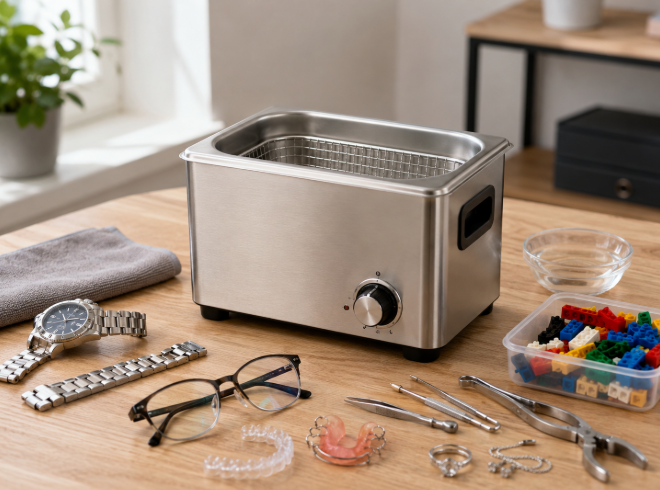
An ultrasonic cleaner uses high-frequency sound waves in liquid to remove dirt, oil, grease, dust, and residue from small gaps, grooves, holes, and hard-to-reach surfaces. It is useful for many household, workshop, dental, jewelry, and industrial cleaning tasks.
However, ultrasonic cleaning is not suitable for every item. Some materials may absorb water, some coatings may peel, and electronic parts may be damaged by liquid and vibration. The safest approach is to judge the item by material, structure, waterproof level, coating, glue, and cleaning solution compatibility.
How to Decide If an Item Is Safe for an Ultrasonic Cleaning Machine
Before placing anything into an ultrasonic cleaning machine, check whether the item can safely handle water, vibration, and cleaning solution.
Check the Material First
Hard, non-porous materials are usually safer. Stainless steel, many metals, glass, ceramic, and some hard plastics can often be cleaned ultrasonically.
Soft, porous, or natural materials are risky. Wood, leather, horn, bone, fabric, foam, pearls, opals, and some soft gemstones may absorb water, swell, crack, lose shine, or deform.
Plastic items require extra care. Plain hard plastic may be safe with warm water and a short cycle, but hot water, long cleaning time, or harsh chemicals may cause warping or fading.
Check for Electronics, Glue, Coatings, and Cracks
Do not put items with batteries, chips, microphones, speakers, charging contacts, or hidden circuits into an ultrasonic bath. Liquid can enter small openings and stay inside even after the outside looks dry.
Also avoid items with weak glue, peeling coatings, unstable paint, stickers, plating damage, or visible cracks. Ultrasonic vibration may loosen weak parts or make existing damage worse.
Before cleaning, ask:
1.Is it waterproof?
2.Does it contain electronics?
3.Does it have glue, paint, coating, or stickers?
4.Is the material porous or delicate?
5.Can it sit in the basket without touching other items?
If you are unsure, manual cleaning is safer.
Items Usually Safe for Ultrasonic Cleaning Equipment
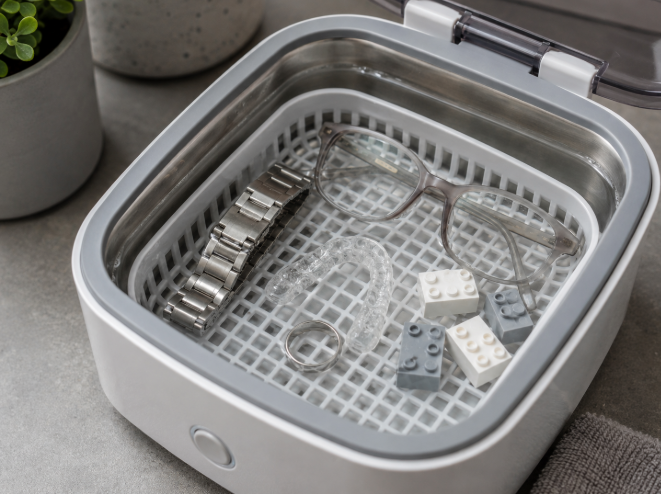
Ultrasonic cleaning equipment works best on items that are hard, water-safe, and stable.
Metal Tools, Parts, and Watch Bands
Many metal items are suitable for ultrasonic cleaning, including stainless steel tools, screws, bolts, small hardware, metal watch bands, carburetor parts, coins, and precision metal components.
A metal watch band can often be cleaned, but a complete watch should not be placed in the tank unless the manufacturer confirms it is safe. Water may enter the case and damage the movement, seals, or electronics.
For automotive or industrial parts, use a compatible degreasing ultrasonic cleaning solution rather than basic household soap.
Some Jewelry, Eyeglass Frames, and Dental Items
Some solid metal jewelry can be cleaned in an ultrasonic cleaner, especially when there are no loose stones or delicate settings. Avoid pearls, opals, emeralds, soft stones, glued stones, and fragile jewelry.
Eyeglass frames may be cleaned if they are stable and water-safe. Be careful with coated lenses, peeling anti-reflective coatings, wood frames, glued decorations, and loose screws.
Dental retainers and mouthguards can often be cleaned with a mild solution, but ultrasonic cleaning does not replace disinfection or sterilization. Medical and dental instruments still require proper post-cleaning treatment.
Plain Hard Plastic Items
Plain hard plastic parts can often be cleaned gently. For example, loose LEGO bricks may be cleaned with warm water, mild soap, and a short cycle.
Do not clean stickered LEGO pieces, valuable printed pieces, electronic LEGO components, motors, lights, battery boxes, old brittle bricks, painted parts, or assembled models that can trap water inside.
For most plastic items, mild soap and warm water are enough. Avoid bleach, alcohol, strong detergents, and high heat.
Items You Should Keep Out of an Ultrasonic Cleaning Tank
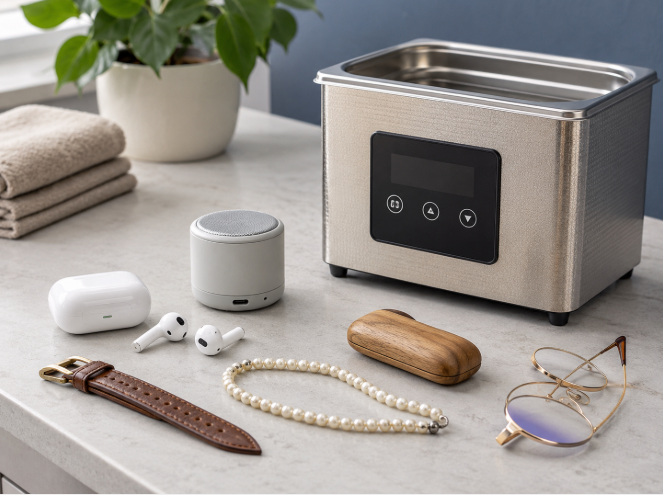
Some items should not be placed in an ultrasonic cleaning tank because the risk of damage is high.
Electronics, AirPods, Speakers, and Earbuds
Do not put AirPods, earbuds, speakers, headphones, smartwatches, hearing aids, phones, or other electronic devices into an ultrasonic cleaner.
These items contain small openings, batteries, microphones, speaker meshes, charging contacts, and circuit boards. Ultrasonic vibration can push liquid into internal areas, causing corrosion, sound distortion, charging failure, or complete device failure.
Only removable, water-safe, non-electronic parts may be cleaned carefully. The complete electronic device should stay out of the tank.
Porous, Soft, or Natural Materials
Avoid ultrasonic cleaning for leather, wood, horn, bone, fabric, foam, pearls, opals, emeralds, and soft or porous gemstones. These materials may absorb water, crack, swell, lose their finish, or become cloudy.
For natural, valuable, or delicate materials, use manual cleaning or follow the care instructions from the manufacturer.
Coated, Painted, Glued, or Damaged Items
Coated, painted, glued, stickered, plated, or cracked items should be handled carefully. Ultrasonic cleaning may lift weak coating, loosen glue, remove unstable paint, or worsen cracks.
Avoid cleaning items with peeling lens coatings, glued rhinestones, loose inlays, cracked plastic, weak plating, or decorative finishes unless you know they are ultrasonic-safe.
What Cleaning Solution Should You Use in an Ultrasonic Bath
The cleaning solution should match the item and the type of contamination. Plain water can remove light dust, but a suitable cleaning agent usually improves performance.
Match the Cleaner to the Material
Use mild soap or neutral cleaner for general household items and hard plastic parts.
Use jewelry cleaning solution only for jewelry materials confirmed safe for ultrasonic cleaning.
Use degreasing ultrasonic cleaning fluid for automotive parts, engine parts, and oily metal components.
Use mild retainer or dental cleaning solution for mouthguards and retainers.
For LEGO bricks and similar plastic items, warm water with a small amount of mild dish soap is usually enough.
Liquids You Should Never Use
Do not use gasoline, diesel, acetone, bleach, strong acids, strong alkalis, flammable solvents, unknown chemical mixtures, or large amounts of alcohol in a standard ultrasonic cleaner.
These liquids may create safety risks, damage the machine, harm the item, or leave unsafe residue.
How to Use an Ultrasonic Cleaner Without Damaging Items
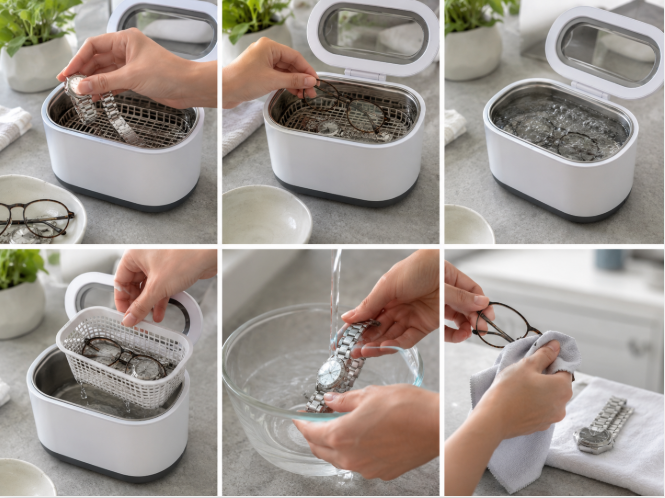
Safe operation is just as important as choosing the right item.
Use the Basket and Avoid Direct Tank Contact
Always place items in the basket or tray. Do not place them directly on the metal tank bottom. Direct contact may cause scratches, reduce cleaning performance, or transfer too much vibration to delicate items.
Do not overload the basket. Items should have enough space around them so the cleaning liquid and ultrasonic energy can reach the surfaces.
Keep the Cycle Short for Delicate Items
For small or delicate items, start with a short cycle. If the item is still dirty, repeat a short cycle instead of running one long cycle.
Avoid unnecessary high temperature unless the material and cleaning solution allow it.
Rinse and Dry After Cleaning
After cleaning, rinse the item with clean water if needed. Dry it completely before use or storage.
This is especially important for items with holes, hinges, grooves, threads, or small cavities where water can remain trapped.
Different Types of Ultrasonic Cleaning Machines and Their Uses
Different ultrasonic cleaning machines are designed for different cleaning needs.
Small Household Ultrasonic Cleaners
Small household ultrasonic cleaners are suitable for eyeglass frames, small jewelry, retainers, watch bands, and light personal cleaning tasks. They are compact and easy to use, but not designed for large parts or heavy oil.
Benchtop Ultrasonic Cleaners
Benchtop ultrasonic cleaners are commonly used in dental clinics, laboratories, repair shops, and small workshops. They offer larger tanks, stronger cleaning performance, timers, heating, and baskets.
They are suitable for tools, dental instruments, small metal parts, lab items, and batch cleaning.
Industrial Ultrasonic Cleaning Equipment
Industrial ultrasonic cleaning equipment is used for engine parts, molds, precision metal components, medical instruments, manufacturing parts, and high-volume cleaning. It may include filtration, lifting baskets, drying stations, and customized tank systems.
When choosing a machine, consider item size, cleaning quantity, material sensitivity, contamination type, tank capacity, frequency, power, heating control, timer function, and cleaning solution compatibility.
FAQ About Ultrasonic Cleaners
1.Can you put LEGO in an ultrasonic cleaner?
Yes, plain loose LEGO bricks can usually be cleaned gently with warm water, mild soap, and a short cycle. Do not clean stickered pieces, printed collectible parts, electronic components, motors, lights, or old brittle bricks.
2.What is the best cleaner for LEGO bricks?
Warm water and a small amount of mild dish soap are usually enough. Avoid bleach, alcohol, strong detergents, solvents, and high heat.
3.Can I put AirPods in an ultrasonic cleaner?
No. AirPods contain batteries, speakers, microphones, charging contacts, and internal circuits. Water and ultrasonic vibration may cause internal damage.
4.Can ultrasonic cleaners clean speakers?
Do not clean a complete speaker in an ultrasonic cleaner. Only removable, water-safe, non-electronic parts may be cleaned carefully.
5.Can I use plain water in an ultrasonic cleaner?
Yes, but plain water has limited cleaning power. For better results, use a mild or material-compatible ultrasonic cleaning solution.
6.Do ultrasonic cleaners sterilize items?
No. Ultrasonic cleaning removes dirt, grease, and residue, but it does not replace disinfection or sterilization. Medical and dental items may still need additional sterilization after cleaning.
Conclusion
An ultrasonic cleaner is useful for hard, water-safe, and stable items, but it is not suitable for everything. Metal parts, watch bands, some jewelry, dental retainers, eyeglass frames, and plain hard plastic items are usually better candidates.
Avoid electronics, AirPods, speakers, leather, wood, pearls, soft stones, glued parts, fragile coatings, cracked items, and anything with uncertain waterproofing.
The safest rule is simple: check the material, structure, coating, glue, electronics, and cleaning solution before cleaning. GT SONIC provides household, benchtop, and industrial ultrasonic cleaning solutions for different cleaning needs, from small personal items to workshop and manufacturing applications.


