The ultrasonic cycle ends and the hinges look cleaner, yet the lenses appear foggy, streaked or covered by a rainbow film. Running the machine again is tempting, but repetition can hide the real cause. The finish may be detergent residue, minerals in the rinse water, contamination transferred from the tank, a dirty drying cloth or permanent lens-coating damage.
The fastest solution is therefore diagnostic: change one variable at a time and begin with the least aggressive test.
| What you see |
Most useful first test |
Likely direction |
| Rainbow film that moves when rinsed |
Rinse thoroughly with clean cool water |
Detergent or oil residue |
| White spots that appear after drying |
Repeat only the final rinse with low-mineral water |
Mineral deposits |
| Haze unchanged by rinsing |
Inspect under diffuse light |
Coating or lens damage |
| Clean lenses but dirty hinges |
Review loading and solution age |
Blocked liquid access |
| Fresh streaks after wiping |
Use a freshly washed optical cloth |
Drying-stage contamination |
Check the Liquid in Your Ultrasonic Eyeglass Cleaner
An ultrasonic eyeglass cleaner transmits acoustic energy through liquid. That liquid is also where loosened skin oil, cosmetics, dust and detergent accumulate. A cycle can remove soil successfully and still leave a poor optical finish if the rinse or drying stage redeposits material.
Start by rinsing the glasses with clean, cool water. If the haze changes or disappears, the problem is probably removable residue rather than a damaged coating. Replace visibly dirty solution and use only the detergent concentration permitted by the equipment and eyewear instructions. More detergent does not prove stronger cavitation; it can simply make rinsing more difficult.
CDC guidance for ultrasonic cleaning notes that used solution can contain contamination and that cleaned items should be inspected. Its healthcare context is different, but the process principle remains useful: a working tank is not the same as permanently clean liquid.
Separate Residue From Lens Damage After Ultrasonic Cleaning
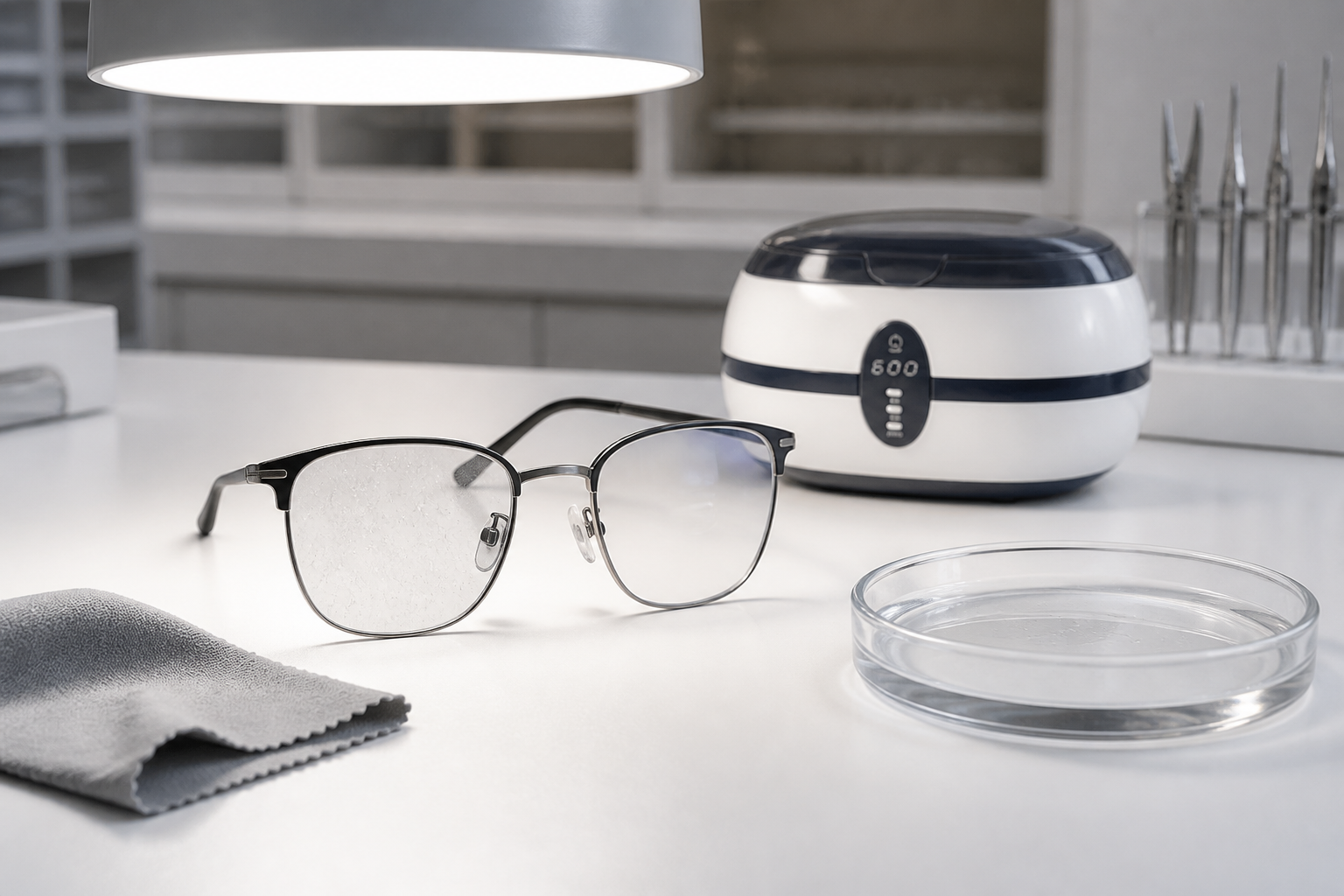
Residue responds to a controlled rinse or gentle wipe; physical deterioration normally does not. After rinsing, let the glasses dry and inspect both sides under broad, diffuse light. Rotate the lenses slowly rather than looking through one bright point source.
A movable smear, soap-like rainbow or isolated water spot suggests something remains on the surface. Persistent milkiness, fine cracking, peeling at an edge or irregular colored patches may indicate coating failure. An ultrasonic spectacle cleaner cannot repair a coating, and longer cycles will not restore optical clarity.
The U.S. Department of Veterans Affairs recommends cool-water rinsing or eyeglass solution followed by a microfiber lens cloth for routine care. Use that simple finishing test before adding more chemistry. If a clean rinse and clean cloth do not change the haze, stop and ask an optician to distinguish contamination from permanent damage.
Inspect How the Ultrasonic Cleaner for Glasses Is Loaded
An ultrasonic cleaner for glasses needs liquid access around the frame. When lenses rest against the tank, items overlap or a basket is crowded, acoustic action and solution circulation cannot reach every surface equally.
Keep eyewear away from the tank bottom and avoid stacking. Position it so liquid surrounds the lenses, nose pads and hinges, while following the model instructions. If one recess repeatedly stays dirty, change the position only with a known-compatible test frame. Valuable coated eyewear should not become a performance probe.
Also consider shadowing by the basket or another object. The fact that one part becomes clean proves that energy exists in the tank, not that every surface received the same cleaning exposure.
Test an Eyeglass Cleaning Machine Without Repeating Risky Cycles
Refresh the system before extending time
Replace the liquid, clean the basket and wipe the tank according to the manual. If the equipment specifies degassing, complete it before evaluating performance. Deposits, spent solution and an incorrect fill level can weaken results without any obvious change in sound.
Use a known-compatible control item
Choose an inexpensive compatible item with visible, removable soil. Photograph it under fixed lighting, run the normal approved cycle and compare. If results remain weak, investigate the machine or process instead of lengthening exposure on eyeglasses.
Treat sound as a clue, not proof
A buzz shows that the unit is operating, but it does not measure uniform cavitation. Peer-reviewed work indexed by the U.S. National Library of Medicine has found limitations in common cavitation tests. Follow the manufacturer鈥檚 validated check rather than relying on bubbles, noise or a homemade foil test alone.
Prevent Streaks With a Better Eyeglass Cleaning Routine
Remove the glasses when the approved cycle ends, rinse away suspended soil and detergent, then let excess water drain. Dry with a dedicated, clean microfiber cloth using light pressure. A cloth that has touched jewelry polish, skin products or workshop parts can transfer contamination back to a clean lens.
Separate the machine from the finishing stage. Keep the rinse container, cloth and drying surface clean, and do not lay cleaned glasses beside untreated items. For repeated commercial use, record solution changes, load arrangement and unexpected results. Patterns often reveal whether failures follow a material, an operator or a maintenance interval.
Use GT SONIC Controls to Make Troubleshooting Repeatable
Timed operation helps hold one variable constant. GT SONIC compact ultrasonic cleaners provide automatic cycle control, allowing users to compare solution age, placement and finishing steps without casually extending cleaning time.
Explore more evidence-led ultrasonic eyeglass cleaner guidance before changing chemistry or frequency. Consistency makes faults easier to isolate and protects eyewear from unnecessary repeat exposure.
FAQs About Glasses Cloudy After Ultrasonic Cleaning
Should I run a second cycle immediately?
No. Rinse and inspect first. Another cycle will not remove permanent coating damage and may add unnecessary exposure.
Does distilled water guarantee clear lenses?
No. Lower mineral content may reduce spotting, but cleaning still depends on compatible chemistry, loading, cavitation and a clean finish.
Why are the hinges clean while the lenses remain streaky?
The machine may have removed hinge soil while detergent, minerals or a contaminated cloth affected the lens finish.
When should I stop troubleshooting at home?
Stop when haze survives a clean rinse, coatings look cracked or lifted, parts loosen, or the cleaner develops abnormal heat, noise or electrical behavior.
Get Help With an Eyeglass Cleaning Machine
A clear diagnosis saves time and avoids needless cycles. Contact GT SONIC with the cleaner model, eyewear material, solution, loading method and visible symptom. Our team can help separate application issues from equipment-service needs.
Authoritative references
CDC, cleaning and ultrasonic equipment
U.S. Department of Veterans Affairs, eyeglass care
PubMed, research on ultrasonic cavitation testing


