5 Best Laboratory Ultrasonic Cleaners for Laboratories in 2026 (Modeled Evaluation & Recommendations)
Author: Zoey
Date: 2026-02-10
Read: 5min
Abstract
Choosing the right laboratory ultrasonic cleaner in 2026 is no longer a “nice to have.” With higher expectations for trace cleanliness, reproducibility, and documented SOPs, ultrasonic baths help labs standardize cleaning of glassware, instruments, and precision components while reducing manual scrubbing and variability. This guide compares five widely used product families across tank size, frequency, programmability, and lab usability, then provides a practical buyer’s guide and best-practice operating parameters.
Introduction: Why Laboratory Ultrasonic Cleaners Are Critical for Modern Labs in 2026
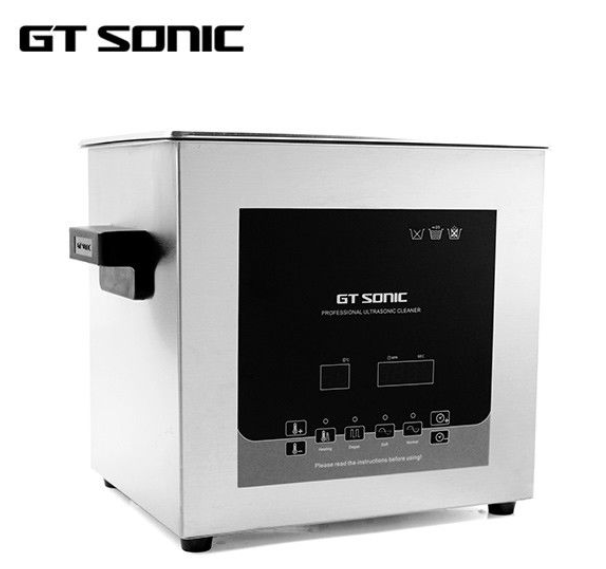
Increasing cleanliness and reproducibility requirements
Modern laboratories are being pushed toward tighter contamination control and more defensible data. Whether you are running analytical chemistry, materials science, cell culture support, or QA/QC, residual films on glassware or tooling can introduce background signals, interfere with coatings, or compromise downstream assays. A laboratory ultrasonic bath provides a repeatable cavitation-driven cleaning process that is easier to document and reproduce than hand washing.
Three trends in 2026 make ultrasonic cleaning especially relevant: (1) higher analytical accuracy standards that magnify small contamination effects; (2) wider use of precision labware, microfluidic parts, and reusable components; and (3) the shift from manual techniques to standardized workflows where time, temperature, chemistry, and ultrasonic energy are set parameters in an SOP.
In practice, a lab ultrasonic cleaner often replaces the “variable human factor” of brushing and rinsing with a controlled cycle: pre-rinse, ultrasonic wash, rinse, and dry. That repeatability improves data confidence and can reduce rework, breakage, and technician fatigue.
Typical laboratory applications
Laboratory ultrasonic cleaners are used for more than just beakers. Common applications include: cleaning lab glassware and precision components, removing protein, grease, wax, and particulate residues, and degassing liquids for sample preparation. Degassing is particularly useful when bubbles would disrupt pipetting, chromatography, or coating processes.
Comparison Overview: Best Laboratory Ultrasonic Cleaners for 2026
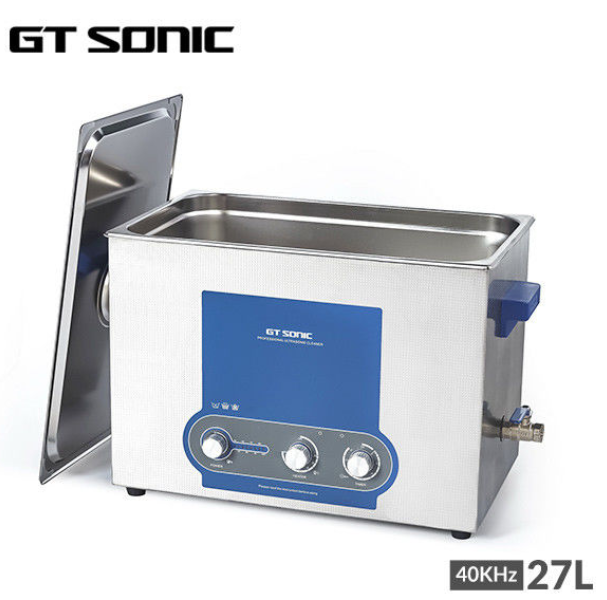
Below is a quick comparison of five popular lab ultrasonic cleaner families. Specifications are representative ranges across each series (models vary).
How We Evaluated These Laboratory Ultrasonic Cleaners
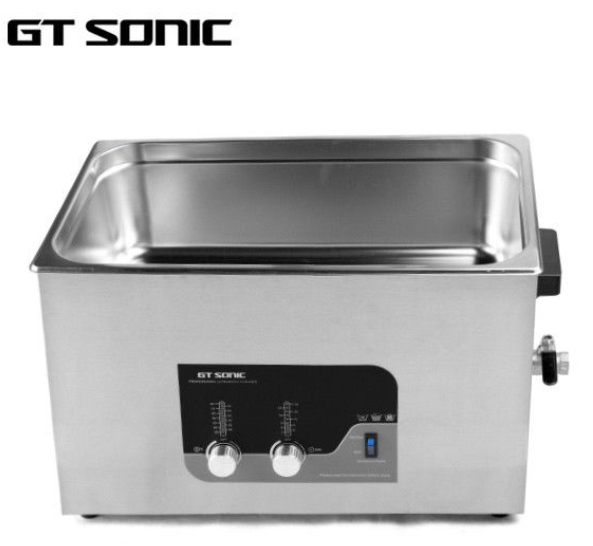
Because labs differ widely, the most useful “best” list is one that explains an objective framework. We modeled realistic lab cleaning scenarios and compared product families using an evidence-based checklist: manufacturer specifications, workflow features, and lab practicality. The goal is to help you select a bath that fits your SOPs rather than to claim a single perfect unit for every lab.
Realistic laboratory cleaning scenarios
The evaluation framework reflects common tasks: cleaning volumetric glassware with residue films, removing protein/grease from tools and fixtures, cleaning small metal parts without pitting, and degassing prepared solutions. These scenarios emphasize consistency across the tank, temperature stability, and controls that support repeatable cycles.
Evaluation criteria (objective framework)
|
Evaluation Factor
|
What Was Assessed
|
Relevance to Labs
|
|
Cavitation uniformity
|
Cleaning consistency across the tank
|
Repeatability
|
|
Frequency suitability
|
Gentle vs strong cleaning behavior
|
Glassware protection
|
|
Noise performance
|
Audible noise at typical bench distance
|
Daily lab usability
|
|
Temperature control
|
Stability, cutoffs, and safe range
|
Process control
|
|
Programmability
|
Timer, power steps, degas/sweep modes
|
SOP standardization
|
|
Build quality
|
Tank, basket, controls, serviceability
|
Reliability & lifespan
|
Buyer’s Guide: Choosing the Right Laboratory Ultrasonic Cleaner
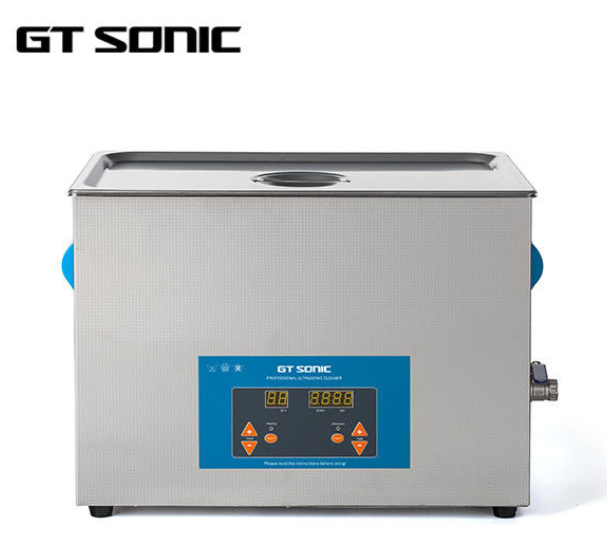
Selecting the correct tank size (laboratory ultrasonic bath)
Tank size should match your largest routine item while leaving clearance for the basket and proper liquid circulation. As a practical rule, do not pack the tank: crowded loads reduce cavitation exposure and cleaning consistency.
Typical sizing guidelines:
• 2-3 L: teaching labs, small benchtops, and quick cycles for small parts.
• 6-10 L: routine analytical and research labs handling mixed glassware and tools.
• 30 L and above: batch processing, shared facilities, or industrial-lab crossover workloads.
Frequency considerations for lab ultrasonic cleaners
Ultrasonic frequency affects bubble size and cleaning aggressiveness. Lower frequencies tend to create stronger cavitation for robust items, while higher frequencies are gentler for delicate surfaces. Many laboratories benefit from dual-frequency units that switch between “strong clean” and “gentle clean” modes.
Common lab ranges:
• 35-40 kHz: strong cavitation for robust lab equipment and heavier contamination.
• 45 kHz: balanced cleaning for mixed labware and general-purpose workloads.
• 65 kHz: gentle cleaning for delicate glassware, optics, and fine features.
Essential features for lab environments
For a lab ultrasonic cleaner that fits regulated or documentation-heavy environments, prioritize: accurate timer control, stable heating with over-temperature protection, a drain for larger tanks, a basket that keeps items off the tank bottom, and functions like degas and power adjustment. If you run multiple SOPs, programmability and consistent user interfaces across tank sizes can save time and reduce mistakes.
Best Overall Laboratory Ultrasonic Cleaner: GT SONIC L-Series
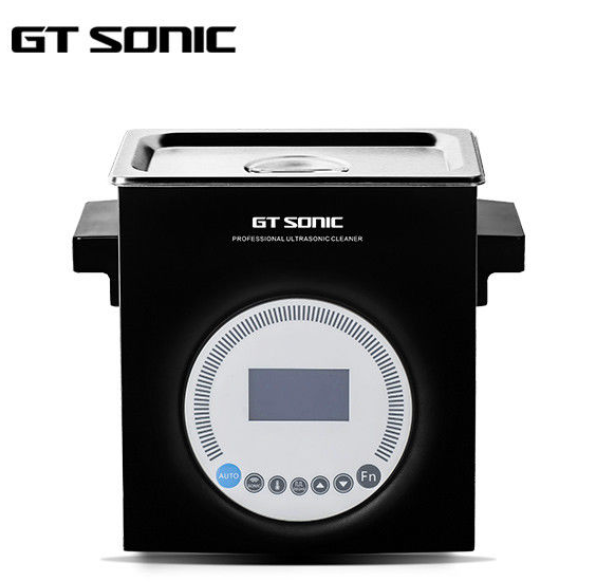
Overview
The GT SONIC L-Series is positioned as a programmable laboratory ultrasonic bath designed for repeatable workflows. A key advantage is dual-frequency operation (45/65 kHz) across multiple tank sizes, letting labs choose stronger or gentler cleaning behavior without changing platforms.
Key specifications (from product background)
|
Model
|
Volume
|
Frequency
|
Ultrasonic Power
|
Heating Power
|
Temperature Range
|
Timer
|
|
L3
|
3 L
|
45 / 65 kHz
|
100 W
|
100 W
|
0-65 C
|
1-60 min
|
|
L6
|
6 L
|
45 / 65 kHz
|
150 W
|
300 W
|
0-65 C
|
1-60 min
|
|
L10
|
10 L
|
45 / 65 kHz
|
200 W
|
300 W
|
0-65 C
|
1-60 min
|
|
L30
|
30 L
|
45 / 65 kHz
|
500 W
|
500 W
|
0-65 C
|
1-60 min
|
Practical laboratory advantages
For 2026 lab operations, the most practical strengths are workflow-oriented: dual-frequency flexibility, consistent temperature range for heated cleaning chemistries, and timer control suitable for SOPs. Labs that frequently alternate between delicate glassware and more robust metal fixtures can standardize on one series and adjust frequency and cycle parameters rather than maintaining separate units.
The series format also makes scaling easier. If you start with a 3 L or 6 L benchtop bath and later add a 10 L or 30 L unit for batch work, the operating logic remains similar, reducing training overhead.
Objective assessment
This series scores well when you value programmability and gentle-clean options. The primary trade-off is that labs should verify basket fit, drain configuration on larger tanks, and how power adjustment is implemented in the model they select. As with any lab ultrasonic cleaner, performance depends on proper load spacing, chemistry choice, and routine maintenance.
Branson CPX Series Laboratory Ultrasonic Cleaner
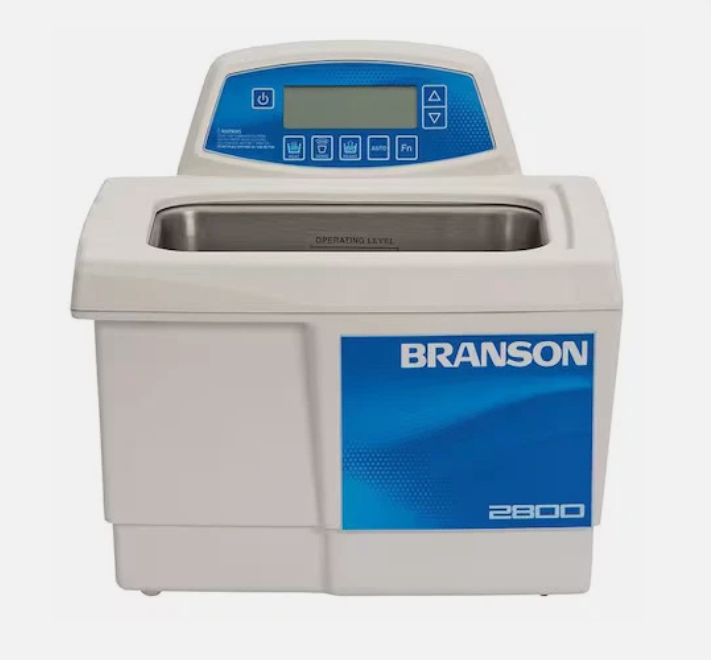
Overview
Branson’s CPX series is a common choice in academic and industrial labs where reliability and support matter. These general lab ultrasonic cleaners typically operate around 40 kHz, making them suitable for routine glassware and tool cleaning.
Strengths and limitations
Strengths: a long-standing reputation for durability, consistent day-to-day operation, and broad service availability. Limitations: fewer frequency options and less workflow programmability than dual-frequency or advanced control platforms.
Best suited for
Teaching labs and routine QA/QC cleaning where standardized outcomes are needed but highly specialized cycles are not. If your lab already has established cleaning chemistries and simply needs a dependable ultrasonic bath, CPX is often a safe pick.
Elma Elmasonic S Series Laboratory Ultrasonic Bath
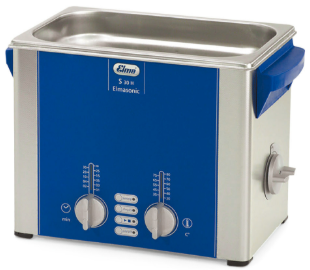
Overview
The Elmasonic S series is frequently chosen for precision cleaning where uniform cavitation and gentle handling are priorities. German-engineered design and refined controls often appeal to analytical environments and labs handling sensitive parts.
Strengths and limitations
Strengths: uniform cleaning behavior, strong usability, and a reputation for gentler treatment of delicate components. Limitations: higher acquisition cost compared with basic ultrasonic baths of similar volume.
Best suited for
Analytical labs, optics, and sensitive instruments where surface preservation matters as much as cleanliness. If you routinely clean fragile glassware, lenses, or precision assemblies, this category is worth prioritizing.
Bandelin Sonorex RK Series Lab Ultrasonic Bath
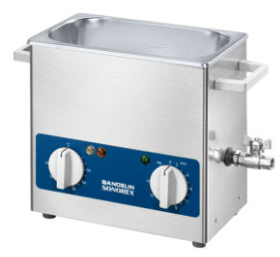
Overview
Bandelin’s Sonorex RK series is designed for heavier workloads and larger batch sizes. With tank options extending to high volumes, it fits labs that run continuous or near-continuous cleaning cycles.
Strengths and limitations
Strengths: robust construction, broad size range, and suitability for high-throughput routines. Limitations: larger, higher-power baths can be noisier than low-noise precision models, which may matter in shared lab spaces.
Best suited for
Industrial laboratories, shared facilities, and continuous-use applications where throughput and durability outweigh compactness.
Fisherbrand Ultrasonic Cleaner for Laboratories
Overview
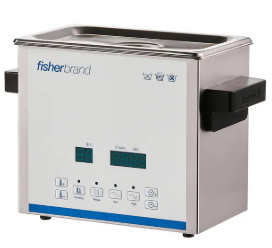
Fisherbrand ultrasonic cleaners are often selected as accessible, entry-level lab equipment cleaners for routine needs. They typically cover common benchtop volumes and straightforward controls suited to general maintenance.
Strengths and limitations
Strengths: cost-effective, widely available, and easy for new users to operate. Limitations: limited advanced features such as multi-step programs, fine power control, or dual-frequency modes.
Best suited for
Routine glassware cleaning and general lab upkeep, especially where budget and simplicity are key considerations.
Best Practices: Using a Laboratory Ultrasonic Bath Safely and Effectively
Typical operating parameters (example table)
Actual parameters depend on chemistry, contamination type, and item material. Use the table below as a starting point, then refine within your lab’s SOP and safety rules.
|
Application
|
Frequency
|
Temperature
|
Time
|
|
Glassware cleaning
|
65 kHz
|
40 C
|
10 min
|
|
Metal components
|
45 kHz
|
50 C
|
15 min
|
|
Degassing liquids
|
N/A
|
30 C
|
5-10 min
|
Maintenance and safety considerations
Key safety and maintenance habits include: always use a basket (do not place items directly on the tank bottom), keep liquid level within the marked range, and avoid operating the unit dry. Change solutions before they become heavily loaded with soils, and run a degas cycle after filling to improve cavitation. For heated cleaning, confirm temperature limits for plastics, adhesives, and any calibration markings on glassware. Finally, document your parameters (chemistry, temperature, time, load type) so results remain consistent across technicians.
Conclusion: Selecting the Best Laboratory Ultrasonic Cleaner for 2026
The best laboratory ultrasonic cleaner is the one that matches your actual workflow: tank size that fits your typical loads, frequency that protects your most delicate items, and controls that let you lock in repeatable SOPs. If you want one versatile platform for mixed labware and sample-prep support, dual-frequency options like the GT SONIC L-Series can make standardization easier. If reliability and support are the priority, Branson CPX remains a practical workhorse. For sensitive instruments, precision-focused lines such as Elmasonic S are often favored, while Bandelin’s larger RK baths fit high-throughput environments. For straightforward routine cleaning on a budget, Fisherbrand units can be a solid starting point.
No matter which model you choose, the biggest performance gains usually come from process discipline: right chemistry, proper loading, degassing, and documented parameters. When your ultrasonic bath is treated as a controlled process tool rather than a simple “cleaning box,” it becomes a measurable contributor to data quality and lab efficiency.


