A scratch can seem to disappear when glasses come out of an ultrasonic bath. The lens looks clearer, reflections change, and the line is less obvious. That improvement is real, but it does not mean missing lens material has been rebuilt. Ultrasonic cleaning removes contamination; it is not a polishing, coating or resurfacing process.
| What you see | What may be happening | Best next step |
|---|
| Line moves after rinsing | Oil, detergent or a fiber on the surface | Rinse and inspect again |
| Fine mark stays in one position | True abrasion or coating damage | Stop repeated cycles and ask an optician |
| Rainbow patch near an edge | Possible coating deterioration | Avoid aggressive cleaning |
| Many marks appear after soil is removed | Old scratches are now easier to see | Do not blame cleaning without inspection |
Can an Ultrasonic Eyeglass Cleaner Remove Scratches?
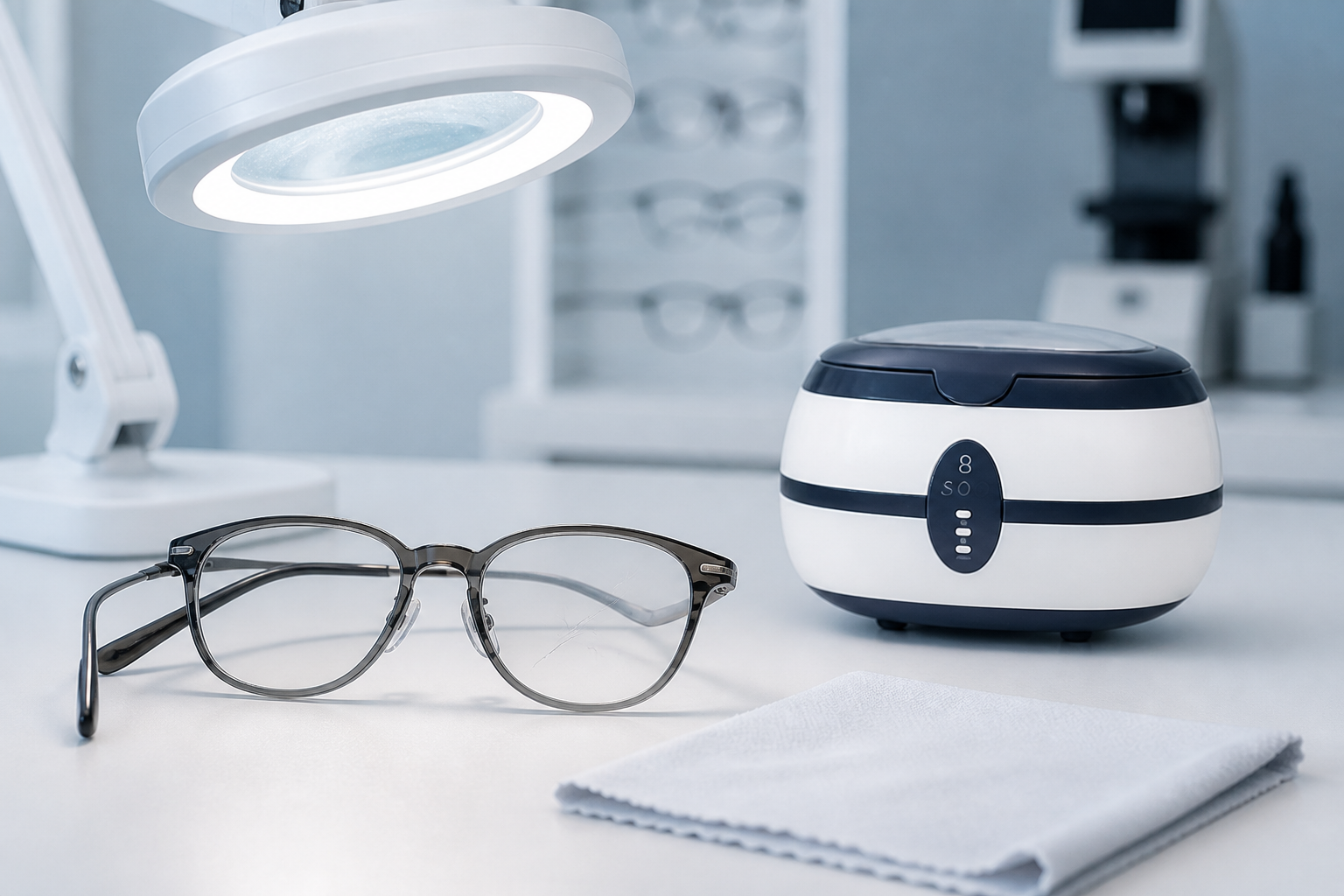
No. A genuine scratch is a physical change in the lens surface or one of its coatings. Restoring it would require adding material, removing surrounding material in a controlled way, or replacing the damaged layer. An ultrasonic eyeglass cleaner does none of those things.
The FDA explains that ultrasonic energy creates cavitation: small bubbles rapidly form and collapse, producing a scrubbing action on an immersed surface. That mechanism is valuable for loosening skin oil, dust and debris around hinges and nose pads. It does not fill a groove or recreate an anti-reflective coating.
Cleaning can nevertheless change how a scratch looks. Oil inside a shallow groove alters reflection. Once the oil is removed, the mark may look sharper, fainter or simply different under another light angle. The surface has become cleaner, not repaired.
Separate Lens Residue from Scratch Damage
Start with a cool-water rinse and diffuse light. The U.S. Department of Veterans Affairs recommends rinsing eyeglasses or using an eyeglass cleaning solution, followed by a microfiber lens cloth to reduce scratching risk. This provides a useful low-aggression inspection step.
Rotate the lens slowly. Residue usually smears, moves or changes after rinsing. A scratch stays fixed in relation to the lens. Coating damage may appear as irregular haze, fine crazing, peeling at an edge or a colored patch that does not wash away.
Do not use toothpaste, baking soda or household polish as a diagnostic method. Abrasives may alter the surrounding optical surface and remove functional coatings. Once material has been changed, the original lens geometry and coating performance cannot be restored by ordinary cleaning.
Why Scratched Coated Lenses Need Extra Caution
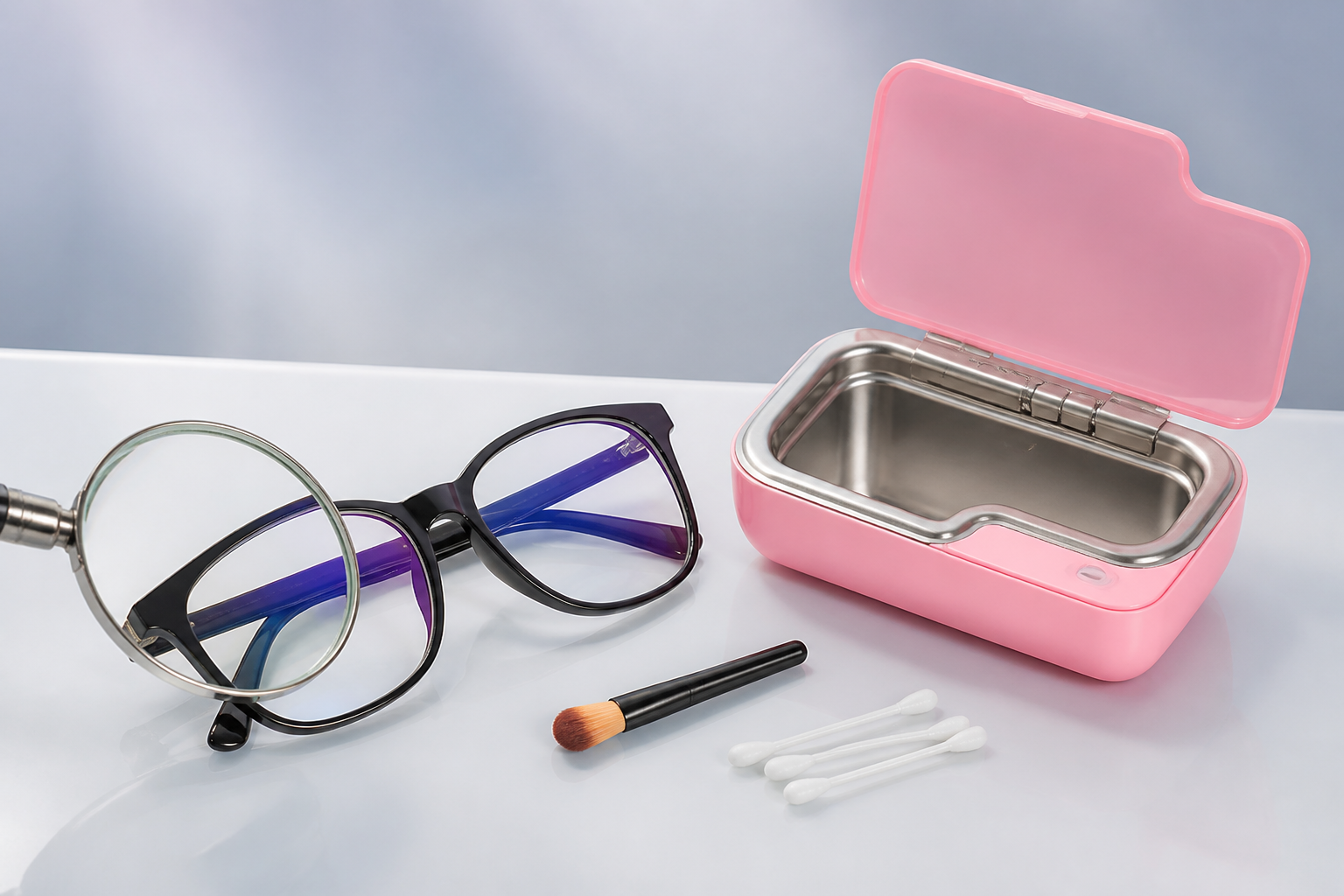
Modern lenses may combine a hard coat, anti-reflective layers, hydrophobic treatment, tint, photochromic chemistry or polarization. A visible line may affect the substrate, the outer coating or several layers. The correct response therefore depends on what is damaged.
Peer-reviewed work from the University of Waterloo found that coating systems materially changed the abrasion and impact behavior of CR-39 lenses. Another study from the University of California, Berkeley reported substantial differences in fracture energy among coated and uncoated test groups. These studies do not test household ultrasonic cleaners, but they demonstrate why a coated lens should not be treated as a uniform block of plastic.
If a coating is already lifting, cracked or cloudy, ultrasonic exposure cannot rebond it. Cleaning may reveal the boundary more clearly, and a deteriorated area may continue to fail. The safest decision is inspection by the lens supplier or an optician before further immersion.
Use an Ultrasonic Cleaner for Glasses Without Hiding the Problem
Begin with one compatible pair in good structural condition. Use the approved basket, keep the lenses away from the tank, select a mild compatible liquid and run the shortest validated cycle. Rinse thoroughly and inspect under the same lighting used before cleaning.
Photographing a suspicious mark before the cycle can help. Match the lens angle and light direction afterward. If the line remains in the same position, treat it as damage rather than leftover soil. If the mark moves or disappears with a rinse, it was more likely contamination.
Avoid repeating cycles simply because a scratch remains. More time cannot convert cleaning into repair. Repetition only adds exposure to liquid, chemistry and vibration while delaying the correct decision.
What an Ultrasonic Spectacle Cleaner Can Improve
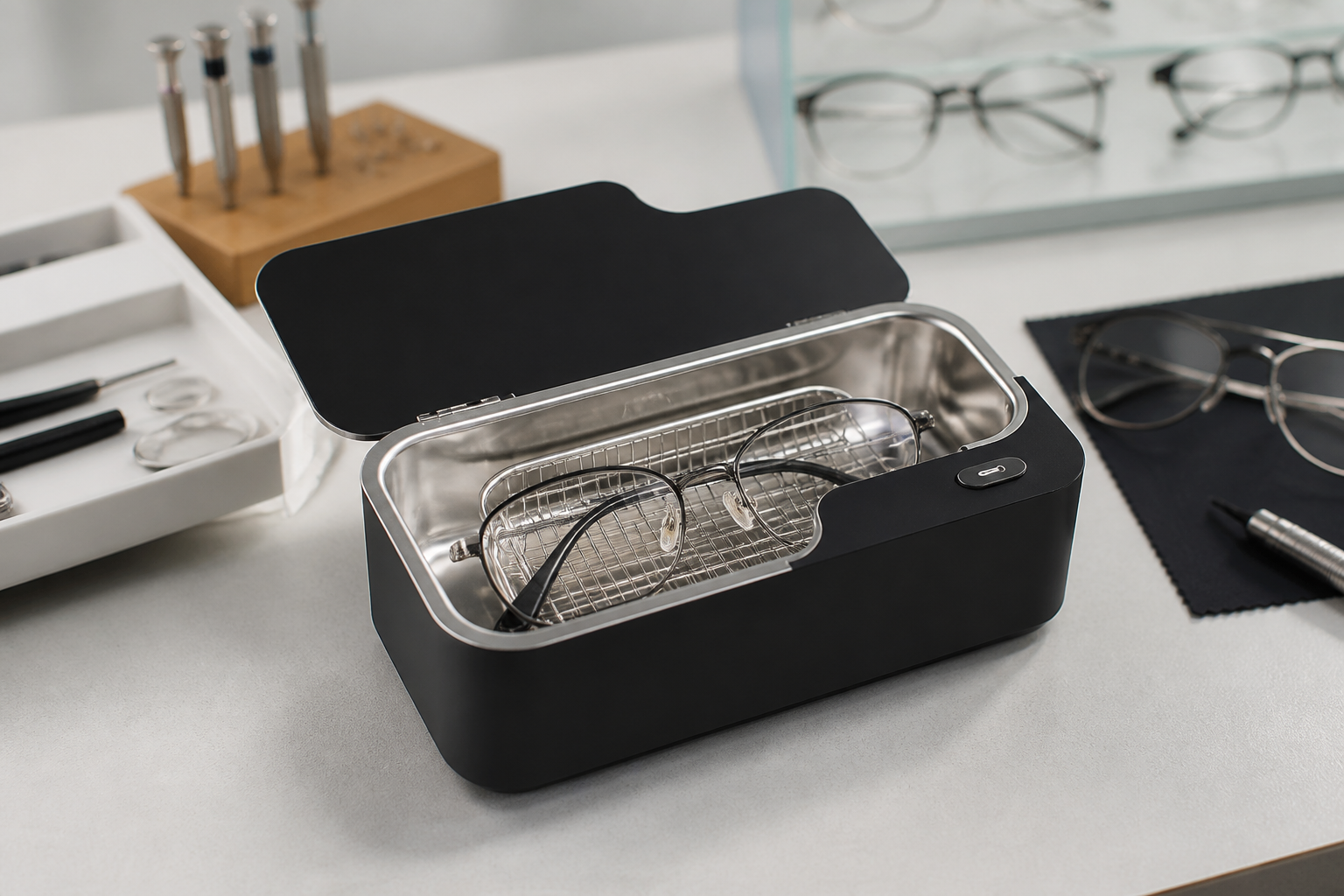
An ultrasonic spectacle cleaner is most useful where a cloth has limited access: hinge barrels, nose-pad mounts, screws and the narrow frame-to-lens boundary. Removing soil from those areas can improve appearance, comfort and inspection accuracy.
It can also reduce the temptation to rub dusty lenses aggressively. That is a preventive benefit, not a repair claim. Careful loading, compatible solution and clean finishing materials still matter.
If a lens still looks hazy after the surface has been rinsed, use our guide to diagnosing cloudy or streaky glasses after ultrasonic cleaning. It helps separate removable detergent or mineral film from permanent coating deterioration before another cycle is attempted.
Before immersing specialty lenses or an older frame, review which glasses should not be cleaned in an ultrasonic cleaner. That compatibility checklist is especially useful when a visible scratch is accompanied by peeling coatings, loose mountings or glued decorations. A compact home ultrasonic glasses cleaner should be selected for tank fit and controllable cycles, not marketed as a scratch-removal machine.
When Scratched Glasses Need Professional Help
Seek an optician when a mark affects central vision, produces glare, appears to be spreading, or is accompanied by coating haze, a crack or frame damage. A professional can distinguish surface contamination from coating failure and advise whether the lens needs replacement.
Deep scratches and cracks are not cosmetic cleaning problems. They may distort vision or weaken the lens. Stop experimenting with stronger chemicals or longer cycles when the result is unchanged.
FAQs About Scratches and Ultrasonic Glasses Cleaning
Why did more scratches appear after cleaning?
Removing oil and dirt can expose marks that were already present. Compare before-and-after photos under the same light before assuming new damage.
Can ultrasonic cleaning polish plastic lenses?
No. Cavitation loosens contamination; it does not perform controlled optical polishing.
Will water fill a micro-scratch?
Water may temporarily change reflection while the lens is wet, but the scratch returns when the surface dries.
Can I clean scratched lenses anyway?
Only after confirming the lens, coating and frame remain suitable for immersion. Damaged coatings need professional advice.
Choose the Right GT SONIC Eyeglass Cleaning Process
Tell GT SONIC what frames, coatings and daily workload you handle. Contact our team to discuss tank fit, basket design and repeatable cycle controls for safe soil removal without unsupported scratch-repair claims.
Authoritative references
U.S. FDA: Evaluation of Ultrasonic Cleaning Processes
U.S. Department of Veterans Affairs: How to Care for Your Eyeglasses
University of Waterloo: Durability of Coated CR-39 Industrial Lenses
UC Berkeley: Effects of Coatings on Ophthalmic Lens Fracture Resistance


