What Is Degas Mode in a Laboratory Ultrasonic Cleaner and When Should You Use It?
Author: Zoey
Date: 2026-06-18
Read: 6min
Summary:
Degas mode in a laboratory ultrasonic cleaner is a function used to remove dissolved air from the cleaning liquid before ultrasonic cleaning begins. This process helps the ultrasonic bath produce more stable cavitation, especially after fresh water or a new cleaning solution has been added.
Many users fill a lab ultrasonic cleaning machine with water or detergent solution and start the cleaning cycle immediately. However, fresh liquid usually contains dissolved air. This trapped gas can reduce cavitation strength during the first cleaning cycle, making the cleaning result less consistent. A degassing ultrasonic cleaner helps prepare the liquid first, so the ultrasonic energy can work more effectively.
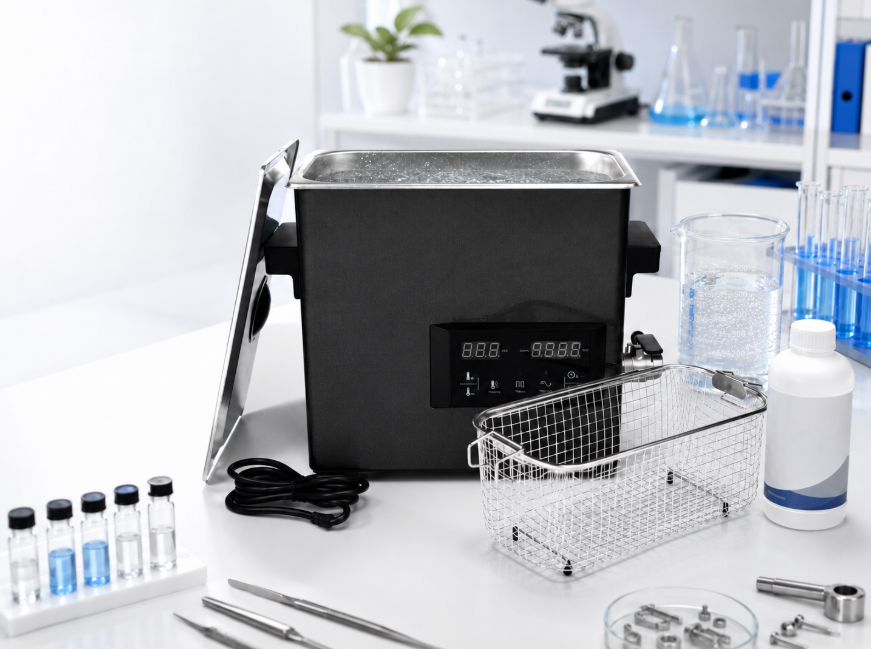
For laboratories that clean glassware, sample vials, stainless steel tools, small instruments, or precision parts, ultrasonic degassing can improve repeatability. It is especially useful when the ultrasonic cleaning equipment is used in SOP-based workflows where stable cleaning performance matters.
What Is a Degassing Ultrasonic Cleaner?
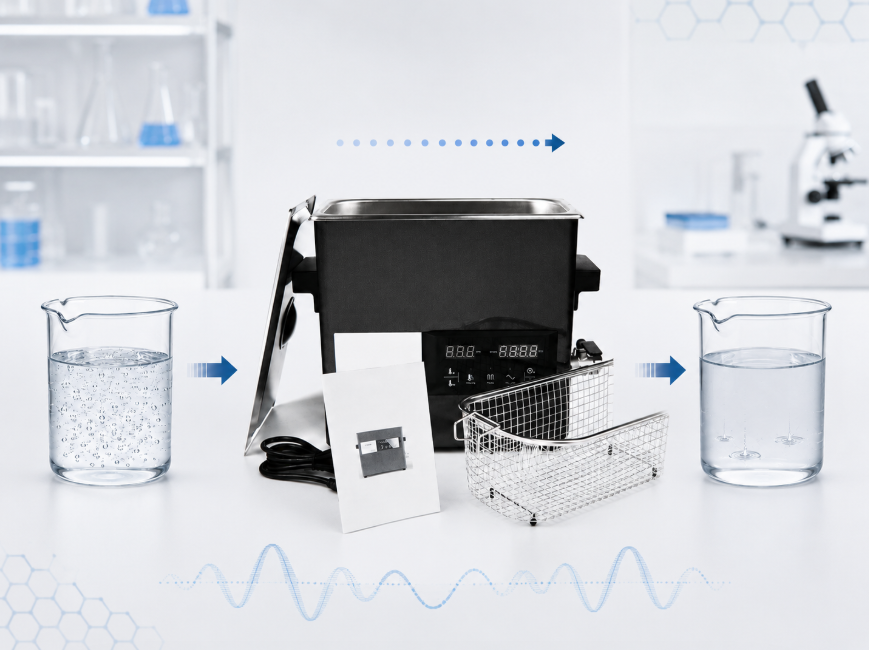
A degassing ultrasonic cleaner is an ultrasonic cleaning device with a Degas mode or degassing function. This function helps release dissolved air from water or cleaning solution before the normal cleaning cycle starts.
How Does Degas Mode Work in a Lab Ultrasonic Cleaning Machine?
Degas mode works by using ultrasonic energy in a controlled or pulsed pattern to help trapped air escape from the liquid. Compared with simply letting the liquid stand in the tank, a digital ultrasonic cleaning unit can speed up this process and make it easier to repeat.
When Degas mode is running, users may see small bubbles rising from the bottom or sides of the tank. This usually means dissolved gas is being released from the cleaning liquid.
What Does Degassing Do in an Ultrasonic Cleaner?
Degassing removes excess air from the cleaning liquid so cavitation can become stronger and more stable. Too much dissolved gas can absorb ultrasonic energy and weaken the bubble collapse that performs the cleaning action.
This is why ultrasonic cleaner degassing is often recommended before cleaning narrow glassware, small metal parts, or laboratory instruments with grooves and hard-to-reach surfaces.
Why Does Ultrasonic Degassing Improve Cleaning Performance?
Ultrasonic degassing improves cleaning performance by helping cavitation bubbles form and collapse more effectively. Once excess air is removed, ultrasonic energy can transfer through the liquid more efficiently.
Why Does Trapped Air Weaken Cavitation in an Ultrasonic Bath?
Trapped air weakens cavitation because gas can cushion the collapse of ultrasonic bubbles. Instead of producing strong microscopic cleaning action near the item surface, excess gas may reduce the impact of ultrasonic energy.
This is why the first cleaning cycle in a freshly filled laboratory ultrasonic bath may be less effective if the liquid has not been degassed. A Degas function helps reduce this issue before cleaning starts.
How Does Degassed Liquid Help Laboratory Glassware and Instruments?
Degassed liquid helps laboratory glassware and instruments receive more stable ultrasonic action. Beakers, flasks, test tubes, sample vials, stainless steel tools, and small components can benefit from more uniform cavitation.
For example, narrow-neck flasks and small instrument parts often have areas that are difficult to reach manually. A properly degassed ultrasonic cleaning bath can support better cleaning consistency in these areas.
When Should You Use Degas Mode in a Laboratory Ultrasonic Bath?
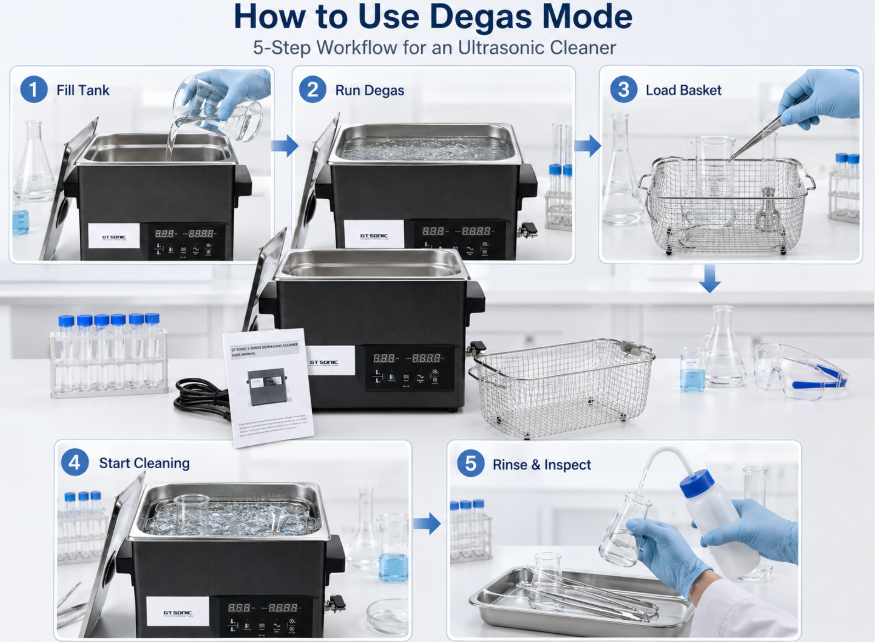
You should use Degas mode whenever fresh water or new cleaning solution is added to the tank. Fresh liquid usually contains dissolved air, so degassing before cleaning helps prepare the bath.
Should You Degas Before the First Cleaning Cycle?
Yes, you should degas before the first cleaning cycle because freshly added liquid contains the most trapped air. Running Degas mode first helps stabilize the liquid before glassware or instruments are cleaned.
|
Step
|
Action
|
Purpose
|
|
1
|
Fill the tank with water or cleaning solution
|
Prepare the cleaning liquid
|
|
2
|
Run Degas mode
|
Remove dissolved air
|
|
3
|
Load glassware or instruments
|
Avoid overcrowding
|
|
4
|
Start ultrasonic cleaning
|
Use stable cavitation
|
|
5
|
Rinse and inspect
|
Confirm cleaning result
|
Should You Degas After Replacing the Cleaning Solution?
Yes, you should degas after replacing the cleaning solution because new liquid introduces new dissolved air. Even if the same ultrasonic cleaning machine was degassed earlier, the process should be repeated after a refill.
This is especially important when switching from plain water to detergent solution, adjusting concentration, or preparing the bath for more sensitive laboratory items.
How Often Should an Ultrasonic Cleaning Device Be Degassed?
An ultrasonic cleaning device should be degassed whenever the tank is filled with fresh liquid. For most lab workflows, one degassing cycle at the start of each fresh bath is usually enough.
What Is a Simple Rule for Ultrasonic Cleaner Degassing?
A simple rule is: new liquid needs degassing. If you refill the tank, replace the cleaner solution, or prepare a new bath, run Degas mode before the main cleaning cycle.
This habit is easy for lab operators to follow and helps prevent weak first-cycle cleaning results.
What Are the Signs That a Lab Ultrasonic Bath Needs Degassing?
A lab ultrasonic bath may need degassing if many tiny bubbles continue rising from the liquid, if cleaning looks weak after refilling, or if the first cycle performs worse than later cycles.
If the liquid was just changed, degassing should be done before troubleshooting cleaning time, temperature, or cleaner concentration.
What Is the Optimal Temperature for Ultrasonic Cleaning Degassing?
The optimal temperature for ultrasonic cleaning degassing depends on the liquid, residue, and items being cleaned. Mild warmth can help dissolved gas escape faster, but high temperature is not always necessary.
Can a Heated Ultrasonic Cleaning Machine Improve Degassing?
A heated ultrasonic cleaning machine can support faster degassing when moderate warmth is safe for the cleaning liquid and items. Warm liquid usually releases dissolved gas faster than cold liquid.
This can be useful for general cleaning, oily residues, or stainless steel tools. However, temperature should still match the cleaning application.
When Should Lower Temperature Be Used During Degassing?
Lower temperature should be used when cleaning heat-sensitive parts, protein residues, coated items, calibrated tools, or materials that may deform. In these cases, Degas mode can still work, but it may take slightly longer.
A digital ultrasonic cleaning unit with timer and temperature control is helpful because it allows labs to repeat the same degassing conditions more consistently.
Which Lab Applications Benefit from Ultrasonic Degassing?
Lab applications benefit from ultrasonic degassing when cleaning consistency matters. Degas mode is most useful when fresh liquid is added, when small or complex items are cleaned, or when stable cavitation is important.
Degas Mode for Laboratory Glassware Cleaning
Degas mode helps laboratory glassware cleaning by preparing the liquid before cavitation starts. Beakers, flasks, test tubes, and sample vials may be cleaned more consistently when the bath is degassed first.
This does not replace proper cleaning solution selection. Degassing only improves the condition of the liquid; the cleaning agent still needs to match the residue type.
Ultrasonic Degassing for Small Instruments and Stainless Steel Tools
Ultrasonic degassing is useful for small instruments and stainless steel tools because these items often have grooves, holes, or detailed surfaces. Stable cavitation can help the cleaning liquid reach these areas more effectively.
A GT SONIC lab ultrasonic cleaning machine with Degas mode, basket, heating control, and timer settings can support this type of routine cleaning workflow.
Degassing for Sample Preparation and Liquid Handling
Ultrasonic degassing can also support selected sample preparation or liquid handling workflows. For example, some labs use ultrasonic energy to help reduce dissolved gases in certain liquids.
However, if the main purpose is liquid degassing rather than object cleaning, specialized ultrasonic degassing equipment may be considered. For routine lab cleaning, a laboratory ultrasonic cleaner with Degas mode is usually more practical.
How to Choose Lab Ultrasonic Cleaning Equipment with Degas Mode?
Lab ultrasonic cleaning equipment with Degas mode should be chosen based on tank size, timer control, heating function, basket compatibility, and the items being cleaned. The goal is to make cleaning preparation more repeatable.
What Features Matter in a Degassing Ultrasonic Cleaner?
The most useful features are Degas mode, stable ultrasonic output, digital timer, stainless steel tank, heating control, and suitable accessories.
|
Feature
|
Why It Matters
|
|
Degas mode
|
Removes dissolved air before cleaning
|
|
Digital timer
|
Makes degassing time repeatable
|
|
Heating control
|
Supports faster degassing when safe
|
|
Stainless steel tank
|
Suitable for routine laboratory use
|
|
Basket compatibility
|
Keeps items properly positioned
|
|
Correct tank size
|
Prevents overcrowding and weak cleaning
|
What Are the Best Ultrasonic Cleaning Machines for Degassing Applications?
The best ultrasonic cleaning machines for degassing applications are models with a clear Degas function, stable cavitation, timer control, and tank size suitable for the lab workload.
For routine lab use, buyers should choose a model based on the size of glassware or instruments, daily cleaning volume, whether heating is needed, and whether the degassing function is available.
How Does GT SONIC Support Ultrasonic Cleaner Degassing?
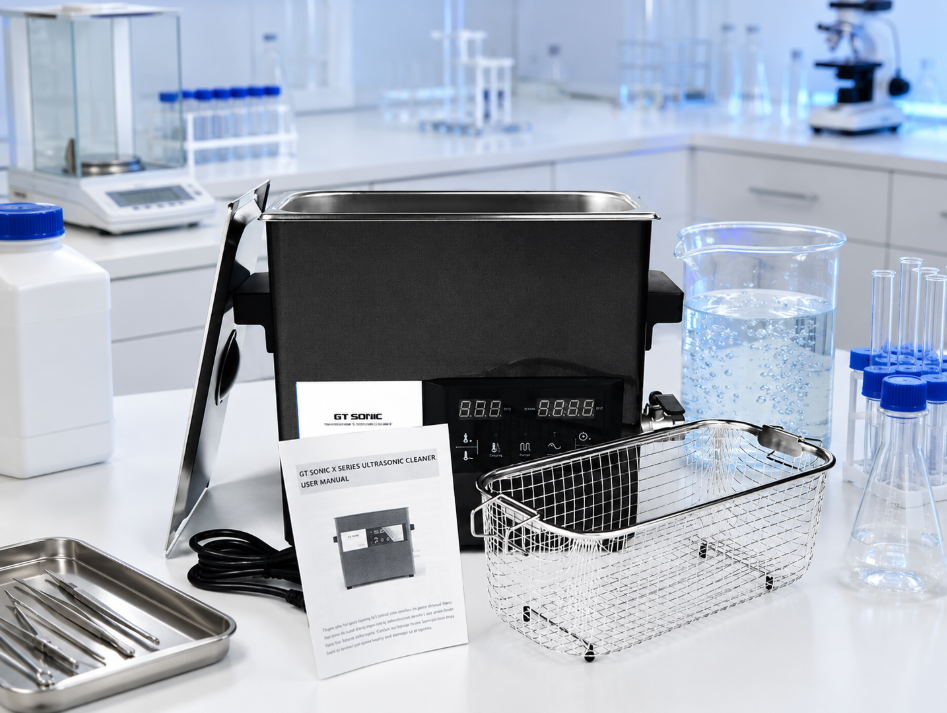
GT SONIC supports ultrasonic cleaner degassing through selected models with Degas mode, digital control, heating function, stainless steel tanks, and baskets. These features help labs prepare cleaning liquid before running the main ultrasonic cycle.
Why Choose a GT SONIC Ultrasonic Cleaning Machine with Degas Mode?
A GT SONIC ultrasonic cleaning machine with Degas mode is useful for labs that often replace water or cleaning solution. The Degas function helps stabilize the liquid and improve first-cycle cleaning consistency.
This is suitable for laboratories cleaning glassware, small tools, sample containers, stainless steel parts, and precision components.
How Can GT SONIC Help with Model Selection?
GT SONIC can help users choose suitable ultrasonic cleaning equipment based on tank capacity, cleaning workload, item size, heating needs, and Degas mode requirements.
FAQ About Degas Mode and Ultrasonic Degassing
1.What Is Degas Mode in an Ultrasonic Cleaner?
Degas mode is a function that removes dissolved air from the liquid inside an ultrasonic tank. It prepares the bath for more stable cavitation before cleaning begins.
2.What Is a Degassing Ultrasonic Cleaner?
A degassing ultrasonic cleaner is an ultrasonic cleaning device with a built-in Degas function. It helps remove trapped air from fresh water or cleaning solution before the main cleaning cycle.
3.What Does Degassing Do in an Ultrasonic Cleaner?
Degassing removes trapped air from the cleaning liquid so ultrasonic cavitation can work more effectively. This helps improve cleaning consistency, especially after fresh liquid is added.
4.How Does Ultrasonic Degassing Improve the Cleaning Process?
Ultrasonic degassing improves cleaning by reducing gas interference in the liquid. With less trapped air, cavitation bubbles can collapse more effectively near the item surface.
5.When Should You Use Degas Mode in a Lab Ultrasonic Bath?
You should use Degas mode after adding fresh water, replacing cleaning solution, or preparing a new bath for routine laboratory cleaning.
6.How Often Should an Ultrasonic Cleaning Machine Be Degassed?
An ultrasonic cleaning machine should be degassed whenever fresh liquid is added. In most labs, this means once before the first cleaning cycle of each fresh bath.
7.What Is the Optimal Temperature for Ultrasonic Cleaning Degassing?
The optimal temperature depends on the liquid and the item being cleaned. Mild warmth can help degassing, but room temperature may be safer for heat-sensitive materials or protein residues.
8.Can Degas Mode Replace Cleaning Time?
No, Degas mode cannot replace cleaning time. It prepares the liquid before cleaning, while the normal cleaning cycle removes residue from the item surface.
9.Do All Lab Ultrasonic Cleaning Devices Have Degas Mode?
No, not all lab ultrasonic cleaning devices have Degas mode. Basic models may only provide timer control, while some digital ultrasonic cleaners include Degas, Sweep, heating, and other functions.
Conclusion
Degas mode in a laboratory ultrasonic cleaner removes dissolved air from the cleaning liquid so cavitation can work more effectively. It is most useful after adding fresh water, replacing cleaner solution, or preparing a new ultrasonic bath before the first cleaning cycle.
For labs that clean glassware, small tools, stainless steel instruments, or precision components, ultrasonic degassing can help improve cleaning consistency without changing the basic workflow. The best practice is simple: fill the tank correctly, add a suitable cleaning solution, run Degas mode, and then start the normal cleaning cycle.
A GT SONIC ultrasonic cleaning device with Degas mode can help laboratories build a more repeatable cleaning process when the model is selected according to tank size, workload, heating needs, and application requirements.


